An FPV drone is an entire system. For it to function properly, several factors must be considered: the quality of the materials and propellers, the power of the video transmitter, camera, motor, and more. Drone antennas play one of the leading roles in this structure, as they ensure the transmission and reception of video signals and commands.
Why is an antenna so important for the correct operation of an FPV drone? The answer is very simple: its quality and proper configuration directly affect the flight range, connection stability, and the clarity of the image the operator receives in real time.
This material will help you better understand the main types of antennas for FPV drones, their technical features, and form factors. The Flash Army team has also prepared tips for choosing the right antenna, so that this article will be useful to anyone interested in or working with drones.
What is an FPV drone antenna?
An FPV drone antenna is a radio-technical device that transmits and receives electromagnetic signals between the drone's video transmitter and FPV goggles or a ground control station.
The principle of antenna operation is to convert electrical signals coming from the video transmitter or receiver into radio waves and vice versa. It is through the antenna that the signal propagates in space, allowing the operator to receive video and control the drone remotely.
Purpose of antennas in FPV systems
Antennas in FPV drones are designed for:
Control and signal relay over long distances.
An FPV antenna provides reliable communication over several kilometers, even in rugged terrain or dense urban development. It also supports the operation of repeaters, which help amplify the signal where necessary.
Transmitting video and telemetry data between the drone and the ground station.
A high-quality antenna contributes to the formation of a clear image with minimal delay and also ensures the accuracy of data regarding coordinates, flight altitude, and the technical condition of the drone.
Ensuring range and stable communication.
The flight range and connection stability depend on the antenna quality. The operation of a UAV antenna is based on the phenomenon of resonance: its length must be matched to the operating frequency (e.g., 5.8 GHz). In the event of a mismatch, signal stability deteriorates, interference levels increase, and the effective communication range decreases.
Main types of antennas
There are several types of antennas for FPV drones: omnidirectional, directional, circularly polarized, and diversity systems with multiple antennas. All of them have their own purposes and features. Let's consider them in more detail.
Omnidirectional antennas
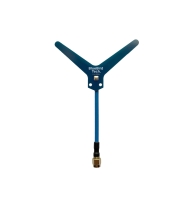
As the name suggests, omnidirectional (omni) antennas transmit and receive signals uniformly in all directions. They are a common option for FPV drones, as they are suitable for agile flights where the direction of movement constantly changes.
The antenna can be easily installed on the drone itself without the need for precise spatial alignment. Disadvantages include a shorter range (up to 2–3 km).
Directional antennas
Directional antennas concentrate the signal in a narrow sector. This significantly increases the range and stability of communication (up to 10 km or more). That is why they are chosen for long-distance flights.
Typically, such antennas are installed on the receiving side: ground stations, goggles, helmets, or remotes. Among the disadvantages, it is worth noting the need for precise orientation in the direction of the drone. When moving outside the radiation pattern, communication quality deteriorates significantly.
Circularly polarized antennas
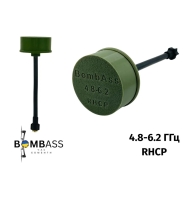
Circular polarization transmits signals in both horizontal and vertical planes, but the direction of radio waves "twists." Such antennas provide more stable reception and fewer reflections from metal objects. They work in two directions: right-hand circular polarization (RHCP) and left-hand circular polarization (LHCP). Therefore, it is important that the remote and the drone have the same polarization.
Diversity systems with multiple antennas
Hybrid systems allow connecting several antennas simultaneously (for example, one omnidirectional and one directional). The receiver automatically selects the signal with the best characteristics at any given moment. This approach allows combining the advantages of different antenna types and ensuring stable communication in changing flight conditions.
Main antenna form factors
The form factor of FPV drone antennas refers to the antenna's constructive design, i.e., its physical shape, dimensions, construction method, and element arrangement. In other words, it is how the antenna looks and how it is implemented from a technical standpoint.
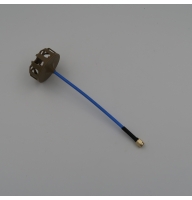
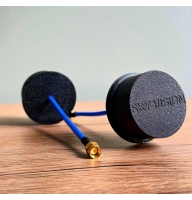
- Clover antennas are compact, omnidirectional, circularly polarized antennas with a characteristic cloverleaf shape of three "petals" or a tilted planar wheel. They provide a more stable signal in noisy conditions, reducing the impact of multipath propagation.
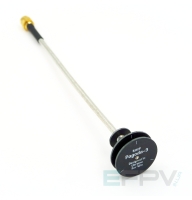
- Pagoda antennas are omnidirectional circularly polarized antennas that typically operate at 5.8 GHz. The main difference of Pagoda lies in its manufacturing method: it consists of several layers of printed circuit boards rather than bent wires. For this, fiberglass is used as a dielectric instead of air, which can reduce signal power.
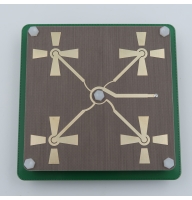
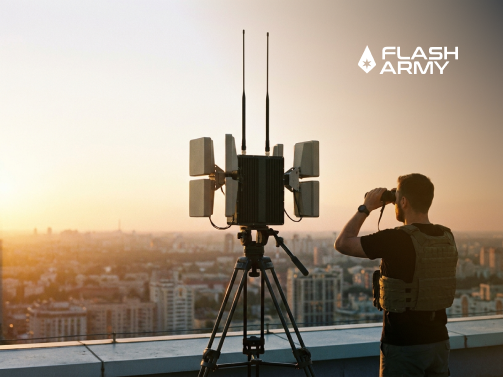
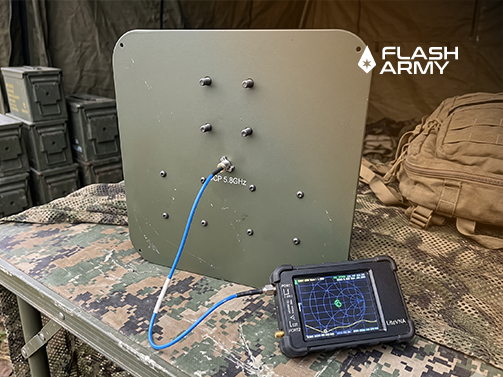
- The most common type of directional antennas are patch antennas. They have a flat shape, high gain, and consist of a metal plate on a dielectric base. Such antennas are designed for receiving video signals over long distances. They concentrate the signal in a narrow beam, providing a clear image. Most often used on ground stations.
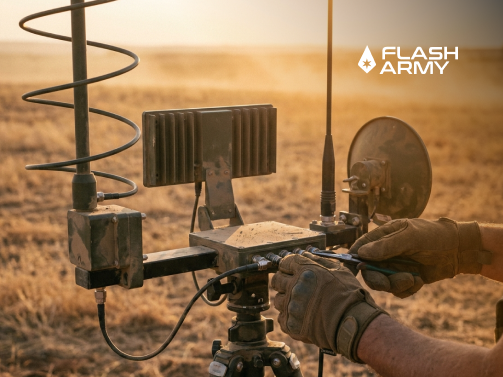
- Helical antennas have a spiral shape and are directional with circular polarization. The more turns (e.g., 12, 16, 22), the higher the gain and narrower the reception angle. Ideal for long-distance flights.
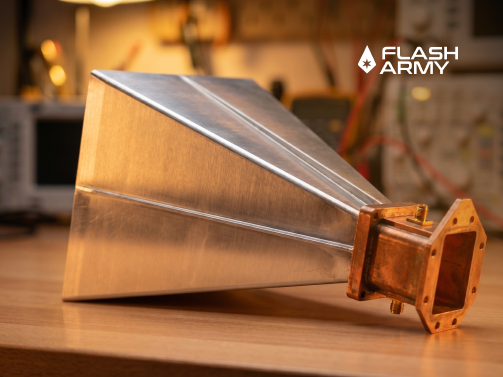
- Horn antennas concentrate the signal in a narrow direction, ensuring its stability over long distances. The horn shape minimizes signal scattering. These antennas can have both linear and circular polarization.
How to choose the right antenna for an FPV drone
When choosing an antenna for an FPV drone, you should pay attention to:
- flight purpose and conditions;
- operating frequency;
- equipment compatibility;
- polarization type;
- radiation pattern;
- gain (dBi);
- radio interference density.
Conclusion
In an FPV drone system, the antenna determines the quality of the video signal, communication stability, and effective flight range. A correctly selected model minimizes interference, ensures a clear image, and maintains control over the drone even in conditions of strong radio interference.
Modern FPV technologies offer many solutions for any conditions and tasks. Therefore, to achieve maximum operational efficiency, it is important to correctly match the antenna characteristics to the operating conditions and other components of the FPV complex.
You can familiarize yourself with available FPV drone antenna models in the Flash Army online store. If you are looking for reliable options across different frequency ranges, form factors, brands, and gain levels, you can easily find equipment for specific flight conditions on the website.

-192x200.jpg "Antenna Helical 3.3 GHz 12dBi")
-192x200.jpg "Antenna Helical RHCP 10 dBi 6 Turns 4.9-6.1 GHz")