Catalog
0
0

Yagi Antennas for Military Use
Sort By:
In stock
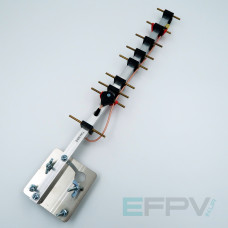
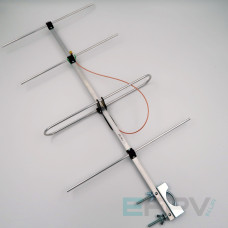
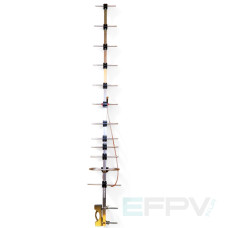
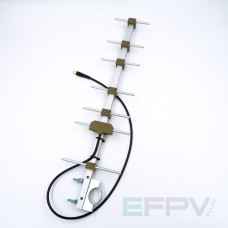
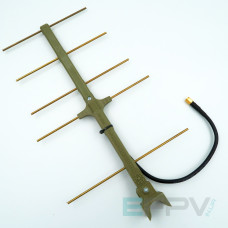
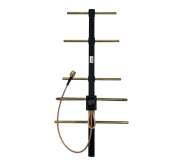
Directional Yagi Antenna 700-800MHz 11dBi, 5 Sections SMA
1
2 000 UAH
-25%
1 500 UAH
Add to Cart
In stock
In stock
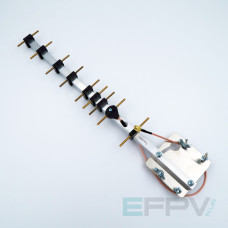
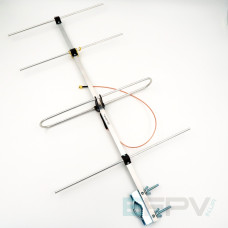
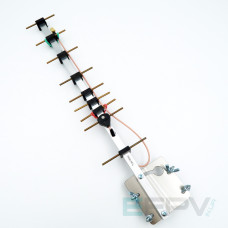
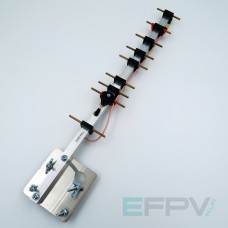
Directional Yagi Antenna 750 MHz 13dBi 1m, 9 Sections SMA
1
4 000 UAH
-13%
3 500 UAH
Add to Cart
In stock
In stock
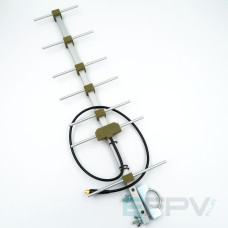
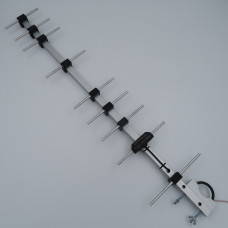
Antenna Coalas Yagi 135-175MHz
0
2 904 UAH
Add to Cart
In stock
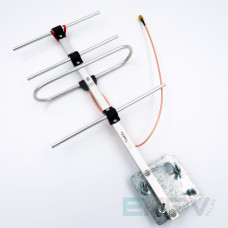
Yagi Antenna 868-915 MHz Plastic 10dBi
0
3 520 UAH
Add to Cart
In stock
Antenna COALAS::YAGI-270-410
1
3 200 UAH
-9%
2 904 UAH
Add to Cart
In stock
Antenna Yagi-Uda Lite 915
0
2 100 UAH
-9%
1 920 UAH
Add to Cart
In stock
In stock
Antenna COALAS::YAGI-360-530
1
3 300 UAH
-12%
2 904 UAH
Add to Cart
In stock
In stock
In stock
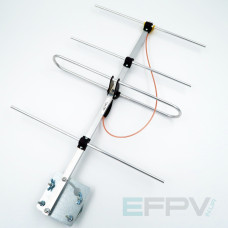
Yagi Antenna 150 without Cable
1
1 956 UAH
Add to Cart
In stock
Yagi Antenna 460-540 MHz Plastic 10dBi
0
3 520 UAH
Add to Cart
In stock
In stock
Antenna Yagi 915MHz 9 sections 13.4 dBi
0
3 520 UAH
Add to Cart
In stock
In stock
Antenna Yagi 750MHz 9 sections 13.4 dBi
0
3 520 UAH
Add to Cart
In stock
Yagi Antenna 890-1000 MHz Plastic 10dBi
0
3 520 UAH
Add to Cart
In stock
Yagi Antenna 420-480 MHz
1
2 050 UAH
Add to Cart
Yagi Antennas for Military Use

What are Yagi antennas?

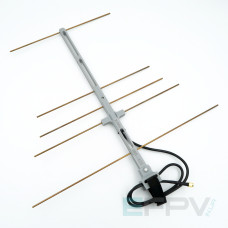
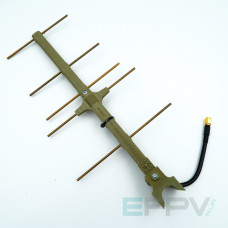
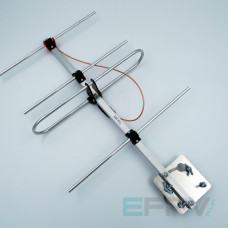
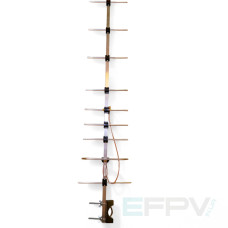
A Yagi antenna is one of the most common types of directional antennas for drones, used in military equipment. The design consists of an active element, a reflector, and several directors that form a clearly directed signal. Thanks to this, the Yagi antenna provides stable communication even over long distances, works with various transmitters and receivers, and maintains an optimal balance between power, range, and signal quality.

Types of Yagi antennas

There are several variants of Yagi antennas. Depending on the manufacturing material, they can be aluminum (lightweight and mobile) or steel (more durable and resilient). According to the number of sections, basic models with a minimum number of elements and reinforced Yagi antennas with an expanded range and higher gain are distinguished. The choice depends on the tasks: from field deployment to stationary communication systems. To maintain equipment operation in the field and ensure the antennas are effective, portable power stations are used.

Purpose of Yagi antennas

The main function is to ensure stable military communications over medium and long distances. The Yagi antenna is used to transmit and receive signals in the desired direction, which increases the efficiency of transmitters and receivers. Due to its directivity, it helps reduce the impact of interference, optimize communication, and improve transmission range.

How to choose Yagi antennas?

When choosing, several factors should be considered:

  • Number of sections – the more sections, the higher the gain and signal range.
  • Operating frequency and band – must match your equipment.
  • Material – lightweight aluminum antennas are suitable for field conditions, while sturdier steel ones are better for stationary setups.
  • Compatibility with receivers and transmitters is a key parameter for efficient operation.

Where to buy Yagi antennas?

Reliable military antennas of this type can be ordered from Flash Army. Here you can find antenna models, drones and quadcopters, and other equipment with various specifications, certified and tested in combat conditions. Thus, you receive equipment with a warranty, fast delivery, and expert support.

Expand

Frequently asked questions about products in this category Yagi Antennas for Military Use

A Yagi antenna is a directional antenna consisting of an active element, a reflector, and several directors. This design concentrates the radio signal in a specific direction and reduces backward radiation.
A Yagi antenna allows you to amplify the signal in the desired sector and stabilize communication over a greater distance.
Yagi antennas are designed for a specific frequency range. Most often, they are used at frequencies of 433 MHz, 868 MHz, 915 MHz, 1.2 GHz, or 2.4 GHz. These ranges are used in FPV systems, radio communications, and drone ground control stations.
A Yagi antenna typically provides gain of approximately 7 to 15 dBi. The exact value depends on the number of directors and the length of the structure. The more elements a Yagi antenna has, the more strongly it concentrates the signal in the direction of operation.
A dipole antenna has an omnidirectional radiation pattern and transmits signals in all directions. A Yagi antenna operates directionally, focusing the signal in a specific direction. This allows a Yagi antenna to provide a higher gain compared to simple antennas.
A Yagi antenna has a narrow, directional radiation pattern. The main part of the signal propagates in front of the antenna, while backward radiation is significantly weaker. This signal shape allows for more precise work with a specific target or direction.
A Yagi antenna is often used in drone ground control stations and communication systems. It is used in FPV systems, military radio communications, or television signal reception. A Yagi antenna helps amplify the signal in a specific direction and increase the communication range.
In most cases, a Yagi antenna uses linear signal polarization. The type of polarization depends on the antenna's position during installation. If the antenna is installed vertically, the signal also has vertical polarization.
Yagi antennas are typically made of aluminum or other lightweight metals. Metal elements provide good signal conductivity and low structural weight. The frame or mounts are sometimes made of plastic or composite materials.
The Yagi antenna performs well in challenging radio environments due to its directional radiation pattern. It allows concentrating the signal in a specific direction and reducing the impact of extraneous interference sources. This feature helps achieve a more stable connection.
You can buy a Yagi antenna on the FlashArmy military equipment marketplace. You can choose different Yagi antennas depending on your needs. Before choosing, you should pay attention to the frequency range and compatibility with your equipment.