

Sleeping Bags
There are no products to list in this category.
Continue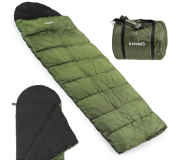
What are sleeping bags?
A sleeping bag is not just an insulated sack. It's your opportunity to get proper rest when it's cold, damp, or noisy around you.
A camping sleeping bag creates its own thermal space where the body recovers faster than under several layers of clothing. Without a quality sleeping bag, sleep is superficial, and you wake up from the slightest cold. With it, your body maintains a stable temperature and doesn't expend excess energy. In a military environment, this is a matter of endurance. Choosing a sleeping bag is an important component for spending a long time outdoors; equally important are aspects of outdoor cooking using cauldrons and barbecues.
Purpose of sleeping bags as a piece of equipment
After a long walk, night duty, or training, the body needs a break. If you're cold, recovery isn't complete. A mummy sleeping bag acts as insulation from the ground and air, even if the temperature changes throughout the night.
In field conditions, it becomes part of a system: a cot underneath, a blanket sleeping bag or another type on top. Together, this creates stable comfort, regardless of whether a tent is pitched or you're spending the night in a shelter.
When planning a hike or setting up positions, it's also worth remembering stoves and barbecues – they are an excellent component for heating and cooking.
Types of sleeping bags
The most popular formats are simple and clear:
- Mummy sleeping bag – fits snugly around the body, reduces heat loss, suitable for cold weather.
- Rectangular sleeping bag – more spacious, comfortable for warm nights, can be fully unzipped.
- Models with a hood – additional head protection from the cold.
- Options with a compression sack – convenient for backpack transport.
Mummy bags are chosen when thermal insulation is important. Rectangular bags are chosen when freedom of movement is needed.
Main characteristics of sleeping bags
Don't just focus on appearance.
- Comfort temperature – indicates the conditions under which you will sleep comfortably.
- Insulation – synthetics are resistant to moisture, down is lighter and compresses better.
- Fabric density and seams – affect durability.
- Weight and volume in the sack – important for long treks.
A good camping sleeping bag should not lose its shape after compression and transport.
What to consider when choosing sleeping bags?
Evaluate the conditions in which you will be sleeping. If overnight stays are expected in autumn or spring, it's better to choose a mummy sleeping bag or a rectangular sleeping bag with a temperature margin. Check the length: the sleeping bag should not constrict your shoulders or legs.
Also pay attention to the zipper. If it snags or looks weak, it will become a problem in field conditions.Where to buy a sleeping bag?
At FlashArmy, you can find a camping sleeping bag for service, recreation, or camping. The website also offers cots and camp equipment – it's convenient to assemble a complete set at once. If sleeping outdoors is important to you, you should choose a sleeping bag based on its actual characteristics, not its design.