Catalog
0
0

Additional Batteries
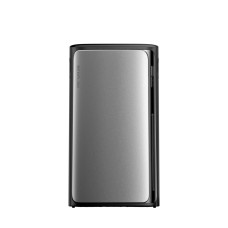
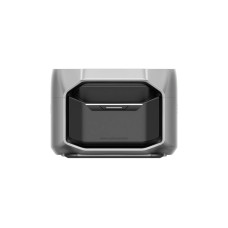
Sort By:
Additional Batteries
What is an extra battery?

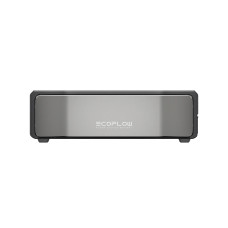
An extra battery for a power station is an expansion that allows you to increase the capacity and backup operating time of your power system. It comes in handy where a standard battery is no longer enough: on long trips, fieldwork, or in cases of emergency blackouts. In fact, a battery for a power station is an energy reserve that is always close at hand.

Purpose of the extra battery

What is the main task of a power station battery? Scaling. With an extra battery, you can extend the operation of the power plant, provide power to more devices, and increase the level of energy independence. This is especially important for the military, rescue services, business, and private use.

Overview of popular models

Among the most common solutions are:

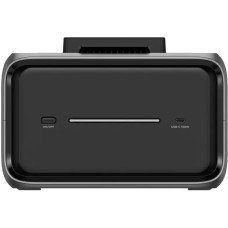
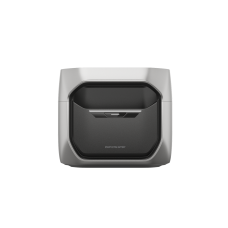
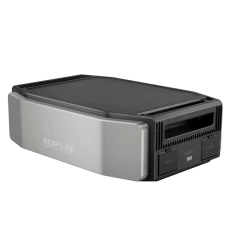
  • EcoFlow DELTA Pro Extra — for powerful systems with heavy loads.
  • EcoFlow DELTA 2 Extra — a versatile option for home and travel.
  • EcoFlow DELTA 3 Extra — a new generation with improved capacity and mobility.

Technical characteristics of extra batteries

An extra battery has key parameters to look out for:

  • battery capacity and voltage;
  • power and charging time;
  • compatibility with power station models;
  • presence of an inverter or ability to operate in tandem.

Where are extra batteries used?

The scenarios vary greatly: from powering a home during emergency outages to ensuring the operation of field equipment, camping, or military tasks. Where energy is critically needed, extra batteries become a reliable reserve.

How to choose extra batteries?

Assess your needs: what power is required, how many devices you plan to connect, and how long the system needs to run autonomously. It is important to consider capacity, compatibility, and mobility.

Where to buy extra batteries?

Reliable solutions for scaling your power system can be found at Flash Army. Official models of power stations, generators, uninterruptible power supplies, and other energy independence systems are presented here with a warranty, fast delivery across Ukraine, and support from specialists who will help you choose the optimal option for your tasks.

Expand

Frequently asked questions about products in this category Additional Batteries
An extra battery for a charging station is an external battery module that increases the total capacity of a compatible station. It adds not watts of power, but a reserve in Wh or kWh: the station powers a router, light, laptop, refrigerator, or boiler longer within its output power. Most such batteries only work with a specific series of stations because they have their own connector, voltage, communication protocol, and charge management system.
Additional batteries are needed to increase standalone operating time without purchasing a second charging station. If the base station has 512 Wh, connecting a 512 Wh module effectively doubles the energy reserve but does not change the inverter's wattage limit. This is important for equipment with moderate consumption: a router, cameras, lighting, a laptop, a gas boiler with a pump, a refrigerator, or medical equipment with a small load.
Additional batteries are distinguished by capacity, chemistry type, voltage, compatible series, and connection method. Compact modules typically have a reserve of hundreds of Wh and are suitable for portable stations, while large blocks of 1–2 kWh or more are used for DELTA-class, PowerStation, or home systems. In terms of chemistry, Li-ion, Li-pol, and LiFePO4 are common; LiFePO4 is usually chosen for a longer cycle life, while compact lithium-ion modules are preferred for lighter weight.
An additional battery is connected only to a compatible station via the standard cable and proprietary expansion port. Before connecting, verify the station model, permissible number of batteries, voltage, connector type, cable version, and manufacturer's requirements for charge level. Homemade adapters, universal cables, and connections of different series are dangerous: the BMS may not recognize the battery, charging may proceed incorrectly, or the system may shut down due to protection.
An additional battery increases the system's autonomy without changing the main station, outlets, or familiar connection scheme. It is useful if the station already powers the necessary equipment, but its capacity is insufficient for a night, a work shift, or a longer outage. Another advantage is modularity: the base station can be used separately for a trip, and at home, the battery pack can be connected for a larger power reserve.
Multiple batteries are combined only according to the scheme that the manufacturer has allowed for a specific station or home system. Some series allow one additional module, others — two, three, or more units with capacity expansion up to several kWh. Do not mix different voltages, different series, batteries with different connectors, or modules with different BMS logic, because the station may incorrectly calculate the charge, limit operation, or fail to start the system.
An additional battery should be stored in a dry room, without overheating, frost, direct sunlight, or moisture near the connectors. For long-term storage, a medium charge of approximately 40–60% is usually maintained, unless the manufacturer specifies otherwise. It is important not to block ventilation, not to place heavy objects on the casing, not to pull the unit by the cable, not to charge it with an incompatible adapter, and to periodically check the connectors, cable, and status indicators.
Additional batteries for power stations in Ukraine are priced from UAH 11,000. Compact modules of several hundred Wh cost less than 1–2 kWh batteries, while blocks for home systems or powerful stations fall into a significantly higher budget. The price is influenced by capacity, chemistry type, cycle life, weight, dimensions, brand, compatible series, display availability, BMS, fast charging, and support for combining multiple modules.
An extra battery is chosen for a specific station, not just for a desired capacity. Before purchasing, you need to know the model of the charging station, the required Wh reserve, the number of allowed modules, the cable type, the battery weight, and the usage scenario: apartment, house, trip, office, or backup for a boiler. Flash Army offers extra batteries for charging stations, capacity expansion modules, and battery packs for power supply systems.