Catalog
0
0

Fiber-optic drones for military use

There are no products to list in this category.

Continue
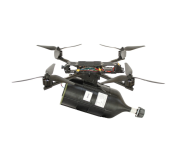
Fiber-optic drones for military use

What are fiber-optic drones?

Fiber-optic drones are a modern type of FPV system where control and video transmission occur not via radio channel, but through a fiber-optic cable. This protects the connection between the operator and the drone from interference, jamming, or signal loss. Such a fiber-optic FPV drone operates stably even in the most challenging conditions where classic models become vulnerable.

Purpose and applications

Their main role is to perform tasks in active EW threat zones. They are effective for:

  • reconnaissance and covert surveillance;
  • operational situation assessment and target detection;
  • precision strike with ballistic considerations;
  • ensuring unit protection through reliable information.

Fiber-optic FPV is a versatile tool for military personnel, allowing uninterrupted operation and reducing the risk of losses.

Operating principle

Instead of a standard antenna with a transmitter, FPV fiber optics are used, directly connecting the drone and the remote control. Video from the camera is transmitted to the screen instantly, and commands from the controller arrive without any delays. This provides the operator with a stable signal, clear navigation, and full control. Advantages of fiber-optic drones

  • EW protection — the drone cannot be jammed by radio waves.
  • Reliable control — stable connection even at long distances.
  • Minimal risk of loss — direct connection reduces the chance of failure.
  • Instant reaction — the operator receives the image from the sensor without delays.
  • Versatility — suitable for reconnaissance, strikes, and operations in conditions of constant attacks.

Advantages of buying a fiber-optic FPV drone at Flash Army

In real combat conditions, not only the equipment but also the guarantee of its reliability is important. At Flash Army, you can purchase fiber-optic FPV drones and other modern solutions directly from the manufacturer. We offer:

  • proven quality;
  • optimal price;
  • fast delivery across Ukraine.

Fiber-optic FPV drones are a technology that truly changes the game. They save lives and help achieve results where other systems are powerless.  

Frequently asked questions about products in this category Fiber-optic drones for military use

An FPV drone on fiber optics is an unmanned platform where signal transmission occurs via a fiber-optic cable instead of the standard radio channel. This operating principle ensures stable communication, high-quality data transmission, and reduced susceptibility to radio interference. During flight, the drone maintains a physical connection to the control point via a cable that gradually unwinds as it moves.
The main advantage is a stable communication channel without the typical dependence on radio interference. This solution ensures precise command transmission, high-quality video signal, and a lower probability of losing control in a complex environment. An additional advantage is the reduced impact of external factors that can degrade the performance of traditional wireless systems.
The size of an FPV drone on fiber optics depends on the platform's purpose and the equipment installed. Compact models are usually more maneuverable, lighter, and more convenient for operating in confined spaces, while larger designs may offer better stability and higher payload capacity. Dimensions also affect flight duration, speed, energy efficiency, and the ability to install additional components.
The average flight range of fiber-optic FPV drones is determined by cable length, energy reserve, and platform technical parameters. In most cases, the operating radius is limited by the connection line rather than signal quality, as in radio-controlled systems. The actual range also depends on terrain, weather conditions, equipment weight, and flight mode.
The flight time of fiber-optic FPV drones depends on battery capacity, total structural weight, and load intensity during operation. Lighter models typically stay airborne longer, while heavier platforms consume more power. Autonomy is also affected by flight speed, weather conditions, maneuvering, and additional equipment installed.
The maximum speed of fiber-optic FPV drones typically ranges from 60 to 120 km/h, depending on frame size, motor power, and cable weight. Compact models often exhibit higher dynamics, while larger platforms are focused on flight stability. Actual performance may vary due to weather conditions, payload, and power system configuration.
The payload capacity of FPV drones typically ranges from 0.5 to 3 kg, depending on the frame size, motor power, and battery type. In reinforced configurations, this figure can be higher, but increased load often reduces flight speed and autonomy.
FPV drones with fiber optics typically feature analog, digital, or low-latency HD cameras, depending on the platform's purpose. Modules with resolutions from 720p to 1080p, a wide field of view, and improved low-light performance are most commonly used. The specific camera choice depends on requirements for image detail, signal latency, and operating conditions.
Fiber-optic FPV drones are made from carbon fiber, aircraft-grade aluminum, composite materials, and impact-resistant plastic. Carbon fiber frames are popular due to their low weight and high rigidity, while metal elements are used to reinforce high-stress components. Materials may vary depending on the drone class, operating conditions, and structural strength requirements.