Catalog
0
0

Receivers for FPV Drones and Quadcopters

Sort By:
Receivers for FPV Drones and Quadcopters

What are receivers for FPV drones and quadcopters?

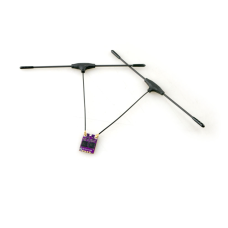
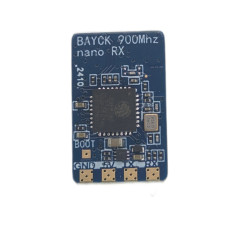
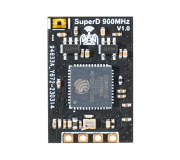
A drone receiver is a key element of the control system that receives a signal from the remote control or transmitter and relays it to the flight controller. It is thanks to the receiver that the operator maintains communication with the UAV, and the drone responds to every command. In the case of FPV flights, the correct choice of receiver directly affects signal stability, range, and control accuracy.

Types of receivers for FPV drones

Today, two main types are used:

  • Analog – simple, lightweight, and affordable. They provide a stable control channel but have a limited video format and are susceptible to interference.
  • Digital FPV receivers – modern solutions that provide a clear picture, better synchronization, and longer range. They are ideal for competitions and professional flights.

Key characteristics of radio receivers

  • Frequency and operating range;
  • Operating range;
  • Signal strength and its stability;
  • Compatibility with your equipment and controller;
  • Antenna type;
  • Size and weight to avoid overloading the drone.

How to choose radio receivers for drones and quadcopters?

To choose the right FPV receiver, you should consider the planned flight range, video communication requirements, and available channels. For training flights, a simple and lightweight analog option will suffice. If maximum image quality and interference immunity are needed, it is better to buy a digital drone receiver with a wide frequency range.

Where to buy radio receivers for drones and quadcopters?

Reliable equipment should be ordered from trusted suppliers. At Flash Army, you can buy FPV receivers for various drone and quadcopter models. We offer certified components, fast delivery across Ukraine, and quality assurance. A correctly chosen drone receiver means a stable signal, control in all conditions, and confidence in every flight.  

Expand

Frequently asked questions about products in this category Receivers for FPV Drones and Quadcopters
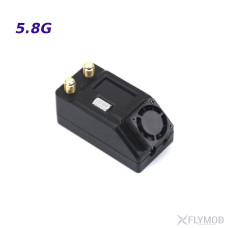
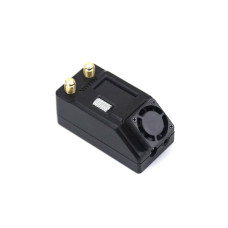
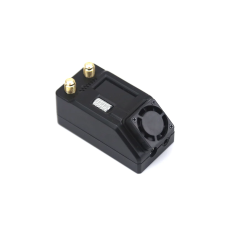
A drone receiver is a module that receives a signal from the transmitter and relays it to the drone's system. For control, the receiver gets commands from the remote and sends them to the flight controller. If it's an FPV receiver, it receives the video signal from the drone so the operator can see the image in goggles, on a monitor, or via a ground station.
The main types are FPV receivers for video and RC receivers for control. An FPV receiver works with the image: it receives a video signal from the transmitter on the drone. An RC receiver is responsible for flight commands — throttle, turns, modes, arming, and other actions from the remote control. These are different tasks, so it's important not to confuse the video channel and the control channel when choosing.
The weight of receivers can range from a few grams for compact RC modules to noticeably heavier FPV solutions for goggles or ground stations. For a lightweight drone, every extra gram affects balance, flight time, and frame load. On larger platforms, there is more weight allowance, but it is still best to plan the placement of the receiver, antennas, and wires from the start.
Modern receivers operate in various bands, depending on whether they receive video or control signals. For radio control, 433 MHz, 868 MHz, 915 MHz, and 2.4 GHz are often used. For FPV video, 5.8 GHz, 1.2/1.3 GHz, 3.3 GHz, and other bands are common. The frequency must match the transmitter and antenna; otherwise, the system will simply not provide a stable connection.
Diversity is a technology where a receiver operates with two antennas or two receiving channels and selects the stronger signal. This helps reduce communication dropouts when the drone changes position, flies behind an obstacle, or enters an area with signal reflections. For FPV, this is especially useful: the picture remains more stable, and control is less dependent on a single unfavorable antenna position.
Receivers are used for FPV flights, racing, aerial photography, training assemblies, and long-range flights where connection stability is crucial. For racing, low latency, light weight, and quick response are more important. For aerial photography, a stable signal and compatibility with the camera, goggles, or monitor are essential. For long-range flights, factors like frequency, antennas, protocol, and signal reception margin are considered.
Drone receivers in Ukraine are priced from UAH 300. The cost then depends on the receiver type, frequency, protocol, number of antennas, Diversity support, range, connection format, and package contents. A simple RC receiver for control and an FPV receiver for video can differ significantly in price, as these are different modules for different tasks.
Drone receivers can be ordered from Flash Army — for control, FPV video, or a specific build for a required frequency range. Here, you can conveniently check compatibility with the transmitter, antenna, flight controller, and remote control right away, to avoid assembling the system at random. Orders are quickly dispatched across Ukraine, so you can receive the necessary module without a long wait.