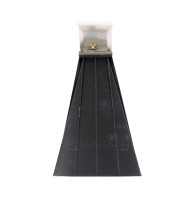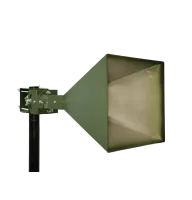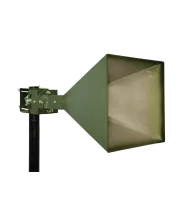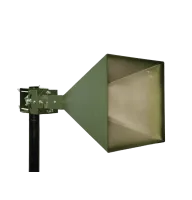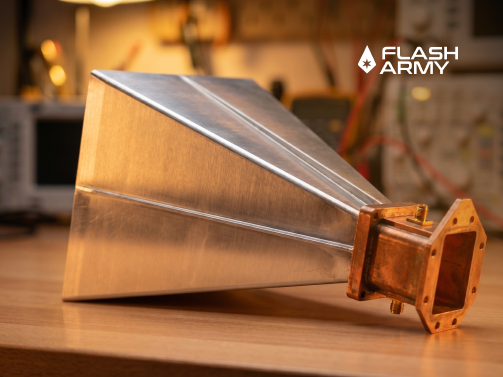
Various types of antennas are used in radio communication systems: whip, dipole, panel, helical, etc. All of them have their own characteristics and applications. The choice of antenna depends on the requirements for communication range, operating frequency, radiation directivity, operating conditions, and other features. In this article, we will focus on horn antennas.
They are designed for data transmission between remote objects. That is why this type of antenna is often used in microwave communication links, radar stations, and FPV systems.
We explain in detail how and why horn antennas are used in this material.
What are horn antennas and what is special about their design
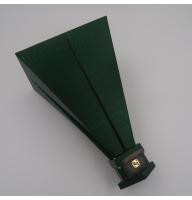
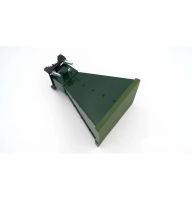
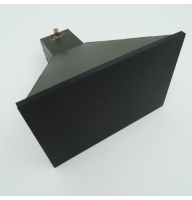
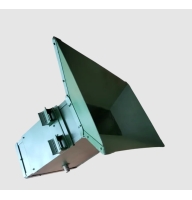
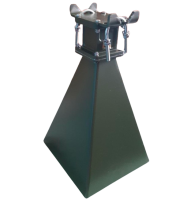
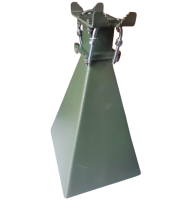
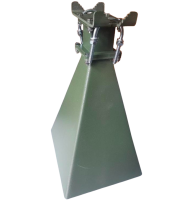
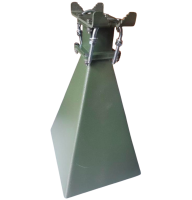
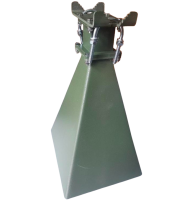
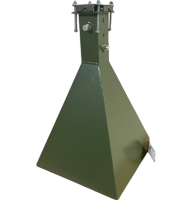
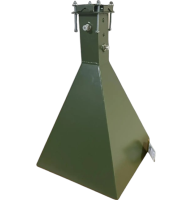
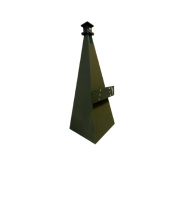
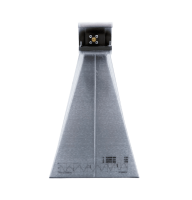
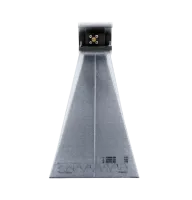
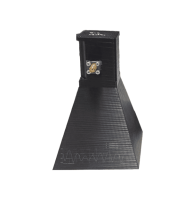
Horn antennas are a type of directional antenna whose design resembles an expanding metal horn. Why such a specific shape? First of all, it provides a smooth change in wave impedance, minimizing signal loss and wave reflections inside the antenna itself. This is why radiation becomes more efficient.
Secondly, such a pyramid forms a narrow and clearly directed electromagnetic beam with a high gain. Thanks to this, most of the energy is radiated in a given direction, rather than scattered around.
How horn antennas work and how they form a directional signal
The main elements of a horn antenna are: the waveguide, the horn itself, and the output section.
The operation of a horn antenna begins with the supply of a high-frequency signal to the waveguide. Inside it, the electromagnetic wave travels to the expanding part — the horn. Due to the gradual increase in the waveguide's cross-section, the wave smoothly transitions into free space.
During this, electromagnetic energy is concentrated in one direction, forming a so-called radiation pattern. The larger the horn's flare relative to the wavelength, the narrower the beam will be.
Main types of horn antennas and their features
Horn antennas differ in the shape of the flare and the plane of wave propagation. Depending on these characteristics, they are divided into the following types:
- Pyramidal.
The most common type, in which expansion occurs simultaneously in both planes (vertical and horizontal), forming a four-sided pyramid. They are considered ideal for radar and satellite communications.
- Sectoral.
Expand in only one plane. This allows them to form a wider radiation pattern in one direction and a narrower one in the other.
- Conical.
Have a smooth conical expansion (round cross-section) from the waveguide to the aperture. Used for working with circular waveguides or for generating special waves (e.g., circular polarization).
- Exponential.
Designs in which the horn profile expands according to an exponential law (the rate of change of a quantity is proportional to its current value). This provides a very wide bandwidth and low levels of signal distortion or reflection.
- Corrugated.
A feature of these antennas is the presence of special grooves-corrugations on the inner surface of the horn. This improves beam symmetry and reduces side radiation at high frequencies.
Advantages of horn antennas
Horn antennas have a number of advantages:
- high gain;
- wide frequency range;
- ability to form a narrow and concentrated radiation beam;
- low energy loss and signal distortion;
- simple design;
- resistance to interference.
Where horn antennas are used: communications, radars, and FPV systems
Thanks to the mentioned advantages, horn antennas have found wide application in various fields of radio engineering. They are used wherever it is necessary to ensure stable signal transmission or reception. In particular:
- In satellite and wireless communication systems.
Serve as powerful illuminators for large satellite dishes and point-to-point radio relay stations. They help form a directional radio signal, ensuring efficient data exchange between ground stations and satellites or between remote objects.
- For radar.
In radars, they are used to form narrow radio beams that allow detecting objects, determining their position, and tracking movement.
- In FPV systems.
In FPV systems, horn antennas are used to improve the quality of video signal reception. They can be used on ground stations or receiving equipment, especially when it is important to ensure a reliable video transmission channel over a long distance.
What to consider when choosing a horn antenna
Before you buy an antenna, we advise you to consider:
- operating frequency range;
- gain;
- beamwidth;
- polarization type;
- dimensions of your installation;
- type of construction.
Conclusion
You can order proven horn antenna models from Flash Army. Our catalog features only high-quality and reliable options for your needs.