You watched
Catalog
8
0
0

Military Exoskeletons

There are no products to list in this category.

Continue
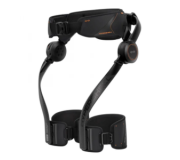
Military Exoskeletons

What is an exoskeleton?

An exoskeleton is a wearable electrical device that supports or enhances human movement, reducing strain on the legs, back, and joints. It helps carry loads, reduces the risk of injuries, and increases endurance, among other benefits.

Modern models are used in military applications and rehabilitation, as well as in tourism and outdoor activities.

What is an exoskeleton used for?

An exoskeleton is used to enhance human physical capabilities and reduce strain on the legs, back, and joints. In the military and for the Armed Forces of Ukraine, an exoskeleton is a unique piece of military equipment that allows for longer periods of carrying ammunition and performing complex tasks. 

In civilian settings, it is used for recovery and rehabilitation after injuries, in loading and unloading operations, tourism, and outdoor activities where back and limb support is crucial.

Types of exoskeletons

Exoskeletons are divided into several types depending on their purpose and area of support:

  • for legs;
  • for back and torso;
  • military exoskeletons;
  • medical and rehabilitation;
  • civilian portable and tourist.

Each type is designed for specific tasks, so before purchasing any exoskeleton, it is important to determine its primary purpose: work, rehabilitation, or outdoor activities. It is a kind of alternative to traditional orthoses and bandages.

Exoskeletons in the military

Military exoskeletons reduce the risk of injuries during active combat operations and increase movement speed in field conditions. Additionally, they assist in logistical and support operations, such as evacuating the wounded or transporting cargo. 

That is why modern models are actively being tested by the Armed Forces of Ukraine and other armies worldwide, combining enhanced physical capabilities with safety and reliability in combat conditions.

Features of choosing an exoskeleton

Among all parameters, it is most important to pay attention to:

  • support area;
  • personal comfort;
  • appropriate power for tasks;
  • material quality;
  • price and maintenance;
  • certification.

Before buying an exoskeleton, you should weigh the pros and cons, as it is a valuable investment in your productivity, safety, and health. Match your tasks with the technical specifications of each model before making a purchase.

Where to buy an exoskeleton?

Flash Army is actively expanding its range of military and other exoskeletons, where you can choose a model that suits you. Here you can buy a military exoskeleton ready for use, complete with a battery and charging station. If you have difficulty choosing, specialists can advise and help with your selection, and fast delivery across Ukraine will ensure timely receipt of your order.

Frequently asked questions about products in this category Military Exoskeletons

An exoskeleton is a wearable structure that supports the human body and helps reduce strain on muscles, back, knees, or legs. It can be passive, without motors, or active — with actuators, sensors, and a battery. The main idea is not to replace a human, but to facilitate movement, weight transfer, or prolonged work under load.
Exoskeletons are designed to support humans during physical work, movement, rehabilitation, carrying loads, or prolonged standing. In industry, they help reduce fatigue during repetitive movements. In medicine, they can be used to restore mobility after injuries. In field and military tasks, an exoskeleton is valuable because it partially relieves strain on the back and legs when working with equipment.
Exoskeletons are categorized by operating principle and support area: passive and active, soft and and rigid-frame, for the lower body, arms, back, or full body. Passive exoskeletons operate mechanically: springs, levers, hinges, and load distribution. Active ones feature motors, sensors, electronics, and power. Soft exoskeletons resemble a system of straps and textile elements, while rigid ones have a frame made of metal or composites. For carrying loads, legs and back are often more critical, while for manufacturing, arms, shoulders, and lower back are key.
An exoskeleton operates on the principle of motion support or load redistribution. A passive model transfers part of the weight to its frame, helping muscles tire less. An active model reads human movements via sensors and adds force using actuators. With a good exoskeleton, a person should not have to fight the mechanics: the design must replicate natural movement, without hindering steps, bending, sitting, or working with hands.
Exoskeletons are made from aluminum alloys, steel, carbon, composites, polymers, technical textiles, straps, and soft cushioning inserts. Metal or carbon is used where rigidity and load-bearing capacity are required. Polymers and textiles are needed for body parts, fasteners, straps, and body contact areas. For real-world use, not only the frame material is important, but also weight, adjustability, ventilation, body fixation, and comfort after several hours of wear.
Modern exoskeletons may incorporate electric motors, position sensors, gyroscopes, accelerometers, controllers, batteries, motion support software algorithms, and human gait adaptation systems. Simpler passive models use fewer technologies but are lighter, more reliable, and do not depend on battery charge. Active exoskeletons are more complex: they can assist with lifting, uphill movement, prolonged walking, or working with heavy loads, but require power and proper calibration.
Military personnel use exoskeletons where physical strain needs to be reduced: carrying ammunition, gear, batteries, tools, evacuating property, or prolonged work in a position. An exoskeleton does not make a person invulnerable or replace training. Its task is simpler — to help move longer with a load, reduce strain on the back and legs, and decrease fatigue during heavy work.
The advantage of an exoskeleton is that it can reduce body strain, assist during long walks, climbing, carrying heavy loads, or working in an awkward posture. For someone who carries a lot of gear daily, this can be significant support. There are also drawbacks: an exoskeleton adds its own weight, requires fitting to the body, can be cumbersome in confined spaces, and is not always suitable for rapid maneuvers. Active models also depend on battery power, electronics, and operating conditions.
Exoskeletons in Ukraine cost approximately from UAH 48,000, if we are talking specifically about wearable active models, and not separate batteries or chargers. More expensive models may vary in weight, drive power, ergonomics, support modes, battery life, and control system. The price is influenced by the type of exoskeleton, materials, power, autonomy, weight, configuration, and the task for which it is purchased.
When it comes to exoskeletons, it's not about which model looks more high-tech. First, you need to understand its purpose: long marches with heavy loads, work in a static position, logistics, rehabilitation, or industrial applications. At Flash Army, you can consider exoskeletons for tasks where leg and back support, autonomy, construction weight, and compatibility with existing gear are important. Before purchasing, it's best to assess the user's height and build, movement patterns, duration of use, and whether the system will interfere with body armor, a backpack, or other equipment.