Catalog
0
0

Drone Catchers

There are no products to list in this category.

Continue
Drone Catchers

What are drone grippers?

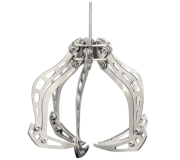
Drone grippers are suspended attachments installed on UAVs to hook, lift, or transport an object. They are also called claws or pincers: the working part clamps the item and holds it during flight. A drone gripper adds a specific task to the aircraft — to pick up the desired object and transport it further.

Purpose of drone grippers

Drone grippers are used for evacuating equipment, small gear, or other items that a specific drone can lift. This is an option for FPV and operational UAVs when a grab-and-carry function is needed instead of a drop. Before installation, consider the thrust, assembly weight, power supply, frame, and drone motors.

Types of drone grippers

Material and metal thickness are important for grippers. Options are available in aluminum and stainless steel, with thicknesses of 1.5 mm and 2 mm. Aluminum is lighter; stainless steel is often chosen when a stronger grip is needed. A drone claw is best evaluated along with the rest of the assembly, as flight stability is also affected by drone propellers.

Recommendations for choosing drone grippers

First, you need to understand what you plan to lift: a light part, a casing, gear, or a damaged drone. Next, consider the material, thickness, mounting method, claw size, and space for the suspension mechanism. If the drone is operating near its limit, a heavier gripper will drain the battery faster, so it's worth checking drone batteries.

Where to buy drone grippers?

Drone grippers can be ordered from Flash Army if you need a gripper for a specific UAV build without searching through various stores. The page makes it easy to compare material, metal thickness, and price. If you have doubts about the claw format, weight, or compatibility with your drone, consultants will help you navigate. Orders are quickly shipped across Ukraine, and necessary components can be purchased together in one place.

Frequently asked questions about products in this category Drone Catchers

Drone grippers are suspended attachments installed on UAVs for lifting or carrying small objects. They are also called claws, crabs, or grabs. The working part clamps the object and holds it during flight. However, this is not a standalone accessory that can simply be screwed on and flown: it immediately affects the drone's weight, balance, and behavior in the air.
Such devices are needed where a drone must not drop, but rather hook, lift, carry, or retrieve a small item. Grippers are used with FPV drones and utility UAVs, provided the assembly itself can withstand the additional load. What matters here is not just the gripper, but the entire system together: frame, motors, battery, thrust, payload weight, and how evenly the item is positioned under the drone.
The gripper or claw attaches to the bottom of the frame via a mounting plate, mounting holes, or a separate suspension assembly. The method depends on the design of the drone and the gripper itself. The part must be level, not interfere with the propellers, and not obstruct the battery, camera, or landing gear. If, after mounting, the drone pulls to one side or has difficulty maintaining a level flight, the problem is often not with the flight controller but with an uneven weight distribution.
Drone grabbers are most often made of aluminum or stainless steel. Aluminum is lighter and takes up less of the drone's payload capacity. Stainless steel is more rigid, holds its shape better, and is suitable for tasks requiring a stronger grip. The choice of material always depends on the specific build: sometimes extra grams are more important than a margin of strength, and sometimes it's the other way around.
Drone grabbers often use metal 1.5 mm or 2 mm thick. A thickness of 1.5 mm results in less weight and is easier for the drone to carry, especially if the build does not have a large thrust margin. A thickness of 2 mm adds rigidity, but with it comes a greater suspension mass. For a small drone, this difference can be noticeable after the first takeoff.
The load of a claw or gripper cannot be calculated by metal weight alone. An object may be physically held in the grip, but the drone will lose stability, drain the battery faster, or become less responsive to controls. You need to consider the weight of the gripper itself, the shape of the object, the center of gravity, thrust reserve, and flight conditions. If the drone is already operating near its limit, even a strong claw will not prevent control issues.
Drone grabbers in Ukraine cost approximately from UAH 2,200. The price depends on the material, metal thickness, brand, claw design, and compatibility with a specific build. Aluminum and steel models differ not only in cost but also in weight, rigidity, and how much they affect drone flight.
A drone gripper is needed when a UAV has to carry an item by gripping it, rather than suspending it. For this task, Flash Army offers aluminum and stainless steel claws and grippers. A lighter gripper consumes less battery power, while a more rigid claw maintains its shape better under load. If the drone struggles to lift off after installation, has difficulty maintaining a level flight, or quickly drains the battery, the problem is not with the flight itself, but with the gripper being unsuitable for this particular setup.