Catalog
0
0

Pouches for optics, NVGs, binoculars

There are no products to list in this category.

Continue
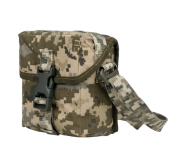
Pouches for optics, NVGs, binoculars

What are optics pouches?

Optics pouches are an element of military equipment responsible for protecting sensitive gear in field conditions. Night-vision devices, binoculars, or other optics cannot withstand impacts, moisture, and dust. A regular pocket or backpack does not provide the necessary level of protection. Therefore, an optics pouch becomes an essential part of the equipment. It allows you to carry the device conveniently and safely, without distraction during operation.

For which optical devices are pouches needed?

A night-vision device (NVG) pouch is most commonly used when referring to a night-vision device. An NVG pouch is also selected separately, taking into account its size and mounting options. In addition to NVGs, such products are suitable for binoculars, thermal imagers, and other compact optics. All of them require protection during movement and transportation.

What functions do optics pouches perform?

An NVG pouch has a primary function: protecting optics from mechanical damage and environmental exposure. The pouch secures the device, preventing it from rattling inside. Most models are compatible with the Molle system and can be easily attached to a plate carrier, backpack, or belt. This ensures that optics are always at hand and do not interfere with other equipment elements.

Additional protection for optics pouches with ballistic inserts

For challenging conditions, there are pouches with the option of installing ballistic inserts. This option adds another layer of protection against fragments and impacts. This is relevant for night-vision devices, as they are high-value and critically important. Such solutions are often used with universal pouches or other military equipment.

How to choose optics pouches?

Before choosing, you should clearly know for which device the pouch is needed. Consider the dimensions, mounting type, and conditions of use. Color also matters: multicam, pixel, coyote, or olive allow you to blend in with the terrain. Quality materials and reliable hardware directly affect the product's lifespan.

Where to buy optics pouches?

FlashArmy offers pouches selected based on real-world experience. Here you can easily find solutions for NVGs, binoculars, and other optics, compatible with modern military equipment. The assortment is complemented by night-vision devices and other useful items. This allows you to assemble a kit that works as a single unit and does not fail in difficult conditions.

Frequently asked questions about products in this category Pouches for optics, NVGs, binoculars

Optics pouches are protective tactical cases for NVGs, binoculars, thermal imagers, and other compact optics. They are needed so that sensitive devices do not lie openly in a backpack and do not hit magazines, tools, cables, or other equipment. This is critical for optics: the housing, lenses, mounts, and electronics do not tolerate impacts, dust, and moisture well.
Pouches for optics are used for carrying, storing, and quick access to a device during operation. They are used to carry NVGs, binoculars, compact thermal imagers, or other optics that need to be kept protected but not hidden deep in a backpack. The pouch secures the device inside and prevents it from moving freely during motion.
In military conditions, an optics pouch must be durable, quiet to use, and compatible with other gear. Important features include thick walls, secure retention, MOLLE attachment, and protection from dust, moisture, and accidental impacts. This is especially crucial for NVGs, as the device is often retrieved in the dark, while moving or changing positions, and must not snag on other equipment elements.
Pouches for optics are made from Cordura, nylon, dense synthetic fabrics, foam inserts, webbing, and reinforced hardware. Specific models use Cordura 1000D, PU, and nylon 6.6, with MOLLE-compatible attachments. For such a pouch, not only the fabric is important, but also how well the walls hold their shape, how securely the seams are stitched, and whether the zipper holds up after constant field use.
In summary, coyote, multicam, olive, pixel, and black are most often used for optics. The color is usually chosen to match the plate carrier, battle belt, backpack, or overall gear set. For civilian use, it's a matter of convenience and taste, but for military conditions, it's better to choose an option that doesn't stand out from the rest of the equipment.
An optics pouch differs from a regular case in that it is designed to be carried with other gear. It features mounting options, denser walls, better retention, and a shape tailored to a specific device. A regular case can protect against scratches in a bag, but it doesn't always stay securely on a plate carrier, belt, or backpack and doesn't provide quick access to optics.
For NVGs, a pouch is selected so that the device's lenses are not pressed against hard objects and do not receive impacts during movement. For binoculars, size, depth, a soft interior, and the ability to quickly retrieve the device with one hand are important. Some pouches may also have additional protection or a compartment for a ballistic insert if the device needs better protection from fragments and impacts.
Optics pouches in Ukraine cost approximately from UAH 1,300. More expensive models feature more durable materials, a form-stable body, MOLLE attachment, larger size, or an additional level of protection for NVGs, binoculars, or other devices. The price is influenced by the brand, fabric, color, hardware, compatibility with specific optics, and the overall design of the pouch.
Optics pouches are available at Flash Army for NVGs, binoculars, and other compact optics that need to be carried not in a general backpack, but in a separate, protected place. If the pouch is for an NVG, first check the device's size, wall rigidity, and attachment to gear; for binoculars, depth, quick access, and lens protection are important. This makes it easier not just to put optics somewhere in your gear, but to properly secure them where they won't hinder movement and will be close at hand.