

Innovative Military Drones and Systems
There are no products to list in this category.
Continue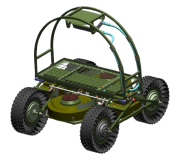
Innovative Military Drones and Systems
Ground drones are modern unmanned systems that perform tactical tasks where human involvement is dangerous or inefficient. Thanks to automation, remote control, and an adaptive platform, ground drones are changing the approach to combat, logistics, reconnaissance, and engineering operations.Types of Ground Drones
- Logistics Ground Drones
- Engineering Ground Drones
- Combat Drones
Types of Movement
- Wheeled Drones — fast, maneuverable, ideal for delivery or evacuation on flat terrain.
- Tracked Drones — highly mobile, stable on difficult terrain, often used as Ukrainian ground drones in cross-country conditions.
- Brand: UAV AviaUkrTech UAV BlueBird EW Jammer Kvertus NRK Mavka NRK Numo Robotics RoboForce UGV Robotic Complexes RobotsUA UGV NRK SokillSky NRC TechRoboCompany NRC UkraineTech EW Jammers Dobrota
- Purpose: Combat UAVs UGV for Mining EW Jammer Remote Control NRK for Transport
- Chassis type: UGVs (Unmanned Ground Vehicles) Wheeled UGV
- Range: RC with range up to 10 km RC with 11-20 km range RC with 21-30 km range RC with 31-40 km range RC systems with range over 40 km
- Speed: UGV with speed up to 10 km/h RC boat with speed 11-20 km/h NRK with speed over 20 km/h
- Payload capacity: UAV with payload capacity up to 100 kg UAVs with payload capacity 101-200 kg UAV with a payload capacity of 201-300 kg UAV with payload capacity over 500 kg
Frequently asked questions about products in this category Innovative Military Drones and Systems
An UGV is an unmanned ground vehicle, i.e., an unmanned platform that moves on the ground and performs tasks remotely. Such a ground drone can transport cargo, assist with evacuation, and serve as a mobile platform for observation, communication, or special equipment. The main idea is simple: a machine, not a human, performs part of the dangerous work.
The operating range of ground drones depends on the radio channel, antennas, terrain, buildings, control type, and power supply. It can vary significantly among different UGVs: a few kilometers are sufficient for closer operation, while more complex systems may have a greater communication range. However, the actual distance always depends on conditions: terrain, hills, concrete, radio interference, and low antenna position significantly affect the signal.
Ground robotic systems can be logistical, evacuation, engineering, reconnaissance, or specialized for specific equipment. Logistical UGV transport ammunition, water, batteries, medications, or other cargo. Evacuation platforms help retrieve wounded from dangerous areas. Engineering and specialized solutions are used where it is too risky for a person to work directly.
Ground drones most often use a wheeled or tracked chassis. Wheeled UGV are faster, easier to maintain, and better suited for roads, hard ground, and flatter areas. Tracked platforms are slower, but better handle difficult terrain, mud, grass, trenches, and uneven surfaces. The choice of chassis depends not on appearance, but on where the system actually needs to operate.
The payload capacity of a UGV depends on the platform size, chassis type, engine power, battery, and frame design. Small UGVs carry lighter loads, while heavier systems can transport tens or even hundreds of kilograms. For logistics, it's important to consider not only the maximum figure but also how the platform handles the load on uneven terrain.
The speed of a ground drone depends on the chassis, weight, motors, terrain, and payload. Wheeled models typically move faster, while tracked models are slower but more stable on challenging terrain. For UGVs, speed is not always the primary characteristic: sometimes it's more important for the system to reliably transport its cargo, avoid overturning, and maintain communication.
Ground robotic systems are controlled remotely — via a remote control, ground station, video channel, and communication channel. The operator sees the platform's position, controls its movement, and monitors how the UGV traverses the route. More complex solutions may include cameras, additional sensors, relay capabilities, navigation, or specific modes for moving with cargo.
The main advantage of UGVs is reduced risk to personnel. A ground drone can go where it is dangerous for personnel to move: deliver cargo, work in a difficult area, assist with evacuation, or keep equipment closer to the desired point. Such systems do not completely replace people, but they reduce the number of situations where a person needs to physically enter a dangerous zone.
Ground drones are most often used for logistics, evacuation, observation, engineering tasks, and equipment transport. They are useful where cargo needs to be delivered, a difficult area traversed, or work performed remotely. For some tasks, payload capacity is more important, for others — cross-country capability, communication range, speed, or the ability to install additional equipment.
Ground drones in Ukraine are priced from UAH 65,000, with costs potentially reaching hundreds of thousands or over a million hryvnias depending on the platform, chassis, operating range, payload capacity, speed, configuration, and purpose. The page may also feature individual components for UGV at a lower price, but these are not full-fledged ground drones.
You can buy UGV from Flash Army for logistics, evacuation, engineering tasks, or working with special equipment. Here you can conveniently compare chassis type, payload capacity, range, speed, and configuration to avoid choosing a platform at random. Orders are shipped across Ukraine, so you can receive the desired system without long waits after selection.