

Reciprocating Saws, Corded
There are no products to list in this category.
Continue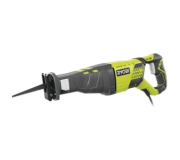
What is a reciprocating saw?
A reciprocating saw is a power tool with a narrow blade that moves back and forth, cutting material like a hand saw, but powered by a motor instead of human force. An electric hacksaw is not for fine carpentry edges: it's used when you need to quickly cut a board, pipe, branch, old frame, or part of a structure that's difficult to access with other tools.
What is a reciprocating saw used for?
A reciprocating saw cuts wood, plastic, thin metal, beams, rails, garden branches, pipes, and old fasteners. It's convenient for repairs, demolition, work in the garage, workshop, or around the house. The workpiece doesn't always need to be perfectly positioned on a table: the saw can be brought to the cutting point by hand.
For clean angled cuts, it's better to look at miter saws. A reciprocating saw is needed in other situations — when access, speed, and the ability to cut in tight spaces are important.
Reciprocating saw characteristics
Before buying, it's better to look not at the general description, but at the parameters that truly affect performance:
- motor power and 220 V mains power supply;
- cutting depth for wood, metal, and plastic;
- blade stroke frequency and speed control;
- blade attachment type and compatibility with various blades;
- weight, handle shape, cable length, and quick accessory change.
If neat, intricate cuts are needed, it's more convenient to use jigsaws. A reciprocating saw works more roughly but is better at trimming, cutting, and disassembling old materials.
Advantages of corded reciprocating saws
A corded electric hacksaw connects to an outlet, so it doesn't depend on battery charge. For a garage, home repairs, or work on a plot, this is practical: if there's a 220 V connection — you can cut without pauses for charging.
Power doesn't drop due to the battery, and the tool itself is easier to prepare for work. For long, straight cuts of sheet materials, electric circular saws are better suited, but for demolition, cutting pipes, branches, and old wood, a reciprocating saw is often more convenient.
How to choose a reciprocating saw?
First, you need to understand what the primary material will be. For branches, boards, and occasional repairs, a simpler corded model will suffice. For pipes, dense wood, demolition, and more frequent loads, it's better to choose a tool with a power reserve, a durable body, and convenient blade fixation.
Blades are considered separately. A wood blade does not replace a metal blade, and universal options don't always work well for everything.
Where to buy a reciprocating saw?
If you need a reciprocating saw, you can buy it on the Flash Army website. The catalog includes corded electric hacksaws for repairs, demolition, garden work, and workshops. You can compare power, configuration, power type, and price, and if it's difficult to choose — ask for a consultation. Orders are shipped across Ukraine without undue delay, so the tool arrives when it's needed for work.