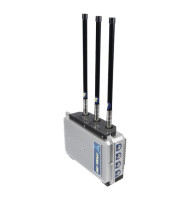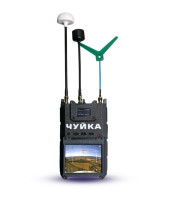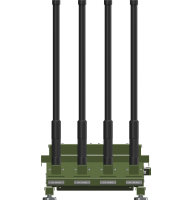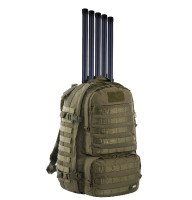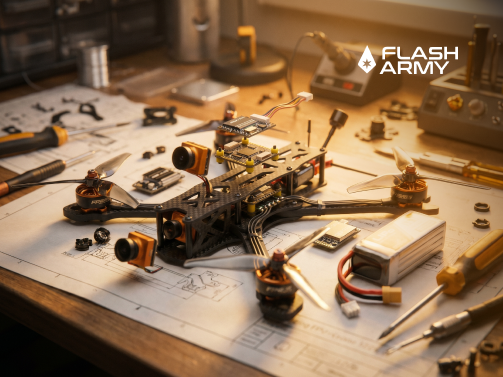
Today, FPV drones have become a widespread tool for precision strikes — they are small, relatively inexpensive, and real-time controlled. From the moment a target is detected until it is hit, sometimes only seconds pass — which is why countering FPV is no longer a highly specialized issue, but a complex task that combines detection, technical protection solutions, and safety measures.
The FPV threat affects both military and civilians. In frontline areas, volunteers, rescuers, logistics crews, and the civilian population are at risk. A drone can appear suddenly, change its flight path, and attack from an unexpected angle.
Effective drone countermeasures begin not at the moment of attack, but much earlier — with preparation, understanding the enemy's capabilities, and correctly selecting drone protection equipment.
Drone Detection
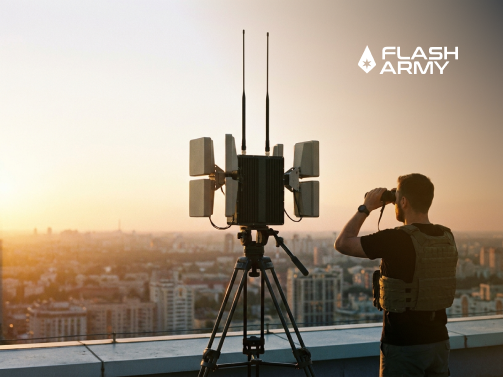
The most effective countermeasure against FPV drones begins with their timely detection. Where the human eye cannot spot a UAV, technical detection and surveillance systems become helpful: they can detect FPV much earlier, gaining you time for protection or redeployment.
Drone Detectors
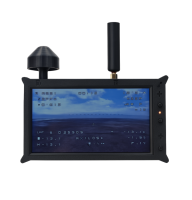
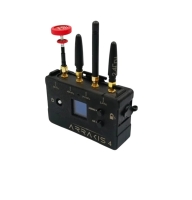
- The most common are drone detectors — devices that work with the radio spectrum. FPVs are controlled by an operator via a radio channel and transmit a video signal in real time. This means that a characteristic signal is present in the air, which can be detected.
Modern detectors analyze drone control and video transmission frequencies and signal their detection — such devices can warn of an approaching UAV several kilometers away.
The effectiveness of detector systems depends on:
- the frequency range they cover;receiver sensitivity;
- the ability to distinguish FPV from other signal sources (friendly or enemy EW, which has the same signal frequencies as drones).
A detector is the first level of drone protection. It acts as "eyes" for the user and warns of a threat in advance, thereby increasing the chances of survival.
Acoustic Sensors
During flight, an FPV drone emits a characteristic sound from its electric motors and propellers. In quiet conditions, it can be heard, but during combat, in enclosed terrain, or with additional noise, a person is not always able to quickly determine the direction of the sound source.
Acoustic sensors recognize the sound of a drone's operation and help determine its approach direction. Such systems are especially useful when the radio signal is difficult to intercept or when the drone operates on non-standard frequencies. This particularly applies to fiber-optic FPV drones, which do not emit a radio signal and remain invisible to most radio detectors.
It is important to understand that an acoustic FPV drone detection system is not a universal solution, as weather conditions and the environment in which a person is located can interfere with the device's operation and affect accuracy.
Protection and Neutralization
After detecting drones, the next step is to affect the device itself, i.e., protection. This can be technical, engineering, or kinetic, but in most cases, a combination of these methods works best.
Protective Structures
The simplest way to protect against FPV is through protective structures. Nets, coverings, canopies, and other types of fortifications — all are aimed at preventing a direct drone hit.
Such structures do not destroy the drone but reduce the effectiveness of the attack. Even partial coverage can provoke premature UAV detonation, thereby moving the explosion away from the target.
EW Jammers
Electronic warfare is one of the key areas when it comes to anti-drone weapons. The precision of FPV operation depends on stable communication with the operator, and disruption of this channel can lead to loss of control and destruction of the device.
EW jammers create interference in the drone's control and video transmission ranges: in practice, this looks like sudden "blinding" and disorientation of the device. The effectiveness of EW operation directly depends on correctly selected frequencies and power.
Anti-drone EW systems can be stationary or mobile. Their use requires an understanding of the overall radio environment, as uncontrolled emissions can also affect one's own communication devices of any type (from standard radio or mobile GSM communication to satellite Starlink).
Anti-Drone EW Rifles
Another category of protection is portable devices that allow the operator to target a specific aim — anti-drone rifles.
The principle of operation of these rifles is similar to classic EW systems, but with the radio signal focused in a specific direction in the form of a conditional beam. This reduces the collateral impact on all other radio frequencies around and allows for pinpoint operation.
An EW rifle is an effective element of FPV countermeasures, especially in conditions of a rapid attack, but its operating range is limited, and the result depends on the type of drone and the rifle's settings.
Net Guns
Anti-drone net guns work on the principle of mechanical interception. A fired net entangles the propellers, causing the FPV to lose its ability to fly and detonate. Such an anti-drone is used at a relatively short distance and requires shooter accuracy.
The advantage of using net guns is the minimal risk of secondary FPV damage, especially in populated areas, but net guns are not effective in all scenarios. Drone speed and maneuverability can reduce the probability of a hit.
Using Small Arms
Small arms against drones remain an extreme and least effective measure. The exception is the use of shotgun (smoothbore) weapons, but hitting an FPV in this way is possible at close range and with appropriate training.
The difficulty of protection with small arms lies in the high speed and small size of the target, so in many cases, such weapons are used as a last resort when other drone countermeasures have failed.
Conclusion
The Flash Army catalog presents proven solutions for countering drones — from detectors and EW jammers to mobile anti-drone systems. An anti-drone or other system element can be selected for specific conditions and tasks. Rational choice and correct equipment configuration allow for the creation of an effective protection system that works in real-world conditions.