You watched
Catalog
2
0
0

Spider Antennas

There are no products to list in this category.

Continue
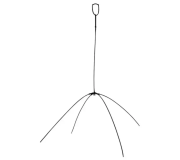
Spider Antennas

What is a Spider antenna?

A Spider antenna is an external antenna with several spaced elements, which is connected to a two-way radio or radio station via a cable and placed separately from the equipment. This setup allows the signal reception point to be moved to a location where it is less obstructed by gear, equipment, or terrain, so communication behaves more stably without sharp drops when changing position or distance. In such tasks, different types of solutions, including dipole antennas, are often compared to understand how the signal behaves under various conditions.

What is a Spider antenna used for?

A Spider antenna is used where communication is needed not only near the radio but also at a distance between points, for example, when working between positions or transmitting a signal through cover. When the antenna is moved higher or to the side, the quality of reception and transmission itself changes, making the signal more even and less dependent on user movement. In such conditions, it is used as an external antenna to move the communication point to a more advantageous position.

Spider antenna characteristics

The key parameter is the frequencies for which the Spider antenna is designed, as it must match the range of the two-way radio or radio station. If there is a discrepancy, even correct installation will not yield results. The second point is the cable: its length affects the antenna's placement, but at the same time adds signal loss, especially over longer distances, so it is important to consider the balance between convenience and quality. The third factor is the design, where rigid fixation of elements is important, because any displacement changes the operating characteristics and affects communication stability.

How to choose a Spider antenna?

If you need a Spider antenna, it should be purchased taking into account specific conditions, not just its appearance or cable length. For working from cover or equipment, options that allow the antenna to be moved outside are usually chosen, while in open terrain, the installation height and location relative to obstacles play a greater role. You also need to check compatibility with connectors and equipment, particularly Motorola radio stations, to avoid signal loss due to improper connection.

Where to buy a Spider antenna?

When faced with the task of buying a Spider antenna, it is important to immediately focus on frequency compatibility, connection type, and usage conditions, otherwise, it will become clear only after the first use. At Flash Army, it is convenient to select an antenna for a specific radio and work scenario without unnecessary trial and error, and also to immediately resolve communication issues in one place if you need to buy antennas along with cables and compatible elements.

Frequently asked questions about products in this category Spider Antennas

Spider antennas are external omnidirectional antennas with multiple radial elements that extend from a central part, resembling spider legs. They are connected to a two-way radio or radio station via a cable to relocate the signal reception and transmission point to a more convenient position. Such an antenna is useful where the standard antenna on a two-way radio operates unstably due to cover, equipment, terrain, or low elevation.
Spider antennas are designed to improve communication between two-way radios, base stations, or field posts. They are used when an antenna needs to be raised higher, moved out of cover, or placed where the signal passes more smoothly. In military conditions, this helps maintain communication between positions, equipment, or groups. In civilian tasks, such antennas may be needed for radio communication, security, field work, and temporary communication points.
Spider antennas vary by frequency range, connection type, cable length, two-way radio compatibility, and mounting design. There are models without a cable, options with 5, 10, 15, or 20 m cables, and antennas for specific Motorola two-way radios. For some tasks, compactness and quick installation are important; for others, the ability to place the antenna further away from the operator, vehicle, or shelter.
The most common spider antenna design consists of a central hub with a vertical emitter, radial elements, and a cable for connecting to a two-way radio. The radial elements function as part of the antenna system and help form a more stable radiation pattern. In field conditions, not only the antenna itself is important, but also how it is suspended, whether the cable is kinked, and whether the elements touch metal, the ground, or equipment.
Spider antennas are made of metal conductors, cable, insulating elements, a connector, and mounts. The radial parts usually require a material that holds its shape and does not break after several bends. The cable must be flexible enough, but not too weak, as a remote antenna is often carried, coiled, suspended, and redeployed. The weak point in such antennas is often not the metal, but the cable, connector, or connection point.
Spider antennas are selected to match the operating frequency range of a two-way radio or radio station. This category includes models for the 136–174 MHz range, as well as variants for 390–410 / 410–430 MHz. If the antenna frequency does not match the equipment's frequency, communication may perform worse even with a proper cable and correct installation. Therefore, the frequency range is the first thing to check before use.
The main advantage of a spider antenna is the ability to move the communication point to where the signal is less obstructed by people, armor, vehicles, walls, or terrain. In the military sphere, this is useful for communication from shelters, vehicles, temporary posts, or positions where a two-way radio inside performs worse. In the civilian sphere, such antennas help organize radio communication at facilities, for security, construction, outdoor events, or in areas with complex terrain.
Spider antennas in Ukraine cost approximately from UAH 500 for basic models without a cable. Options with a cable, compatibility with specific two-way radios, greater extension length, or professional design cost more. The price is influenced by the brand, frequency range, cable length, connector, gain, package contents, and the equipment the antenna is designed for.
For a two-way radio in a shelter, vehicle, or low-lying position, the standard antenna is often insufficient: the signal is obstructed by walls, metal, terrain, and the operator's location. In such situations, a remote spider antenna with a cable can help, as it can be raised higher or moved away from obstacles. Flash Army offers models for Motorola two-way radios, cable-free options, and antennas with 5, 10, 15, or 20 m extensions. Before purchasing, it is important to verify the frequency range and compatibility with your specific two-way radio, as outwardly similar antennas may be designed for different tasks.