You watched
Catalog
4
0
0

3D Printers

There are no products to list in this category.

Continue
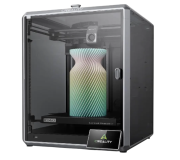
3D Printers

What is a 3D printer?

A 3D printer is a device that creates physical parts from a digital model. A file with a drawing is loaded into the program, after which the printer gradually forms the object layer by layer.

Plastic or photopolymer is most often used for printing. This is why 3D printers are used today in workshops, laboratories, and even in the development of modern devices. 

Purpose of a 3D printer

A modern 3D printer helps quickly create small parts, enclosures, mounts, or prototypes. This is convenient where a part needs to be made without lengthy production. This technology is used to create spare parts for drones and quadcopters, toys, souvenirs, and other products.

Such technologies are also actively used in technical departments and laboratories. They are often combined with robotics.

How 3D printers work

The process looks quite simple. The printer receives a model in digital format and begins to build it in layers using special plastic or photopolymer. To create any model, a 3D model in digital format is required so that the device can read it and build a scheme for its printing.

In FDM models, plastic filament is melted and applied in thin lines. In photopolymer systems, the material hardens under the action of light.

What are 3D printers used for?

3D printing is used in various fields. These can be parts for equipment, device enclosures, or small tools.

Often, people decide to buy a 3D printer for tasks such as:

  • printing prototypes or small parts;
  • manufacturing enclosures and mounts;
  • repairing equipment and gear;
  •  creating training models.

3D printer specifications

Before you buy a 3D printer, you should pay attention to several parameters. They affect the accuracy and size of future models:

  • print area and maximum part size;
  • material type: plastic or photopolymer;
  • layer accuracy during printing;
  •  printer speed.

According to these characteristics, 3D printer prices may vary.

Recommendations for choosing 3D printers

For small workshops or training, compact models are usually chosen. They are easier to set up and take up less space.

For more complex tasks, an industrial or large 3D printer is used. Such devices allow working with large parts and various materials.

When working with equipment, auxiliary equipment is also often used. For example, tools for processing parts.

Where to buy a 3D printer?

When planning to buy a 3D printer, it is more convenient to compare several models by characteristics and working area.

The FlashArmy catalog presents over 13,000 products for technical tasks and workshops. Along with printers, portable charging stations are often chosen so that the equipment works even without a stationary network.

If you have questions about parameters or printing materials, specialists will help you choose a model. Orders are shipped throughout Ukraine.

Frequently asked questions about products in this category 3D Printers

A 3D printer is a device that creates three-dimensional parts from a digital model. It does not cut a shape from a finished blank, but builds up material layer by layer. This is how housings, mounts, mock-ups, repair parts, prototypes, and small-batch products are printed. It requires a model, printing material, and a correctly configured printer to operate.
In everyday life, 3D printers are used for small repair parts, organizers, mounts, models, toys, enclosures, and educational projects. In industry, they are needed for prototyping, test samples, custom brackets, workshop equipment, and small-batch production. It is convenient that a part can be modified in the model and printed again without a separate mold or a long production run.
In the military sphere, 3D printers are used for housings, mounts, holders, adapters, drone components, antennas, and field equipment. This is useful when a small batch of non-standard parts is needed or a quick replacement of a broken element. Most often, not something complex is printed for the sake of printing itself, but simple working items that solve a specific problem on site.
The main types of printing are FDM / FFF plastic and LCD / MSLA photopolymer. FDM / FFF works with plastic filament, which is melted and applied in layers. This format is often chosen for technical parts, enclosures, and functional products. LCD / MSLA prints with photopolymer resin and provides higher detail, making it better suited for small, precise models, prototypes, and parts with complex geometry.
3D printers print with PLA, PETG, ABS, ABS+, ASA, TPU, HIPS, Nylon, PA12, PC, photopolymer resin, and other materials. PLA is convenient for simple models and learning, PETG better withstands loads and moisture, ABS and ASA are more often chosen for stronger technical parts, and TPU is suitable for flexible products. For engineering tasks, it is important to look not only at the material name but also at the printing temperature, shrinkage, strength, and operating conditions of the finished part.
3D printers come in open and enclosed designs. Open models offer easier access to the work area and are often chosen for educational purposes, household tasks, and basic printing. An enclosed casing better maintains internal temperature, protects the model from drafts, and is beneficial for materials sensitive to cooling. The design should be selected based on materials and tasks, not solely on the printer's appearance.
A consumer 3D printer is usually simpler to set up, more compact, and designed for learning, hobbies, minor repairs, or simple technical parts. Professional models feature more stable mechanics, higher speed, better temperature control, an enclosed chamber, more precise calibration, and wider material compatibility. For home use, simplicity and reliability are important; for a workshop, repeatability of results, component lifespan, and the ability to print for extended periods without constant intervention are key.
A 3D printer does not produce a quality part on its own. It requires the right model, material, settings, and equipment maintenance. Printing can take many hours, parts sometimes need post-processing, and errors in temperature, adhesion, or calibration can easily ruin the product. There are also limitations in terms of build volume, layer strength, surface accuracy, and material compatibility.
In Ukraine, BambuLab, Creality, Anycubic, ELEGOO, FlashForge, and other brands of 3D printers are often chosen. BambuLab is valued for speed and convenience, Creality is often bought for home use, workshops, and education, while Anycubic and ELEGOO are well-known among users of resin 3D printing. The brand is important, but the specific model still needs to be selected based on print type, materials, build volume, and tasks.
3D printers in Ukraine cost approximately from UAH 8,400 for basic models. More expensive printers have a larger build volume, enclosed chassis, higher speed, more precise calibration, better mechanics, support for more complex materials, network interfaces, and additional control systems. The most expensive model is not always necessary for a first printer, but for technical printing, it is better not to skimp on stability, structural rigidity, and proper operation with the required materials.
When buying a 3D printer from Flash Army, it's best to start with the materials you plan to print. For simple household parts and learning, an open FDM/FFF model is sufficient; for technical products made of ABS, ASA, or PC, an enclosed casing is more convenient; and for small, precise parts, you should look towards LCD/MSLA printing. If the printer is for a workshop, drone repair, or regular prototyping, not only the brand and price are important, but also the build volume, temperature stability, connectivity interfaces, and material availability.