You watched
Catalog
1
0
0

Military Binoculars

There are no products to list in this category.

Continue
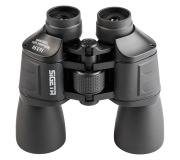
Military Binoculars

What are military binoculars?

Military binoculars are specialized optical devices designed for long-range observation. Army binoculars allow for clear target viewing, territory control, and field observations in any conditions. Professional binoculars combine durable construction, high-quality lenses, and precise optics, making them an indispensable piece of a soldier's equipment. 

Purpose of military binoculars

The main task of tactical binoculars is to enable observation from a safe distance. Binoculars for the Armed Forces help with terrain orientation, target identification, and situation control during field operations. Army binoculars are used both day and night, often supplemented with aiming reticles or lens illumination systems for better vision in challenging conditions. However, for working in darkness or low visibility, thermal imagers are more suitable.

Characteristics of military binoculars

When choosing binoculars, consider:

  • objective lens diameter — affects light gathering and image clarity;
  • exit pupil diameter — determines viewing comfort;
  • lens illumination — for working in low visibility conditions;
  • focus adjustment — allows for quick and precise acquisition of a clear image.

Additionally, when buying binoculars, it's important to evaluate the observation range and the overall weight of the binoculars, as mobility and ease of use are crucial for field conditions. Binocular prices can vary based on the specified characteristics.

How to choose military binoculars

To buy military binoculars, you should determine the primary task: for daytime observation, models with a large objective aperture are suitable; for night observations, those with illumination and high-quality optics. Tactical binoculars must be durable, easy to use, and suitable for field operation conditions.

Where to buy military binoculars?

Reliable army binoculars can be ordered from Flash Army. Here you will find army and professional binoculars for the Armed Forces of Ukraine and tactical use. Flash Army guarantees the quality of military equipment, fair prices, and fast delivery throughout Ukraine.

Frequently asked questions about products in this category Military Binoculars

Military binoculars are field binoculars for long-range observation in normal operating conditions, not for a one-time trip into nature. They usually have a stronger body, rubber coating, better moisture protection, and a more practical design for constant wear. Essentially, this is optics chosen not for compactness, but for reliability and a clear image.
Binoculars most often have an objective lens of 25, 32, 42, or 50 mm. The larger the diameter, the more light enters the optics. Because of this, a 10x50 performs better in twilight than a 10x25, but the binoculars themselves will be larger and heavier. For constant carry, 8x42 or 10x42 are often chosen, as they offer a good balance between weight and light-gathering capability.
The most common magnifications are 8x and 10x. 8x is easier to hold steady, provides a calmer image, and has a wider field of view. 10x offers greater magnification, but hand tremors are more noticeable. 12x options are also available, but they are harder to use without support or a tripod.
Binoculars most often use two schemes — Porro and Roof. Porro is a classic, wider design where the optical tubes are not in a straight line. Such binoculars often provide good image depth for their price. Roof binoculars are more compact, have a straighter shape, and are more convenient to carry, which is why they are very common in modern tactical models.
Without going into too much theory, there are compact, universal, and more light-gathering models. Compact ones are lighter but weaker in low light. Universal models are most often 8x42 or 10x42, and these are the most frequently purchased. Binoculars with a large objective lens, for example 50mm, perform better in low light, but are less convenient for constant carrying. Separately, there are also models with a rangefinding reticle, a sealed body, or a tripod mount.
The housing is usually made of aluminum, polycarbonate, or other durable composite materials. The exterior often features rubber to prevent the binoculars from slipping and to absorb impacts. Lenses are optical glass, often with anti-reflective coatings. In good models, the housing is also sealed, and nitrogen or argon is injected inside to prevent the optics from fogging due due to temperature changes.
The price depends on magnification, objective lens diameter, glass quality, prism type, and housing protection. Simpler models are cheaper. If it's binoculars with good light transmission, a sealed housing, gas-filled, and a clear image in twilight, the price will be higher. Here, the difference in cost very often reflects the quality of the optics, not just the brand name.
You can buy military binoculars on the Flash Army website. Before ordering, it's best to immediately consider magnification, objective diameter, weight, field of view, and type of construction, because a small pocket-sized binocular, a versatile 8x42, and a heavier 10x50 are three completely different use cases.