

Chargers for Drones and Quadcopters
Sort By:

In stock

In stock

In stock


In stock

In stock

In stock

In stock

In stock

In stock
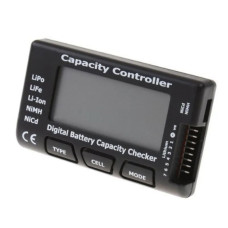




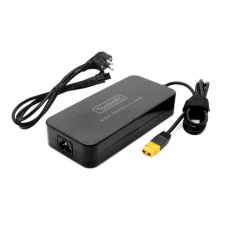
A charger for drones and quadcopters is specialized equipment that allows for efficient charging of UAV batteries, ensuring their operability and readiness for the next flight.
Characteristics of a high-quality drone charger.
Key advantages that distinguish modern chargers include:
- Power. This determines charging speed and the ability to service high-capacity batteries.
- Speed. Modern models significantly reduce the time required to prepare a drone for its next flight.
- Protection. Built-in safety systems prevent overheating, overcharging, and short circuits.
Why do drone operators trust Flash Army? We have tested dozens of charger models available in Ukraine and kept only the best — those that withstood intensive loads in real combat conditions and meet the highest safety standards. If you need a reliable charger for a quadcopter or drone, browse the Flash Army assortment and choose the best.
Expand
Frequently asked questions about products in this category Chargers for Drones and Quadcopters
A drone charger is equipment that charges drone batteries and controls the current supply process. For FPV builds, a regular USB charger is often insufficient because batteries can have multiple cells, different voltages, high current, and a balance connector. A good drone charger doesn't just supply power; it helps charge the battery evenly and without undue risk to the battery.
Drone chargers can support LiPo, Li-ion, LiHV, NiMH, NiCd, Pb, and other battery types, depending on the model. For FPV, LiPo and Li-ion are most often important, as they are used in most builds. Before purchasing, you need to check not only the battery type but also the number of cells: 1S, 2S, 4S, 6S, or another format used on a specific drone.
The maximum charging current depends on the charger's power, power supply unit, number of channels, and the battery itself. In compact chargers, the current may be small, while powerful models for FPV can operate with tens of amperes, if the battery and power supply allow. A higher current is not always better: excessively fast charging heats the battery more and can wear it out faster if the battery is not designed for such a mode.
Drone chargers can operate from a 220V AC outlet, an external power supply, car power, a power station, or another DC source. Some models have a built-in power supply, while others require a separate adapter. For home use, charging from a wall outlet is convenient, but for field operations, it's more important whether the device can be powered from a field source and charge batteries without access to a stationary grid.
Drone chargers may feature protection against overheating, overvoltage, overcurrent, short circuits, incorrect connection, and overcharging. For multi-cell batteries, balancing charging is crucial, where the device monitors the voltage of each cell individually. If the charger does not detect imbalance or operates without basic protections, the risk of damaging the battery is significantly higher.
Pulse chargers are lighter, more compact, and generally more efficient, making them more commonly used for modern batteries and FPV builds. Transformer chargers are simpler in operation but are heavier, larger, and less convenient for field use. For drones, pulse solutions are more often chosen due to the importance of compactness, precise current adjustment, support for various batteries, and proper charge control.
Professional chargers for FPV drones may feature multiple channels, cell balancing, storage mode for battery preservation, discharge, internal resistance check, current adjustment, profile memory, and compatibility with various battery types. Some models support parallel charging via a separate board, but careful attention to identical battery voltage is required. For regular flights, such features save time and help better monitor battery condition.
The price of drone chargers in Ukraine starts from UAH 1300. The final amount depends on power, number of channels, supported battery types, charging current, availability of a built-in power supply, and additional modes.
Drone chargers can be selected at Flash Army for specific batteries, assembly format, and operating conditions. Before purchasing, it is worth checking the battery type, cell count, charging current, power supply, and required modes — balancing, storage, or discharge. This makes it easier to choose a charger that truly fits the drone, rather than one that just has a similar connector.