Catalog
0
0

Hydraulic Power Units

Sort By:
Hydraulic Power Units

What are hydraulic power units?

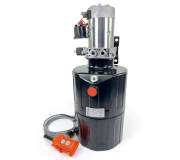
A hydraulic power unit is an assembly that generates a flow of working fluid and delivers it to a hydraulic system at a specified pressure. The fluid reaches the actuator through the motor, pump, reservoir, valve, and, of course, the lines.

A hydraulic power unit is needed where equipment must lift, press, move, or hold a load with a precisely defined force. It handles the power part of the work, and the drive then converts pressure into motion.

What are hydraulic power units designed for?

A hydraulic power unit powers presses, lifts, machine tools, hydraulic cylinders, and other equipment that operates on hydraulic drive. The pressure in the system determines the force with which the mechanism acts on a part or load, and the pump's capacity affects the speed of movement.

In workshops, such units are often used with jacks, pressing devices, and other automotive products for equipment repair and maintenance.

Types of hydraulic power units

Electric hydraulic power units are powered by an electric motor and are suitable for stationary machine tools, presses, and production systems. Hydraulic power units maintain stable operating parameters, which is why they are chosen for regular loads in a workshop or factory.

Gasoline and diesel models are convenient where there is no constant access to the power grid. They are used on construction sites, for field repairs, and for mobile equipment. Regular maintenance is required for proper engine operation: oils, filters, and spark plugs are changed according to the manufacturer's regulations.

Pneumatic units operate on compressed air and are suitable for facilities that already have a compressor system. Mechanical models have a simpler design and are used for tasks without high work intensity.

Characteristics of hydraulic power units

A hydraulic power unit is selected based on several basic parameters: engine power, pump capacity, maximum pressure, and reservoir volume. These indicators determine whether the system can operate without overheating, loss of force, and unnecessary pauses.

The type of valve, the number of working circuits, and the control method are important. A hydraulic power unit for a single drive can be compact, while for several mechanisms, a unit with a distributor, pressure gauge, and reserve capacity will be needed. A large reservoir dissipates heat better and helps maintain a stable fluid temperature under load.

How to choose a hydraulic power unit?

A hydraulic power unit must match the parameters of specific equipment: the required pressure, fluid consumption, drive type, and operating mode. For short cycles, a compact model may sometimes be sufficient, while for continuous operation, a unit with a larger power reserve and cooling is needed.

Also considered are power supply voltage, dimensions, mounting method, and access for maintenance. For a workshop that repairs motor vehicles, compact models are often chosen that do not take up much space but provide sufficient pressure for a pressing or lifting mechanism.

Where to buy a hydraulic power unit?

A hydraulic power unit is chosen not by its appearance, but by its compatibility with a specific press, lift, or other hydraulic equipment. It is necessary to check the operating pressure, pump capacity, reservoir volume, and power requirements.

Models for stationary and mobile systems with various power outputs are presented on Flash Army. A correctly selected hydraulic power unit reduces the load on components, maintains stable system operation, and helps avoid downtime due to parameter mismatch.

Expand