Catalog
0
0

Thermal Monoculars for Military Use

Sort By:
In stock
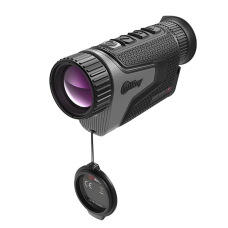
Thermal Imager INFIRAY (iRay) AFFO AP 13
1
27 820 UAH
Add to Cart
In stock
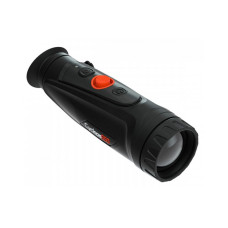
Thermal Monocular iRay Zoom ZH 50 v2
0
112 992 UAH
Add to Cart
In stock
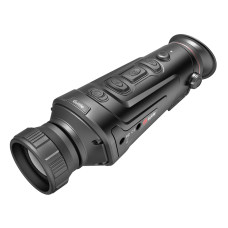
Thermal Imager INFIRAY (iRay) ZOOM ZH38 V2
0
102 720 UAH
Add to Cart
In stock
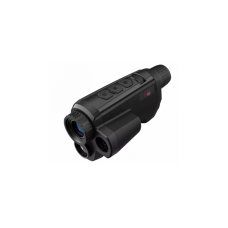
Thermal Imager INFIRAY (iRay) AFFO AL 25
0
51 060 UAH
Add to Cart
In stock
Thermal Imager Monocular IRay E3 max V3
0
61 632 UAH
Add to Cart
In stock
In stock
Thermal Monocular IRay E6 Pro V3
0
96 300 UAH
Add to Cart
In stock
Thermal Monocular iRay IRIS IL 19
0
48 792 UAH
Add to Cart
In stock
Thermal Monocular iRay Unique UH 50
0
107 856 UAH
Add to Cart
In stock
In stock
Thermal Monocular iRay IRIS IL35
0
69 764 UAH
Add to Cart
In stock
Thermal Monocular IRay Finder FH35R
0
87 740 UAH
Add to Cart
In stock
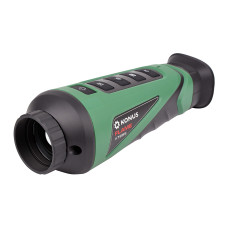
Thermal Monocular KONUS FLAME 640x512
0
88 944 UAH
Add to Cart
Thermal Monoculars for Military Use

What are thermal imaging monoculars?

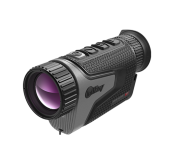
A thermal imaging monocular is a compact optical device that allows you to see the thermal radiation of objects. Its main advantage is that it works where conventional optics are powerless: in darkness, fog, or smoke. Thanks to modern technologies, thermal imaging monoculars have become an indispensable tool for military personnel and those involved in professional reconnaissance or observation. This equipment category also includes other optical observation devices.

Purpose of thermal imaging monoculars

The main function of the device is to ensure effective observation and reconnaissance at night or in conditions of limited visibility. Military personnel use it for:

  • detecting targets at long distances;
  • orientation in the terrain;
  • assessing threats and planning tactical actions.
When observing from a position, camouflage nets may be used.

Advantages of thermal imaging monoculars

A modern thermal imaging monocular has a sealed body, resistant to dust, moisture, and impacts. The image quality is ensured by a microbolometer and a heat-resistant display that works even with sharp temperature changes. Some models allow not only observation but also taking photos or videos. At the same time, the device remains lightweight, compact, and easy to use.

Tactical cases are used for transporting and protecting the device.
 

How to choose thermal imaging monoculars?

Before buying a thermal imaging monocular, you should pay attention to several characteristics:

  • matrix resolution and refresh rate;
  • target detection range;
  • battery life and capacity;
  • objective lens diameter and manual focusing capability;
  • type of thermal imaging module.

The choice depends on the specific tasks you face — short observations or long-term reconnaissance.

Where to buy thermal imaging monoculars?

Reliable and modern models can be ordered from Flash Army. Here you will find thermal imaging monoculars with a quality guarantee, tested in practice, with fast delivery across Ukraine. This equipment will become a reliable assistant in difficult conditions and help maintain a tactical advantage.

Expand

Frequently asked questions about products in this category Thermal Monoculars for Military Use

A thermal monocular is a compact thermal imager for single-eye observation that displays not visible light, but the thermal difference between objects, making people, equipment, or other warm targets visible even in darkness, fog, or smoke.
It is used for observation, searching, and detecting targets at a distance when it is important to quickly find a person, equipment, or another heat-contrasting object, rather than just looking forward as with conventional optics. The compact format also matters here: such a device is easier to carry, quicker to retrieve, and simpler to keep at hand when on an outing.
The principle is simple: the device reads the thermal radiation of objects, the matrix records the temperature difference, and then a thermal image of the scene is formed on the display. Therefore, a thermal imaging monocular does not require external illumination like night-vision devices.
The range among monoculars is wide: vehicle detection ranges from approximately 140 to 6510 m. This is easily explained – compact models and more powerful monoculars with large lenses are grouped in one section, so it's better to consider the range figure along with the sensor and focal length, rather than in isolation.
For a human target, the range is even wider: approximately 60 to 6000 m according to the section filters. In a real purchase, this characteristic is needed to understand whether a specific model will be sufficient for your observation distance, route, or task.
Most thermal monoculars have magnification up to 10x, but there are more powerful options. For example, the GUIDE TrackIR 50mm has 3.3x optical magnification, while the iRay IRIS IL 19 has 2x–8x digital zoom, so in this segment, it's important to look not only at the number itself but also whether it's optical magnification or digital zoom.
Flash Army offers models with matrix resolutions of 160x120, 256x192, 384x288, 400x300, 640x480, 640x512, and higher. In short, the higher the matrix resolution, the better the contours, thermal signatures, and fine details are visible at a distance.
If a more compact and lighter option for constant carry is needed, a monocular is often chosen; if longer observation and less eye fatigue are more important, then a thermal imaging binocular is more convenient. In other words, there is no single best option for everyone: a monocular wins in mobility, while the binocular format wins in comfort for longer work in the field.
Prices for thermal imaging monoculars currently start at approximately UAH 19,600 and go up to about UAH 181,390. Looking at the assortment, many models fall somewhere in the range of UAH 27–35 thousand for entry-level to UAH 100–155 thousand for more powerful solutions.
Thermal imaging monoculars can be selected and purchased at Flash Army. Before ordering, you should immediately check the detection range for humans and vehicles, the matrix, magnification, battery life, and whether a rangefinder is needed, because within the same category, the difference between models lies in their actual operational capabilities, not just the price.