Catalog
0
0

Антени Clover-Mushroom

Sort By:
In stock
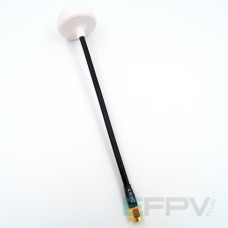
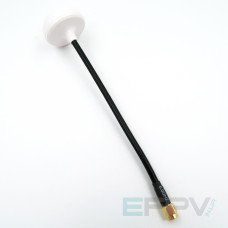
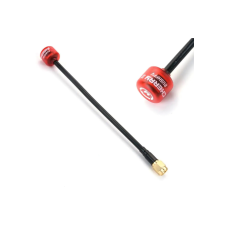
Clover antenna 4.8-6.2 GHz RHCP
3
520 UAH
-15%
440 UAH
Add to Cart
In stock
Clover antenna 6-7 GHz RHCP
2
520 UAH
-15%
440 UAH
Add to Cart
In stock
Clover antenna 4.8-6.2 GHz LHCP
1
500 UAH
-10%
450 UAH
Add to Cart
In stock
Antenna VTX Clover 5.3-6.0 GHz SKY VISION (R)
0
370 UAH
-14%
320 UAH
Add to Cart
In stock
In stock
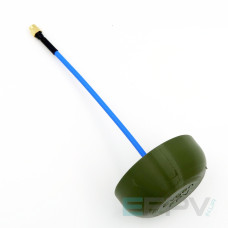
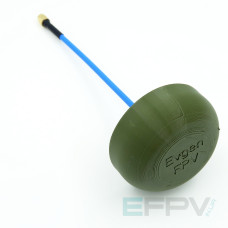
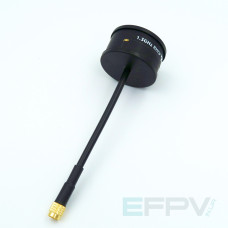
Antenna Mushroom 5.0 GHz
0
462 UAH
Add to Cart
In stock
In stock
Antenna Clover RHCP 3.8-4.2 GHz
0
495 UAH
Add to Cart
In stock
In stock
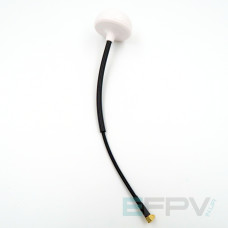
Antenna Mushroom 4.9 GHz
0
462 UAH
Add to Cart
In stock
In stock
Antenna VTX Clover 5.3-6.0 GHz SKY VISION (L)
0
370 UAH
-14%
320 UAH
Add to Cart
In stock
Antenna 6 cm Clover LHCP 4.9-6.2 GHz
0
462 UAH
Add to Cart
In stock
In stock
Антени Clover-Mushroom

What are Clover and Mushroom Antennas?

The Clover antenna and the Mushroom-type antenna are compact omnichirectional antennas with circular polarization. Their shape ensures uniform signal reception and transmission, which is critical for operation in conditions where the directivity of the transmitter or receiver is constantly changing.

Purpose of Clover and Mushroom Antennas

Clover and Mushroom antennas are designed for operation where connection stability is crucial. They are used in military drones, portable two-way radios, and mobile systems where the transmitter and receiver constantly change position. Thanks to circular polarization, the clover antenna maintains the signal even under interference conditions, ensuring communication reliability in a dynamic environment.

Main Antenna Characteristics

Clover and Mushroom are characterized by circular polarization, which guarantees the efficiency of reception and transmission regardless of directivity. Important parameters are the operating frequency range, power, and gain, which determine the range and stability of the signal. The antenna design provides a wide radiation angle, which is critical for drones and mobile systems in field conditions.

How to Choose Clover and Mushroom Antennas?

When choosing, consider: the circular polarization side (RHCP or LHCP), operating frequency range, connector type, as well as material, size, and weight. Compatibility with your system's transmitter and receiver is equally important.

Where to Buy Antennas?

On Flash Army, you can select a Clover or Mushroom for a specific video transmitter or receiver and clarify compatibility before ordering. This is especially useful if the antenna needs to be replaced due to damage: it is enough to know its frequency, polarization, and connector so as not to alter an already assembled FPV system due to an incompatible connector or a different polarization type.

Expand

Frequently asked questions about products in this category Антени Clover-Mushroom

A Cloverleaf antenna is a circular antenna often used in FPV systems. Its design consists of several curved elements that form circular signal polarization.
Thanks to the signal polarization elements, the cloverleaf antenna receives video signals more stably even when the drone changes its position in the air.
Clover-Mushroom antennas typically have a gain of about 1–3 dBi. This is a small value, but such an antenna provides a stable signal in a wide sector. This is why a cloverleaf antenna is often used for FPV video reception.
Clover antennas are manufactured for specific frequencies. Most often, a clover antenna operates in the 1.2 GHz, 2.4 GHz, or 5.8 GHz bands. These frequencies are used in FPV video transmission and some electronic warfare systems.
A Cloverleaf antenna can have two types of circular polarization: RHCP or LHCP. RHCP stands for Right-Hand Circular Polarization, and LHCP for Left-Hand. For stable operation, the transmitter and receiver must use the same type of polarization.
A cloverleaf antenna emits a signal in all directions around itself. Directional antennas work differently – they concentrate the signal in a specific direction. This is why a cloverleaf antenna is used where signal stability is important during drone movement.
Cloverleaf antennas are most often used in FPV video transmission systems. They work well on drones and operator ground stations. Such antennas are also sometimes used in some EW systems where circular signal polarization is required.
Clover antennas can have different types of connectors depending on the equipment. The most common are SMA, RP-SMA, or MMCX. Before connecting, it is worth checking the connector's compatibility with the transmitter or receiver.
Cloverleaf antennas are typically made from copper or brass conductors.
Metal elements are often covered with a plastic or polymer casing that protects the structure. Such a casing makes the clover antenna resistant to mechanical damage.
Cloverleaf antennas are sold in Ukraine at the specialized military equipment store FlashArmy. These antennas are used in drone video transmission systems, so they are often offered together with FPV transmitters, receivers, and other components. Before purchasing, it is worth checking the operating frequency, type of circular polarization (RHCP or LHCP), and connector compatibility with your equipment.