

EW System Modules
Sort By:
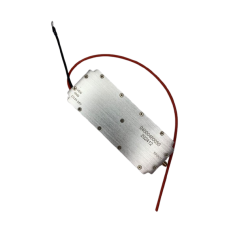
In stock
Module 400-460 Mhz 50W pseudo-digital
13 550 грн.
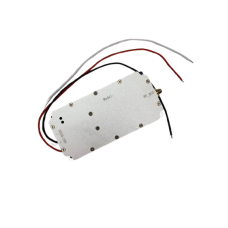
GAN Module 2350-2500Mhz 60W
11 000 грн.
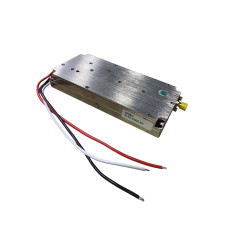
GAN Module 5150-5300 Mhz 60W
14 375 грн.
Modules for EW Systems
Modules for EW systems are specialized components that enable electronic warfare operations: creating interference, suppressing signals, jamming communication channels, and protecting against enemy radio waves. Each EW module has its own function: receiving, analyzing, amplifying, transmitting, or blocking signals within a specified frequency range. Such modules are the foundation of modern defense infrastructure, adapted to the needs of mobile or stationary platforms.Purpose of EW Modules
The main task of EW modules is to detect and jam enemy signals: drones, GPS navigation, communication systems, and radar. They are used for:- creating active interference,
- protection against UAV attacks,
- blocking control frequencies,
- disabling enemy transmitters.
Types of EW Modules
The choice of an EW module depends on the tasks, operating conditions, and technical compatibility with other system elements. The most common classifications are by:- frequency range (low, medium, high, multi-band),
- power (from low-power to broadband),
- housing type (water-resistant, reinforced, compact),
- connectors (for connecting external antennas or power),
- control interfaces (USB, Ethernet, radio control, etc.).
Key Module Characteristics
Quality EW modules have clearly defined parameters that affect efficiency:- signal transmission power (up to several watts or tens of watts depending on the objectives),
- VSWR (Voltage Standing Wave Ratio) — critically important for signal stability,
- dimensions — from pocket-sized to full-sized,
- control interface — for software configuration or manual control,
- compatibility with other EW equipment or elements of ground infrastructure.
How to Choose Modules for EW Systems?
First of all, when choosing modules for EW, pay attention to:- operating conditions (front line, stationary, mobile group),
- type of interference to be created (drone jamming, base protection, interception),
- required frequency range and compatibility with current stations,
- ability to connect to external antennas,
- housing type — especially important for field conditions.
Expand
Frequently asked questions about products in this category EW System Modules
EW modules are functional blocks of an electronic warfare system that form and generate a jamming signal. They are responsible for creating interference in specified frequency bands and controlling operating parameters. It is these modules that determine the effectiveness of impact on control, navigation, and data transmission channels.
EW modules are typically categorized by frequency bands, such as 400–1000 MHz, 1.2–1.6 GHz, 2.4 GHz, and 5.8 GHz, as well as by power level. Power can range from approximately 10–20 W in compact solutions to 100–300 W and more in powerful systems. The choice depends on the task, effective range, and type of targets.
The modules generate radio interference in the corresponding frequency bands, blocking the useful signal. This complicates or completely disrupts the transmission of commands, video, and navigation data. Effectiveness depends on power, tuning accuracy, and distance to the signal source.
EW modules are typically housed in metal or composite enclosures with protection against overheating and external factors. Control is achieved via button panels, toggle switches, or digital interfaces through controllers. The specific implementation depends on the system's class and level of automation.
Key parameters include frequency range, power, cooling efficiency, and compatibility with other system components. Operational stability and parameter adjustability are also important. The choice depends on the application scenario and operating conditions.
EW modules are typically connected via coaxial cables with SMA, N-type, or similar connectors. Power is supplied by 12V, 24V, or 220V sources, depending on the system's power. Connection reliability affects signal transmission efficiency and operational safety.
The cost of EW modules in Ukraine typically starts from UAH 10,000–30,000 for basic solutions and can exceed UAH 50,000–150,000 for powerful configurations. Maintenance most often requires cables, connectors, cooling systems, and power supplies. The price and set of spare parts depend on power, frequencies, and operating conditions.