Catalog
0
0

Security Window Film
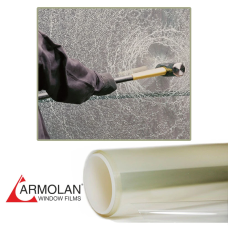
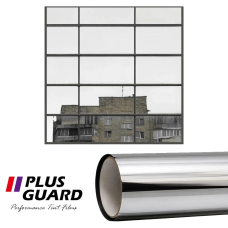
Sort By:
Security Window Film
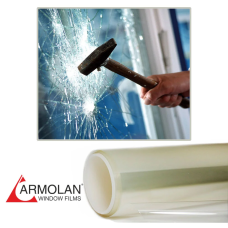
What is window security film?

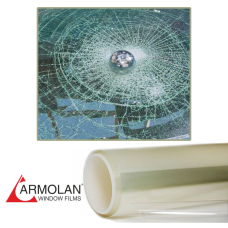
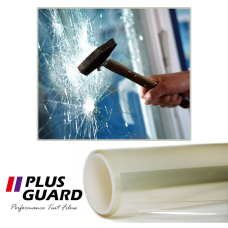
Window security film is a transparent polymer layer applied to the inside of a glass pane. While it doesn't make the window bulletproof, it prevents the cracked pane from shattering across the room after an impact. The fragments remain adhered to the film's adhesive layer. Protective window film is almost invisible if the glass is clean and there's no dust under the material.

What is window security film used for?

Armored window film reduces the scattering of fragments after a strong impact, a falling object, an explosive wave, or an attempted break-in. It is applied in apartments, offices, shops, schools, workshops, and on glass doors. Security systems signal danger, while the film holds the damaged glass in the frame longer.

Characteristics of window security film

The effectiveness of protective film is most influenced by:

  • thickness — thinner film restrains small fragments, thicker film better holds a cracked pane;
  • adhesive layer — prevents glass from crumbling after impact;
  • transparency — important for living rooms and display windows;
  • scratch resistance — the surface stays clean longer;
  • roll width — a single pane works better than several strips;
  • UV protection — curtains and furniture fade less.

During installation, adhesive tapes protect the frame, and a squeegee removes water from under the film.


Advantages of using window security film

Protective window film doesn't remove cracks, but it reduces the number of sharp fragments on the floor, furniture, and windowsill. Window security film also complicates quick access through broken glass: the pane cracks but still holds together. The protection works without power or separate control.

Recommendations for choosing window security film

For a child's room, kitchen, or internal glass doors, a film that holds fragments after an accidental impact will suffice. A display window, ground floor, or panoramic glazing requires thicker material and perimeter fixation. Armored window film should cover the glass without seams and extend close to the seal. Before application, remove dust, grease, old glue, and silicone. Household appliances and other heavy objects should not be positioned to strike the glass if they fall.

Where to buy window security film?

To order, you need the exact width and height of each glass pane and extra for trimming. A too-narrow protective window film will force a seam in the middle and weaken the protection. When the roll, squeegee, knife, and installation materials are gathered in one order on Flash Army, the film can be applied without accidental substitutions or unsuitable tools.

Expand

Frequently asked questions about products in this category Security Window Film
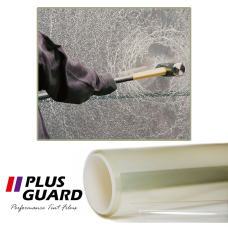
Window safety film is a transparent or tinted polymer layer with an adhesive base applied to glass. After the glass is damaged, the film holds a significant portion of the fragments together and reduces their scatter. It does not turn a regular window into bulletproof glass.
Window protective film is needed where it is important to reduce the danger from fragments during an impact, accidental breakage, or other mechanical damage to the glass. Thick protective films also complicate rapid penetration through a broken window, as the damaged glass remains bound by the film for a longer time.
Protective films differ in thickness, strength, purpose, and fixation method. In appearance, they can be transparent, tinted, or mirrored. Films for architectural and automotive glass are produced separately. The level of protection is determined by the characteristics and test results of a specific material, rather than solely by its color or thickness.
The impact-resistant film features a polymer layer and adhesive system designed to hold damaged glass in place. The main purpose of standard window tint film is to alter light transmittance, reduce glare, or block solar heat. There are combined films that integrate both functions. Therefore, a tinted color by itself does not mean the material has certified impact-resistant properties.
There is no universal thickness. As the thickness increases, the strength of the film itself grows, but the result also depends on the type of glass, the adhesive layer, and the fixation in the frame. For protection against a blast wave or intrusion attempts, it is necessary to check not only the thickness, but also the test protocols of the specific system.
UV protection depends on the specific film. Some protective series block up to 99% of ultraviolet radiation, but this characteristic must be checked in the manufacturer's specification. Transparent impact-resistant film does not necessarily noticeably reduce room heating. This requires material with declared sun protection characteristics.
The film is installed according to the manufacturer's instructions. For materials installed using the water method, the glass is cleaned, moistened with the installation solution, the sheet is aligned, and the liquid is removed with a squeegee. In systems with increased requirements for retaining damaged glass, additional fixation of the film to the frame using a profile or a special sealant may be applied. The mounting method is determined by the manufacturer of the specific system.
Automotive armor film helps hold fragments together when glass is damaged and can have additional tinting or sun-protection properties. These need to be checked individually for each specific material. After applying the film, the overall light transmittance of the glass must comply with current requirements. This applies especially to the windshield and the glass in the driver's forward field of view: Ukrainian regulations require a light transmittance of at least 70%.
The price of protective film starts at approximately UAH 250 per m². Thicker protective materials, automotive films, and options with additional sun-protection properties cost more. The price is influenced by thickness, roll width, design, and manufacturer.
Armor film is selected taking into account the type of glass, installation location, and required area. When ordering on Flash Army, you can clarify whether the chosen film is suitable for specific glass and what protective characteristics the manufacturer claims for it.