You watched
Catalog
1
0
0

Optical Sights for Military Use

There are no products to list in this category.

Continue
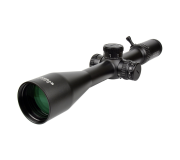
Optical Sights for Military Use

What are optical sights?

Optical sights are special devices that help military personnel increase shooting accuracy and combat effectiveness. They allow seeing targets at greater distances, better controlling weapon balance, and making decisions faster in real combat conditions. Optical sights have become an integral part of modern military equipment, as the outcome of an operation often depends on their quality.

How optical sights work

The principle is simple: a system of lenses magnifies the image of an object, and adjustments allow the sight to be fine-tuned for specific conditions. Modern optical sights offer windage, elevation, and range correction, and some models are equipped with laser illumination or night mode for operations in the dark.

Types of optical sights

They are conventionally divided into two types:

  • Fixed magnification sights – simpler to use, reliable, and durable.
  • Variable magnification sights – more versatile, allowing magnification adjustment for different distances.

Advantages of optical sights

Key advantages:

  • durable construction that withstands loads;
  • waterproof and fog-proof;
  • multi-coated lenses providing a clear image;
  • accuracy even in challenging weather conditions.

How to choose optical sights?

Before you buy optical sights, consider several factors: the range you plan to operate at, the magnification level, the possibility of fine adjustment, and the weight of the sight to avoid overloading the weapon. It is important to choose models that combine accuracy and reliability, as this directly affects the outcome. Depending on your needs, another type of sight, such as thermal imagers, may be more suitable.

Where to buy optical sights?

You will find high-quality optical sights for military personnel at Flash Army. We offer proven models that combine modern technology, durability, and convenience. Fast delivery, fair prices, and a quality guarantee for military equipment from the manufacturer make purchasing as simple and reliable as possible.

Frequently asked questions about products in this category Optical Sights for Military Use

Optical sights are magnified sights through which the shooter sees the target closer and in more detail. Inside, there is a system of lenses and a reticle, and the magnification in such models can be fixed or variable — for example, 3-9x40, 1-6x24, 4-16x50, 5-25x56. That is why optics are needed not for a quick aiming point, like a red-dot sight, but for working at a distance, with smaller targets, and for more precise aiming.
The principle of operation is simple: the objective lens collects light, the lens system forms and magnifies the image, and the shooter sees it through the eyepiece along with the reticle. In variable optics, magnification changes due to an internal group of lenses, so the same scope can operate at both lower and higher magnifications. Bushnell explicitly explains that magnification is affected by the shape and arrangement of the lenses, and the objective lens diameter determines how much light the scope collects.
For close range and fast operation, a red-dot sight is often preferred. For longer-range work, smaller targets, and situations requiring magnification, an optical scope is more convenient. This is clearly visible even in typical formats within manufacturers' product lines: red dots are separate, and riflescopes are separate, with magnifications of 1-4x, 1-6x, 3-9x, 4-16x, 5-25x. In other words, a red-dot sight means speed, while optics mean magnification and more precise work at a distance.
Various reticle types are used in optical sights: Duplex, BDC, MOA, MRAD, Mil-Dot, and derivative variants with markings for corrections. For example, Vortex Venom 5-25x56 and Viper PST Gen II use hash-marked reticles with MOA or MRAD subtension lines, while the Strike Eagle 1-8x24 FFP features an EBR-8 BDC MOA reticle. Thus, a simple reticle is for basic aiming, while MOA/MRAD/BDC reticles are for working with corrections, holdovers, and range.
Most often, these are 24, 40, 44, 50, or 56 mm lenses. For example, 1-6x24 is a compact format for short to medium distances, 3-9x40 is a classic universal option, and 3-18x44, 4-16x50, and 5-25x56 are for longer distances, greater detail, and more light-gathering capability. The larger the objective lens, the more light enters the optic, but the scope itself becomes larger and heavier.
Magnification in optical sights can be both fixed and variable, but variable is most commonly chosen now. Typical formats are 1-4x24, 1-6x24, 1-8x24, 3-9x40, 3-18x44, 4-16x50, 5-25x50 or 5-25x56. Low magnification provides a wider field of view and faster operation, while high magnification offers more detail at a distance. This is why 1-6x24 or 1-8x24 are more often chosen for closer and general-purpose work, and 4-16x50 or 5-25x56 when range is critical.
Light-gathering ability directly depends on the objective lens diameter and magnification. Bushnell states directly: larger objective lenses produce brighter images. Simply put, a 3-9x40 will be brighter at lower magnification than at higher magnification, and 50mm or 56mm lenses will outperform 24mm in terms of light. This is why compact LPVO optics like 1-6x24 are convenient during the day and for fast target acquisition, while large 50–56mm optics perform better at dusk and in low light.
Here, everything depends on the specific model, but normal branded scopes are designed for the recoil of rifled weapons. For example, Leupold explicitly states that each design undergoes 5,000 impacts on the Punisher, and the force of each impact is 3x the recoil of a .308 rifle. Separately, Leupold for the VX-Freedom 3-9x40 Rimfire MOA notes that this scope withstands recoil from a .270 WIN or any other centerfire rifle. This means that branded optics can be taken for normal weapons without problems, but budget models without clear testing are a different story.
The price depends on magnification, objective lens diameter, glass quality, reticle, focal plane, and the class of the scope itself. That is, basic universal optics are cheaper, while FFP, high magnification, better optics, and more precise mechanisms immediately increase the price.
You can choose optical sights on the Flash Army website. Before choosing, you should consider the magnification, objective lens diameter, reticle type, focal plane, and the task for which the scope is being acquired, because 1-6x24 for fast universal work, 3-9x40 as a basic all-rounder, and 5-25x50 or 5-25x56 for longer distances are already different models in terms of performance.