

FPV Drone and Quadcopter Remote Control
Sort By:
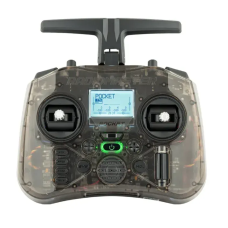
In stock


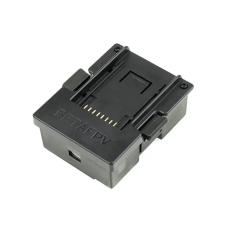
BetaFPV Micro-Nano Module Adapter
545 грн.

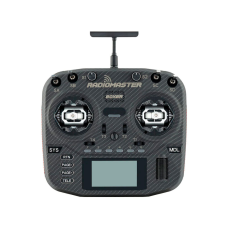


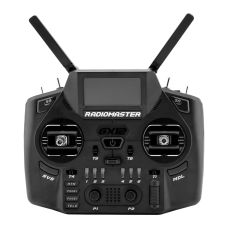


An FPV drone remote controller is the primary tool for real-time UAV control. The precision of movements, signal stability, and flight safety depend on its quality.
Key characteristics of remote controllers.
The devices have a number of features:
- Signal stability. A quadcopter remote controller provides a reliable connection with the drone even at long distances.
- Number of channels. Modern devices support a varying number of control channels.
- Equipment compatibility. Most remote controllers work with popular communication protocols (e.g., ELRS or Crossfire).
Why is Flash Army the optimal place to buy a remote controller? Having researched the market and tested numerous models, we have added only those remote controllers to our assortment that work stably in field conditions, respond accurately to commands, and meet all stated characteristics — without compromises or in-flight surprises. If you want to buy a drone remote controller that works precisely, stably, and without unpleasant surprises — choose models from the Flash Army assortment.
Expand
Frequently asked questions about products in this category FPV Drone and Quadcopter Remote Control
A drone remote controller is a control unit through which the pilot transmits commands to the drone. The sticks are responsible for throttle, turns, tilt, and direction of movement, while the switches control flight modes, arming, failsafe, or additional functions. For FPV, it is important that the remote controller not only connects to the drone but also maintains a stable radio channel without noticeable delay.
Modern radio controllers can support ExpressLRS, Crossfire, FrSky ACCST/ACCESS, FlySky AFHDS, Futaba S-FHSS, and other protocols. ExpressLRS is often chosen for FPV due to its low latency, good range, and flexible settings. However, the protocol must match the receiver on the drone: a good FPV drone controller will not help if it operates on a different communication system.
Drone remote controllers can feature monochrome screens, color displays, or touchscreens. Simple screens are sufficient for basic model settings, profile selection, and telemetry checks. A color or touchscreen display is more convenient for faster interaction with menus, scripts, mixers, channels, and multiple models stored in memory.
Controllers can be powered by replaceable 18650 batteries, Li-ion, LiPo batteries, or a built-in battery. The power format affects operating time, controller weight, and charging convenience. For long trips, it is better when batteries can be quickly replaced or charged via USB-C, rather than being tied to a single built-in unit.
FPV drone remotes most often operate at 2.4 GHz, and for longer flights, they may use 868 MHz or 915 MHz depending on the system and region. Lower frequencies transmit better over distance but require a compatible receiver and correct antennas. The frequency must be selected together with the receiver, as the remote and drone must operate in the same band.
Stable communication is ensured by the correct protocol, a quality antenna, power settings, telemetry, failsafe, and proper receiver compatibility. For minimal latency, a fast radio protocol, precise sticks, the correct packet rate, and a clean channel free of unnecessary interference are important. This is very noticeable in FPV: if a command arrives with a delay, the drone responds worse during maneuvers.
Remote controllers may feature telemetry, voice alerts, vibration, an external module bay, USB-C, Bluetooth, model memory, mixer settings, and simulator support. For a beginner, a simple menu, comfortable sticks, and the ability to practice in a simulator are useful. For an experienced pilot, channels, modularity, settings for various drones, and radio link stability are important.
Popular brands often include RadioMaster, FrSky, Jumper, TBS, FlySky, Futaba, and DJI. RadioMaster is often chosen for FPV due to models with ExpressLRS, EdgeTX, and good configuration flexibility; TBS is more associated with Crossfire, and DJI with its own digital ecosystem. The brand is important, but the protocol, frequency, ergonomics, and drone compatibility remain decisive.
Beginners should opt for a remote with a simple menu, comfortable grip, simulator support, and a common protocol to simplify their first build. Professionals will find models with more precise gimbals, an external module bay, extensive settings, telemetry, and support for multiple drones more suitable. It's better to choose a quadcopter remote based on its compatibility with a specific control system rather than the number of buttons.
FPV drone and quadcopter remote controllers in Ukraine have varying prices depending on the model. Radio controllers start at 2800 UAH, while remote control units start at 4800 UAH and go higher. The price then depends on the brand, protocol, display, stick type, power supply, telemetry support, module bay, firmware, and package contents. A basic drone remote for beginners and advanced equipment with ExpressLRS, a color screen, and extended settings are different solutions in terms of price.
You can order FPV drone and quadcopter remote controllers from Flash Army — for training flights, FPV builds, simulators, or ready-to-fly drones. Here, you can conveniently check the protocol, frequency, power supply, receiver, and compatibility with other components to avoid purchasing equipment that doesn't fit your system. Orders are shipped quickly across Ukraine, so you can receive your remote controller without a long wait.