In FPV, everything depends on the connection. You can assemble a drone from good components, install a powerful video transmitter and a high-quality camera, but it is drone antennas that determine what the flight will actually be like. If the signal is unstable, with noise, delays, or dropouts, the enjoyment of the flight quickly disappears. That's why FPV antennas are not a secondary detail, but one of the key parts of the entire system.
When it comes to drone antennas, the question of frequency immediately arises. 5.8, 2.4, or 1.2 GHz are not just numbers in specifications. Behind them lies the logic of radio wave operation, signal behavior in the air, and real flight limitations. To make an informed choice, it's important to understand how all this works in practice, not just in theory.
What is an FPV antenna
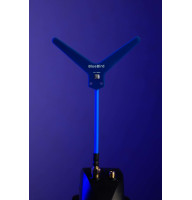
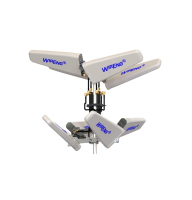
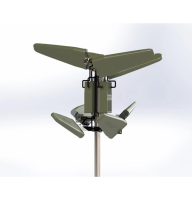
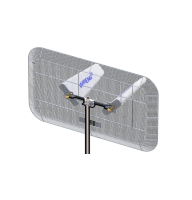
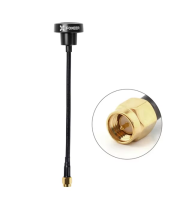
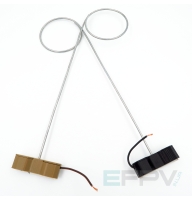
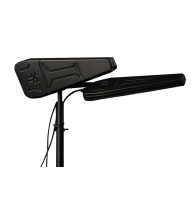
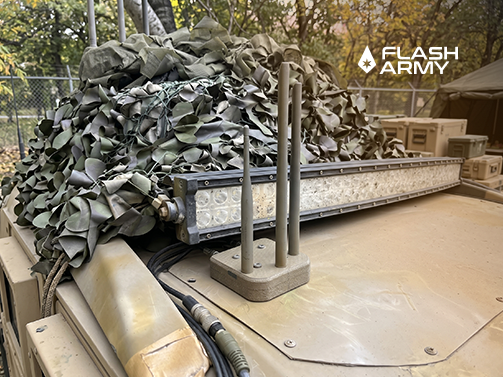
An FPV antenna is an element that emits and receives a radio wave of a certain frequency. It does not "amplify" the signal by itself, but only allows the signal already formed by the video transmitter to be transmitted as efficiently as possible. FPV antennas differ in shape, design, and polarization type. In builds, an external FPV antenna is often used – it is placed further away from other electronic components to reduce interference levels.
Principle of antenna operation in FPV systems
In an FPV system, the antenna performs a simple but very important task – it provides communication between the drone and the pilot. The video transmitter forms the signal, but it is the antenna that transmits it into the air as radio waves. If the antenna is chosen incorrectly or is of low quality, part of the signal is lost even before the drone begins to move away. An antenna works effectively only when it precisely matches the transmitter's frequency and has the correct design. In FPV, this is especially noticeable, because even a slight deterioration in the signal immediately affects video quality.
Impact of frequency on signal range and quality
Frequency is directly related to radio wavelength. A low frequency means a longer wave, which better bypasses obstacles and behaves more stably at a distance. A higher frequency yields a shorter wave, which carries more information but is more dependent on line of sight. That's why drone antennas at different frequencies behave differently even in similar conditions. Sometimes range wins, sometimes image quality, and sometimes compactness and ease of installation. Understanding this principle greatly simplifies the choice.
2.4 GHz antenna frequency band
2.4 GHz is often called a universal option, and that's not far from the truth. This band provides sufficient range for most scenarios while allowing for stable video without sharp dropouts. 2.4 GHz FPV antennas are well suited for both everyday flights and more serious tasks. In open terrain, this band behaves predictably. The signal does not "drop" as sharply as in 5.8 GHz, allowing for calm flights at medium distances. 2.4 GHz drone antennas have moderate sizes, making them convenient for most platforms. But there is a downside. 2.4 GHz is heavily congested with other devices. In the city, this band is constantly occupied by Wi-Fi, household electronics, and other sources of radio noise. In such conditions, an external FPV antenna often becomes necessary to maintain signal stability.
Key features of 2.4 GHz:
- Good balance between range and video quality.
- Moderate resistance to interference.
- Versatility for most pilots.
5.8 GHz antenna frequency band
5.8 GHz is the choice for those who value live video. This band is most often used in freestyle and racing. 5.8 GHz FPV antennas provide a very clear image and minimal latency, which is especially important for fast maneuvers. Another reason for its popularity is compactness. Drone antennas in this band are small and lightweight, easy to place even on a small drone. In addition, 5.8 GHz has many available channels, allowing group flights without significant mutual interference. However, this band is the most sensitive to obstacles. Trees, buildings, or even terrain irregularities quickly degrade signal quality. For long-range routes, 5.8 GHz is less suitable, and even an external FPV antenna cannot always compensate for these limitations.
Key features of 5.8 GHz:
- Maximum video clarity.
- Low signal latency.
- Limited range in challenging conditions.
1.2 GHz frequency band
1.2 GHz is usually chosen by those for whom range is paramount. The long radio wave of this band passes well through obstacles and allows communication to be maintained where other frequencies "give up." That's why 1.2 GHz FPV antennas are popular in long-range flights. Drone antennas in this band are larger in size, and this must be considered when choosing a platform. Also, 1.2 GHz is more often used with analog systems, which is not always suitable for those accustomed to digital video. An important point is regulatory restrictions. In some regions, the use of 1.2 GHz may require permits. In practice, an external FPV antenna is almost always used to fully realize the range potential.
Characteristic features of 1.2 GHz:
- Maximum communication range.
- High signal stability.
- Large antenna dimensions.
Comparison of bands
If we compare all three bands without dry tables, the picture looks like this:
- 5.8 GHz - speed, compactness, and excellent picture, but only with line of sight.
- 2.4 GHz - a calmer and more versatile option that forgives minor errors and is suitable for most flights.
- 1.2 GHz - the choice for those who fly far and don't want to lose signal due to every tree. It requires larger antennas and careful tuning, but provides confidence at a distance.
That's why FPV antennas should be chosen not as the "most powerful," but as those that match real tasks.
Conclusion
The frequency band of an FPV antenna directly affects what your flight will be like. There is no single right option for everyone. Each band has its own logic and purpose. High-quality drone antennas and a properly selected external FPV antenna allow for stable communication and predictable system behavior. If you are looking for reliable solutions for different frequency bands, pay attention to Flash Army - you can easily choose an option for specific flight conditions there.