Catalog
0
0

Interceptor Drones

There are no products to list in this category.

Continue
Interceptor Drones

What are interceptor drones?

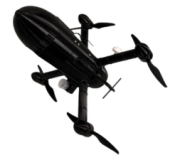
Interceptor drones are high-speed UAVs designed to detect, pursue, and destroy aerial targets. They are part of a broader counter-drone system, rather than a universal quadcopter for various tasks. They work best in combination with other counter-drone measures but do not replace them.

Purpose of interceptor drones

The main task of such systems is to quickly respond to aerial threats from other drones. While other types of FPV drones or quadcopters are more often scouts, bombers (dropping supplies), or kamikaze drones, interceptor drones for Shaheds are designed from the outset to intercept and destroy other UAVs. They are created as a cheaper solution to avoid expending more expensive air defense munitions.

Features of interceptor drones

When choosing an interceptor drone, it is important to consider that versatility and long flight time are not as crucial as a combination of speed, maneuverability, and the ability to quickly reach the target direction. For this reason, anti-Shahed drones are usually evaluated by different criteria than other types of drones and quadcopters. Interceptor drones are most often highlighted for their:

  • reaction speed;
  • flight dynamics;
  • maneuverability;
  • platform design;
  • control stability;
  • ability to operate within a multi-layered counter-UAV system.

When discussing interceptor drones for Shaheds and other UAVs, the emphasis is usually on specialization. Here, it's not just the drone's characteristics that matter, but its suitability for the narrow task of aerial interception under very limited reaction time.

Advantages of using interceptor drones to shoot down UAVs

The main advantage of such systems is that they provide a dedicated tool for engaging unmanned targets. In specialized analytical materials, this is presented as a more flexible and potentially more economical approach compared to using expensive traditional interceptors against cheaper drones. Another plus is that such solutions integrate better into a multi-layered air defense system, where different classes of assets address different types of threats.

Recommendations for choosing interceptor drones

If you plan to buy interceptor drones, you should evaluate all their characteristics, not just one. It matters what scenario the interceptor is designed for, how it integrates into the overall counter-UAV system, and whether the solution is too narrow for a changing environment. It is important to understand that without full integration into the overall counter-UAV system, an anti-Shahed drone will be less effective.

Where to buy an interceptor drone?

At Flash Army, you can purchase not only interceptor drones for Shaheds but also other types of UAVs, such as kamikaze drones or quadcopters — you can find a drone for any task among our assortment. You can also purchase everything you might need at the front lines — from military equipment to silicone tableware sets or potbelly stoves. It's much easier to buy everything in one place with delivery across Ukraine, without wasting time searching online.

Frequently asked questions about products in this category Interceptor Drones

Interceptor drones are UAVs used to engage other drones in the air. This is a distinct type of platform, assembled not for reconnaissance or drops, but specifically for interception. Such a drone must reach the target, catch up with it, and disrupt its flight before it completes its mission.
Interceptor drones are needed to protect positions, equipment, and facilities from enemy UAVs. They are launched when the target is already airborne and a quick response is required. Most often, this involves engaging reconnaissance drones, FPV drones, and some attack UAVs that approach at low altitude or with a short flight time.
The speed of an interceptor drone depends on the platform, but these are high-speed solutions. For reference: some Ukrainian interceptors have speeds starting from 250 km/h, and anti-Shahed configurations reach up to 300+ km/h. Not only top speed is important here, but also acceleration and maneuverability when engaging a target.
In Ukraine, both specific systems and serial interceptors of various types are used. Among the known models is the Shvidun system, which was created specifically for intercepting aerial targets. Also in use are 10-inch anti-aircraft FPV interceptors, assembled for speed and maneuverability, and separate anti-Shahed configurations for Shahed-type drones. Among serial solutions are interceptors from Ukrainian manufacturers, in particular the General Chereshnya brand line, which already offers ready-made assemblies for various interception scenarios.
After detecting a target, the operator launches the drone and guides it to intercept. The next task is to get on the target's flight path and catch up with it. At the moment of approach, it is important to maintain control and guide the drone to impact before the enemy UAV completes its mission.
Effectiveness depends on the specific situation. If the target is slow or follows a stable route, interception is easier. If the drone is maneuverable, flies low, or there are communication problems, everything depends on the operator and the quality of the platform. Therefore, there is no universal percentage of effectiveness here.
Antishahed is an interceptor drone assembled to counter Shahed-type drones. It is not a single model, but a configuration for a larger and faster target. This changes the requirements for speed, range, and communication stability.
The anti-Shahed drone is launched after determining the target's direction of movement. The drone is guided to intercept the Shahed before it approaches the position or object. This allows the drone to be shot down earlier, rather than during the attack.
Anti-aircraft drones launch faster and do not require complex deployment. They can be kept directly on position and lifted immediately after a target appears. For small UAVs, this is often faster and simpler than using other means.
Such drones are kept ready at the position. Upon target detection, the operator immediately launches the interceptor into the required sector. This allows for an immediate counter-attack on a specific point — a trench, vehicle, or object — without delay.
Interceptor drones in Ukraine start at approximately UAH 40,000 for basic anti-aircraft FPV solutions. Mid-range interceptors are UAH 45,000–50,000, anti-Shahed drones are UAH 65,000 and up. Configurations with thermal imagers or for more complex tasks reach UAH 80,000–90,000+.
You can buy interceptor drones at Flash Army. Before choosing, you should look at the configuration: platform, speed, video system, communication, and what task the drone is assembled for, because the difference between models lies precisely in this.