You watched
Catalog
4
0
0

Cables for Antennas

Sort By:
In stock
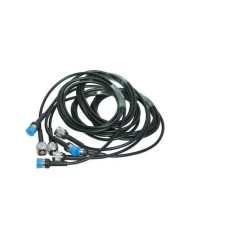
Flexible Coax Cable RG-223 (2m)
1
1 655 грн.
Add to Cart
In stock
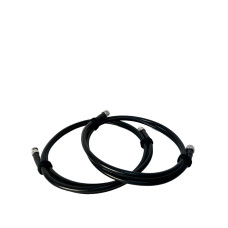
LMR400 Wartex Antenna Extension Cable
0
1 560 грн.
Add to Cart
In stock
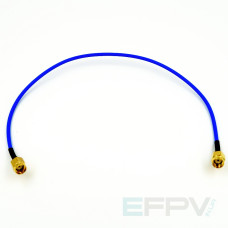
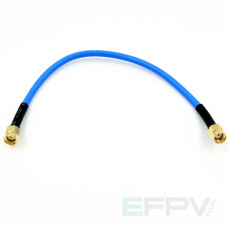
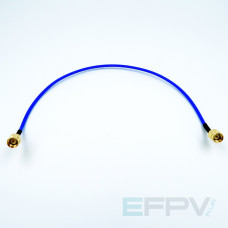
Pigtail RG405 30cm (RP-SMA)
2
330 грн.
Add to Cart
In stock
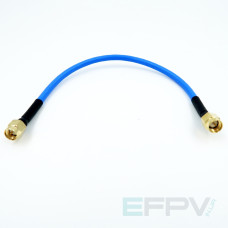
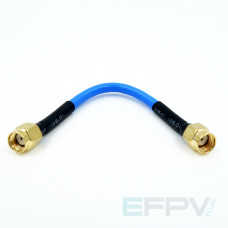
Pigtail RG402 20cm (SMA)
0
275 грн.
Add to Cart
In stock
Flexible Coax Cable RG-223 (3m)
0
2 500 грн.
Add to Cart
In stock
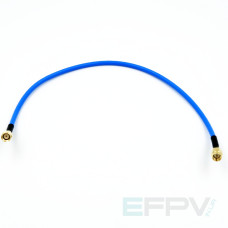
Pigtail RG316 50cm (SMA)
0
330 грн.
Add to Cart
In stock
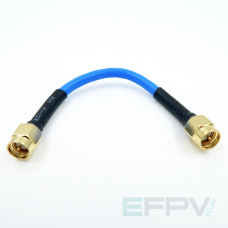
Pigtail RG402 10cm (SMA)
0
220 грн.
Add to Cart
In stock
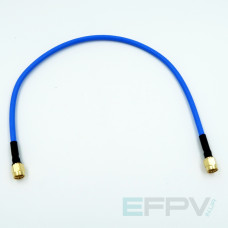
Pigtail RG402 30cm (SMA)
0
330 грн.
Add to Cart
In stock
Pigtail RG402 10cm (RP-SMA)
0
220 грн.
Add to Cart
In stock
Pigtail RG402 20cm (RP-SMA)
0
275 грн.
Add to Cart
In stock
Adapter (SMA - RP-SMA)
0
220 грн.
Add to Cart
In stock
Pigtail RG402 35cm (SMA)
0
385 грн.
Add to Cart
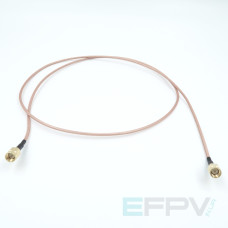
Pigtail RG316 1m (SMA)
0
385 грн.
Add to Cart
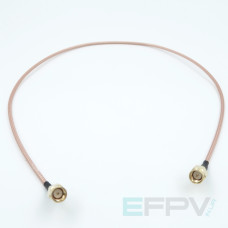
Pigtail RG405 30cm (SMA)
1
330 грн.
Add to Cart
Cables for Antennas

What are antenna cables?

An antenna cable is a vital element of a communication system that connects the transmitter and receiver to the antenna. Signal stability, transmission range, and equipment reliability depend on its quality. For military and tactical tasks, the correct cable selection is especially critical.

Purpose of antenna cables

The main task of cables is to transmit a signal from the source to the antenna without significant losses. They ensure operation at various frequencies and ranges, allowing for the desired power, range, and directionality.

Types of cables: Coaxial cables.

The most common option for military antennas, guaranteeing minimal signal loss.

  • Coaxial cables. The most common option for military antennas, guaranteeing minimal signal loss.
  • Pigtails. Flexible antenna cables used to connect VTX, receivers, and modules with various connectors.

Features of types

A coaxial antenna cable has a low attenuation level and works well over long distances. Pigtails are notable for their compactness and versatility in connection. Both types must be selected for a specific transmitter, receiver, or system.

How to choose antenna cables?

Before buying an antenna cable, you need to consider:

  • purpose – for a stationary or mobile system;
  • length and dimensions – the shorter the cable, the lower the signal loss;
  • connectors and compatibility with VTX, receiver, or transmitter;
  • impedance and attenuation – for stable operation at the desired frequency.

The price of an antenna cable depends on materials, type, and characteristics, but it is not worth saving here – quality directly affects communication efficiency. Where to buy antenna cables? Reliable solutions can be found at Flash Army. Here you can buy an antenna cable for military communication systems, choosing the optimal option for the desired range and power. Fast delivery and quality assurance allow you to be confident in the stability of your equipment.

Expand

Frequently asked questions about products in this category Cables for Antennas

Coaxial cables of various types are most often used for antennas, depending on the frequency and installation conditions. Common options include RG58, RG174, RG316, LMR-series, and other specialized solutions. The specific choice depends on the line length, signal loss, and equipment type.
Coaxial cable for antennas has a central conductor, an insulating layer, shielding, and an outer jacket. This design helps transmit signals with reduced external interference. Important parameters include characteristic impedance, attenuation per length, and cable flexibility.
The optimal cable length depends on the system's operating frequency, cable type, and signal power. It is usually recommended to use the shortest possible line without excessive slack. Shorter lengths often help reduce signal loss during transmission.
Cables vary in diameter, signal loss, flexibility, and application. LMR400 is typically used where lower loss over long distances is critical, while RG316 is popular for compact connections. RG402 is often used in more rigid or specialized assemblies.
A pigtail is a short cable adapter with different types of connectors at its ends. It is used to connect incompatible connectors or to conveniently link equipment. This solution helps avoid replacing the main cable or device.
Several types of power cables are used for Starlink systems, depending on the equipment model. The most common options are the standard antenna cable for power and data transmission, the AC power cable for connecting the power supply to an outlet, and USB-C to DC or DC to DC cables for mobile versions of Starlink Mini. The specific type is selected based on the device generation and use case.
Antenna cables in Ukraine typically cost from 100 to 5,000 UAH, depending on the type, length, and technical specifications. Simple, short options are more affordable, while professional solutions for complex systems are more expensive. Materials, brand, and connector types also influence the price.