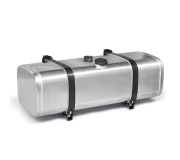
Fuel Tanks
Sort By:
Fuel Tank Man 400L (620x675x1070)
44 280 UAH
MAN Fuel Tank 500L (620x675x1350)
40 418 UAH
Fuel Tank Man 400L (700x700x910)
38 958 UAH
Scania 300L Fuel Tank (670x700x735)
36 301 UAH
Fuel Tank Mercedes Atego 350L (420x510x1850)
37 513 UAH
Fuel Tank Universal 200L (420x510x1050)
28 380 UAH
Universal Fuel Tank 130 L (330X480X1000)
24 768 UAH
MAN Fuel Tank 700 L (620x670x1850)
51 600 UAH
Fuel Tank Man 250 L (620x670x700) Man
32 508 UAH
Fuel Tank MAN 400 L (700×700×910) SIMETRI
35 088 UAH
Fuel Tank Man 600L (620x670x1600) Man
39 010 UAH
Fuel Tank MAN 300 L (700x700x680)
36 572 UAH
Fuel Tank MAN 480 L (700x700x1060)
36 275 UAH
Fuel Tank Volvo, Renault 325L (710x690x830)
47 509 UAH
Fuel Tank Man 630L (700x700x1300)
44 157 UAH
Scania Fuel Tank 400 L (670x700x1000)
43 344 UAH
Fuel Tank Man 380L (700x700x850)
38 132 UAH
Fuel Tank Mitsubishi 250L (420x510x1350)
30 031 UAH
Fuel Tank Mercedes Benz 780L (700x700x1750)
56 130 UAH
Fuel tanks: how to choose and where to buy?
A fuel tank is a specialized container for storing vehicle fuel that must be hermetically sealed and provide an uninterrupted supply to the engine. The proper functioning and reliability of the fuel tank determine the engine's operation.
Fuel tanks come in the following types:
- By purpose, fuel tanks can be: for passenger cars, for boats, and for storing petroleum products;
- By placement method, they can be: above-ground, underground, underwater, and semi-underground;
- By material type used in manufacturing, they can be rigid (made of metal or plastic) and soft (made of elastic and waterproof materials);
- By shape, you can choose from many options: vertical, horizontal, round, square, or D-shaped
Fuel tank: how to choose?
- First, you need to focus on models that fit the purpose (different models for passenger cars and boats);
- Next, you should determine the volume of the fuel tank. This depends on the vehicle's configuration and the required load, i.e., the actual fuel consumption;
- You should also decide on the material that will reliably suit the transport system;
- Choose the tank configuration that perfectly fits the vehicle;
- Also check the device for serviceability: ensure there are no deformations or damage, as fuel tanks must be hermetically sealed.
Fuel tanks are a crucial element of the entire transport system because if they malfunction, the car simply won't move. You can buy a reliable fuel tank in the car accessories section of our store. We recommend paying attention to car cables. There are many new models at affordable prices! Also, you can find a large selection of powerful compressors and portable air pumps at manufacturer prices, with fast delivery!
Expand
Frequently asked questions about products in this category Fuel Tanks
A fuel tank is a container in which a vehicle stores its supply of gasoline or diesel fuel. From the tank, fuel enters the engine through the fuel system. The tank must be sealed, securely mounted, and match the specific car model, as even similar-volume options may have different dimensions, filler necks, or mounting points.
Without a fuel tank, a vehicle has no range: the engine receives fuel only as long as it is in the system. In a passenger car, the tank works unnoticed for years, but in a truck, its volume directly affects how often one has to stop for refueling. For long-haul vehicles, this is no longer a trifle, but part of trip planning.
Look at the gas pump icon next to the fuel gauge on the dashboard. A small arrow next to it indicates which side of the car the fuel filler door is on. If there is no arrow, it's best to check before pulling up to the pump — either by consulting the car's manual or simply by inspecting the car.
In passenger cars, the tank usually holds several tens of liters, while in trucks and special equipment, the count often goes into hundreds. For example, truck tanks can be 130, 175, 250, 400, 480, 550, 600, and 700 liters. The exact volume is determined not only by fuel consumption, but also by the space for the tank on the frame, the length of the route, and the design of the specific chassis.
Plastic or steel is often used for passenger cars, while steel and aluminum tanks are common for trucks. Metal better withstands loads and permanent frame mounting but requires corrosion protection. Plastic does not rust and can have complex shapes, so it is often installed where the tank needs to be placed in a confined space.
External dirt can be removed during washing or inspection of the car, but internal cleaning, leak repair, or tank welding should not be done on your own. Even an empty tank can contain flammable fuel vapors. If there is a smell of gasoline or diesel, wet traces, corrosion, a dent, or damaged mounting, it is better to show the car to a specialized service center.
Calibration is the process of creating a table that shows how many liters correspond to a certain fuel level in the tank. It is necessary because the tank does not always have a simple rectangular shape: at different heights, one centimeter of level can mean a different volume. Such a table is used together with a fuel level sensor to more accurately see the actual remaining volume in liters.
Fuel tanks in Ukraine cost approximately from UAH 18,000. More capacious models for trucks, tanks for specific car brands, and variants with different shapes, necks, or mounts cost more. The price is influenced by volume, material, chassis compatibility, dimensions, and configuration.
Fuel tanks are selected not only by volume. You need to check the car model, dimensions, filler neck location, mounting, and installation spot on the frame. Flash Army offers fuel tanks for MAN, DAF, Iveco, Scania, Mercedes, Volvo, Renault, and universal models of various capacities. This allows you to find a replacement for specific equipment, rather than focusing solely on a similar tank appearance.