Catalog
0
0

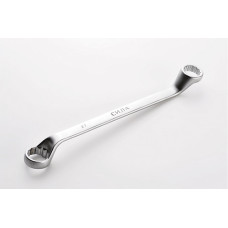
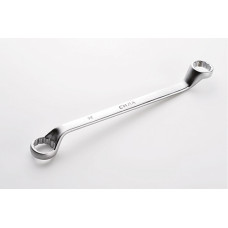
Combination Wrenches
Sort By:
Combination Wrenches
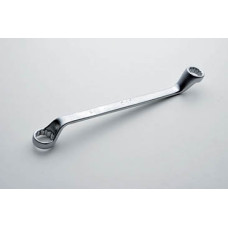
What is a ring spanner?

A ring spanner is a tool with a closed profile that completely encloses a nut or bolt, preventing it from skewing or stripping.

This is well felt in use: you put the spanner on, and it fits snugly with proper seating. If it's high-quality CrV steel, the tool withstands shocks and sustained loads without deforming. In field conditions, when equipment must move without delay, ring spanners often resolve the situation faster than complex solutions that require additional automotive tools.

Purpose of ring spanners

Ring spanners are used to install and disassemble threaded connections. When a nut is seized, or a bolt is at an angle, precision and a firm grip are important. A set of spanners is usually found in a car, which is basic. But it is the ring spanner that takes on a significant load when more force is needed without damaging the fastener.

For more complex jobs, a set with pneumatic tools might be nearby. However, mechanical tools remain a reliable backup. 

Advantages of ring spanners over open-end wrenches

The open-end format is convenient for quick access, but it can slip off under heavy load. A ring spanner works differently.

Its advantages:

  • even distribution of force;
  • minimal risk of damaging the facet;
  • stable operation with seized connections;
  • better control during a sudden jerk.

When equipment is stuck in the middle of the road or field, the difference between the formats becomes obvious. And here, ring spanners win in precision and reliability.

Types of ring spanners and manufacturing materials

Box-end solutions vary in design and length. Most often chosen are:

  • double-ended format: two sizes in one body;
  • options with an offset head for tight spaces;
  • reinforced models for high loads.

The quality of the steel is important. CrV ensures strength and durability. Precise geometry guarantees a proper fit. And after repairs, it's worth taking care of your hands: don't neglect antiseptics and skin disinfectants, especially in field conditions.

Recommendations for choosing ring spanners

When selecting ring spanners, focus on the size of fasteners you work with most often. An incorrectly chosen size creates play and reduces the tool's lifespan. For serious loads, it's better to choose a longer body: a larger lever means more force. For a compact kit, a double-ended option will suffice.

If you already have a wrench set, check compatibility with other tools in your car kit.

Where to buy ring spanners?

It's convenient to order ring spanners along with other necessary goods on Flash Army. The store offers solutions for home, tourism, and field conditions. In the Flash Army catalog, you can assemble a complete kit: from wrenches to related products with quality expert consultation and fast delivery across Ukraine.

Expand

Frequently asked questions about products in this category Combination Wrenches
A box-end wrench is a wrench with a closed, ring-shaped working end. It grips a nut or bolt circumferentially, not just on two sides like an open-end wrench. This allows the box-end wrench to hold better on the flats and is convenient for fasteners that need to be broken loose without slipping.
Box-end wrenches can be single-ended, double-ended, straight, offset, long, short, and ratcheting. A double-ended wrench has different sizes on its two ends, for example, 22 × 24 mm or 24 × 27 mm. An offset shape is needed when the nut is recessed below the surface of the part and difficult to access with a straight tool.
Box-end wrenches are used for nuts and bolts in places where a tight tool fit is required. In automotive applications, they are used for fasteners in suspension, brake assemblies, brackets, rods, clamps, and large threaded connections. The box-end part handles loads well because it distributes force over a larger area of the facets.
The size of the box-end wrench must exactly match the size of the nut or bolt head. If the fastener is 24mm, a 23mm or 25mm wrench will not replace the required size: it will either not fit or will be loose and start damaging the edges. For a workshop, it is better to have a range of common sizes, and for a specific task, it is sufficient to take a wrench for that particular fastener.
Box-end wrenches are often made of chrome vanadium steel (CrV) or other alloy steel for hand tools. The metal must withstand loads on the box end, because when a nut is broken loose, pressure is applied to the thin working faces inside the profile. The coating protects the wrench from corrosion, especially if the tool is constantly stored in a garage, trunk, or workshop with humid air.
A box-end wrench grips fasteners more tightly than an open-end wrench, so it's less likely to slip under load. This is important for overtightened nuts, old fasteners, or parts that are difficult to access multiple times. There is also a downside: a closed ring cannot always be put on from the side, so near tubes, hoses, and long studs, a flare-nut or open-end wrench is sometimes needed.
Open-end wrenches in Ukraine cost from UAH 180 for a single double-ended wrench. Large sizes, such as 30 × 32 mm, are usually more expensive because they use more metal and work with larger fasteners. The price is affected by size, CrV steel, wrench shape, profile quality, coating, and brand.
Before buying, you should know the fastener size and access to it: a straight wrench is not always convenient on a recessed nut, and a bent one may fit better into the depth of the assembly. For cars, people often buy not one random size, but several box-end wrenches for typical nuts and bolts that need to be worked with during repairs. Flash Army offers double-ended CrV box-end wrenches for car tools, garages, and workshops.