
Fiber optic winding machines
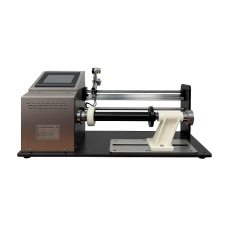
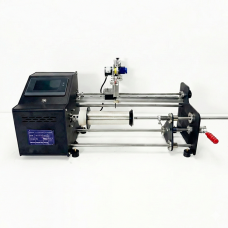

What is a fiber optic winding machine?
A fiber optic winding machine is equipment for evenly winding optical cable onto reels. In this work, speed matters, but so does how the cable is arranged in layers. Fiber optic cable is thin and doesn't tolerate sharp bends or excessive tension, so manual winding can quickly create uneven layers, loops, or weak points.
Purpose of a fiber optic winding machine
A fiber optic winding machine is used to prepare reels for technical work, optical lines, communications, and specialized cable-related tasks. Another application is fiber optic coils for drones, where the cable must be wound evenly and consistently. For such systems, fiber-optic drones require a carefully prepared spool, not just a cable wound by hand.
How a fiber optic winding machine works
The machine rotates the reel and lays the cable in layers with controlled tension. The operator sets the speed, monitors the feed direction, and ensures that the optical cable does not rub against the edge. A fiber optic winding machine should operate smoothly, without jumps, jerks, or sudden stops, as this affects the condition of the fiber.
Characteristics of fiber optic winding machines
A fiber optic winding machine has several important criteria:
- Reel diameter — should correspond to the required cable length;
- Winding width — affects the evenness of the layers;
- Speed adjustment — required for different cable thicknesses;
- Tension control — protects the fiber optic cable from kinks;
- Length counter — helps prepare reels of the same length;
- Frame stability — the machine should not vibrate during operation;
- Reel fixation — without play or misalignment on the axle.
Design features of a fiber optic winding machine
The main components are the frame, drive, reel holder, guide mechanism, and control unit. For assembling, servicing, and adjusting the mechanical components of such machines, workshops use retaining ring pliers and other cordless power tools.
A simpler fiber-optic machine lets the operator control part of the process. More precise models feature a soft start, speed control, a length counter, and more stable cable winding. Repeatability is crucial when preparing kits for drones: each spool must be wound with the same even tension.
Recommendations for choosing a fiber optic winding machine
For small batches, you can purchase a compact fiber-optic winding machine with manual feed control. For regular use, choose a machine with a length counter, smooth speed control, and consistent tension. If the equipment is intended for drones, consider its ability to handle thin cable, compatibility with specific reels, and even winding across the entire width of the reel.
For long-term workshop work or field preparation in autonomous conditions, reliable power banks for the military may be useful, while modern exoskeletons can be used to reduce the physical strain on operators when handling and installing heavy equipment.
Where to buy a fiber optic winding machine?
A fiber-optic winding machine has three critical parameters: the cable must not kink, the spool must not wobble, and the tension must remain consistent from the first to the last layer. Therefore, the machine is selected based on spool diameter, maximum length capacity, speed control, tension control, and winding precision. If you need a fiber-optic winding machine for technical lines, communications, or preparing spools for drones, Flash Army’s product lineup offers solutions tailored to your specific task: what type of cable is being wound, onto what type of spool, with what length, and for what end use. The catalog also features fiber optic drones, electronic warfare systems, camping equipment, and all the necessary military and camping gear.