

Military Compasses
There are no products to list in this category.
Continue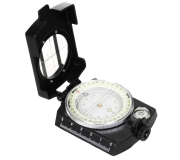
What is a military compass?
A military compass is a reliable device for land navigation, designed with the needs of the army and field conditions in mind. Unlike tourist or sports models, such a compass is designed to operate in extreme situations: from long infantry marches to tactical operations. It helps determine direction, coordinate unit movement, and ensure proper positioning even in difficult conditions where technology may fail. It is an important part of military equipment, especially for infantry groups.
Types of compasses
Today there are many options:
- military compasses;
- artillery models for precise aiming;
- mountain compasses for climbers and tourists;
- underwater compasses for orientation during dives;
- automotive and sports compasses;
- compact — keychain, wrist, or pocket compasses.
How do military compasses differ?
The main difference is durability and functionality. A military compass has a metal casing, protection against impacts and moisture, and is often supplemented with backlighting for night orientation. It is more accurate than hiking models, has scales for working with maps, and is suitable for long-term use in field conditions. It is a tool that can be relied upon both during tactical operations and on a hike or in survival situations.
Along with compasses, sleeping bags are also chosen for comfortable outdoor stays.
How to choose a compass?
Before buying a military compass, you should pay attention to:
- casing durability;
- ease of use with a map;
- resistance to moisture and dust;
- additional functions (luminescent markings, built-in levels).
The choice depends on the tasks: a lightweight hiking compass is suitable for tourism, while a professional military compass is for the army or tactical use.
Where to buy a compass?
Reliable models can be found at Flash Army. Here you can buy a military compass with a quality guarantee, fast delivery, and a manufacturer's price. The website also features products for tourism and camping, such as gas kits for field kitchens.