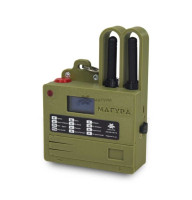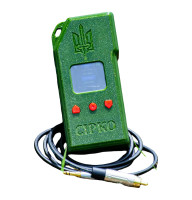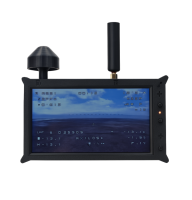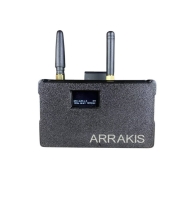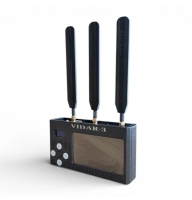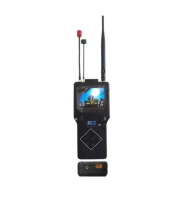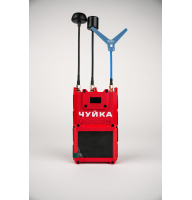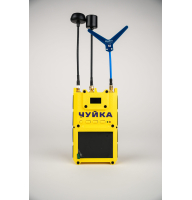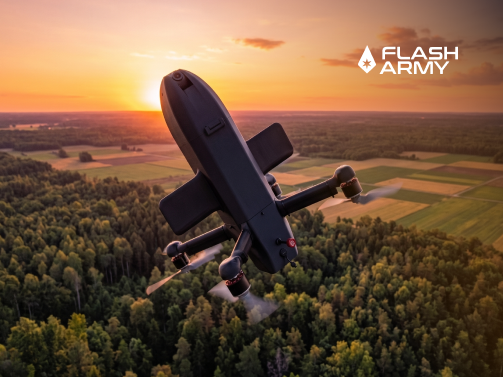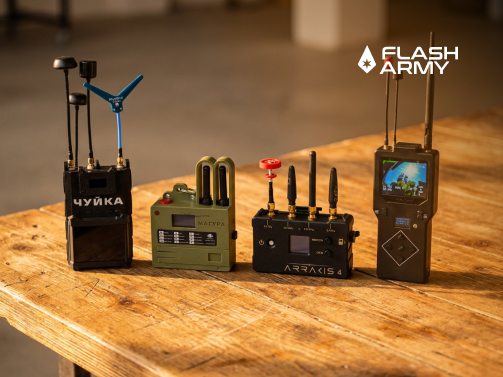
The radio spectrum has long become a separate domain of surveillance. When an FPV or reconnaissance UAV transmits commands, telemetry, or video, its radio signal can often be detected before the aircraft itself becomes visible in the sky. This is exactly what drone detectors are designed for. They do not disable the target or display its coordinates on a map. Instead, their purpose is to detect activity within supported frequency bands, alert the operator, and provide valuable reaction time.
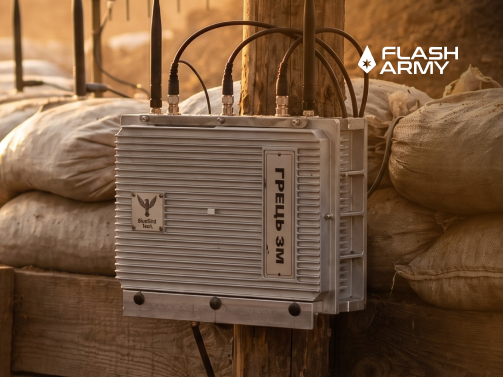
The same device will perform differently in open fields, forests, elevated terrain, or urban environments. Trees, uneven terrain, metal structures, other radio transmitters, electronic warfare (EW) systems, and even poor antenna positioning can weaken the signal. Therefore, the stated detection range should be considered a reference under favorable conditions rather than a guaranteed distance at which every UAV will be detected.
What Can a Drone Detector Do?
Most portable drone detectors operate passively. They do not transmit any signals themselves but instead receive radio waves already present in the air. The antenna captures incoming transmissions, the receiver module scans its assigned frequency band, and the electronics notify the user through sound, vibration, visual indicators, or on-screen information.
Based on their operating principle, these devices can generally be divided into two categories. Scanners and spectrum analyzers detect radio activity within predefined frequency ranges, displaying signal strength or identifying the signal type, but they do not provide video. Models equipped with video interception can receive compatible analog FPV video and display it on a screen. This is only possible when the video transmission uses a supported analog channel—digital transmission, unsupported frequencies, or weak signals will not produce an image.
Frequencies are typically specified in MHz or GHz, where 1000 MHz equals 1 GHz. The number of supported frequency bands is meaningful only when considered together with their exact frequency ranges. A detector with four bands is not necessarily more useful than a three-band model if the required signal falls outside its supported frequencies.
Popular Drone Detector Models
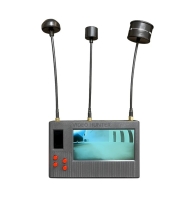
1. Chuika 4.0
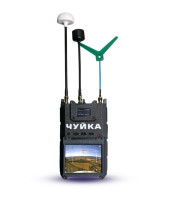
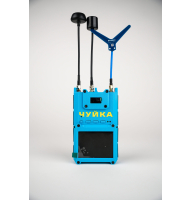
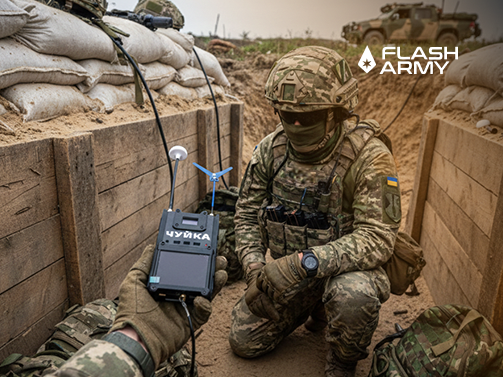
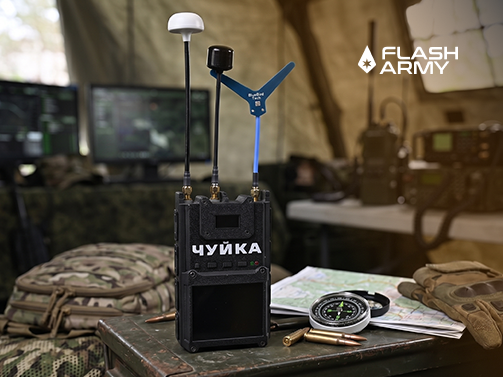
The Chuika 4.0 drone detector is designed to detect analog FPV video signals across four frequency bands: 900–1800 MHz, 2870–4080 MHz, 4860–6060 MHz, and 6100–8600 MHz. The device automatically scans all supported frequencies within 4–8 seconds, provides audible and visual alerts, and displays intercepted analog video on its large screen whenever the received channel is compatible.
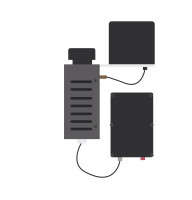
The newly added 6100–8600 MHz receiver module operates with a dedicated fourth antenna. The detector also includes a video output for external displays, active cooling, an IP54-rated enclosure, and support for external power. The internal battery has a capacity of 4500 mAh, while the included external battery pack provides 5000 mAh. According to the manufacturer, detection range reaches up to 4 km on the three primary bands and up to 2–2.5 km within the new frequency range. As with any high-frequency radio system, vegetation, buildings, terrain, and line of sight significantly affect performance.
2. Chuika 3.0
Chuika 3.0 operates across three primary frequency bands: 900–1800 MHz, 2870–4080 MHz, and 4860–6060 MHz. Like its successor, it detects analog FPV video transmissions, provides visual and audible alerts, and displays compatible video on its large screen. A smaller display shows system information, while automatic sensitivity adjustment helps optimize reception under varying radio conditions.
The detector features SMA connectors for external antennas, an IP54-rated housing, and a 4500 mAh battery with a claimed operating time of up to six hours. For monitoring the three most common analog FPV bands, this configuration remains sufficient. The primary difference between the two Chuika models is frequency coverage: Chuika 4.0 adds support for 6100–8600 MHz, a fourth antenna, external video output, and additional power options.
3. Dzyga
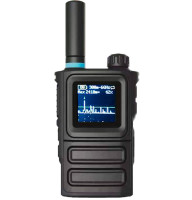
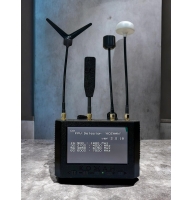
Dzyga is another passive drone detector. The standard version monitors the 1000–1800 MHz and 4860–6060 MHz bands, while expanded configurations include additional frequency ranges. The detector continuously scans supported frequencies, displays channel information on a small screen, and shows compatible analog video on a larger display.
The Dzyga lineup includes both three-band and four-band versions. Before purchasing, it is important to verify the exact frequency configuration rather than relying solely on the product name, as visually similar models may support different frequency ranges.
4. Fox
Fox, developed by Olexa, features three independent receivers that simultaneously monitor the 1.3 GHz, 3.3 GHz, and 5.8 GHz bands. Unlike sequential scanning systems, all three receivers operate in parallel. The detector supports compatible analog FPV video interception and includes an OLED display together with visual and audible alerts.
Power is supplied by a built-in 45 Wh LiPo battery, providing up to eight hours of operation according to the manufacturer. The stated maximum detection range reaches up to 15 km, although actual performance depends heavily on antennas, transmitter power, and environmental radio conditions.
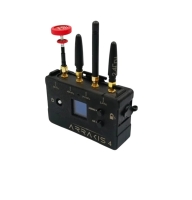
5. Arrakis 4
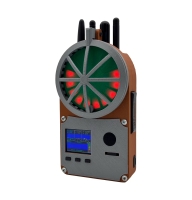
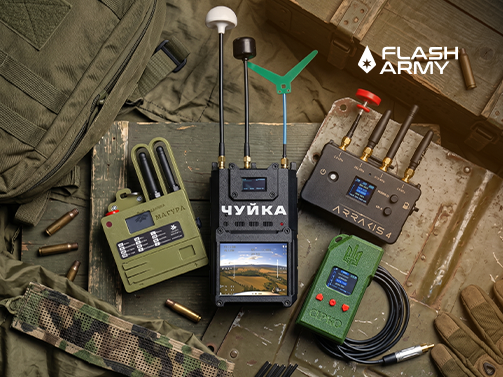
Arrakis 4 does not provide video interception. Instead, it functions as a passive spectrum analyzer that detects FSK telemetry, ELRS, TBS Crossfire, and DJI signals within its supported frequency ranges. When radio activity is detected, the device notifies the operator using sound, vibration, and on-screen indicators.
The Arrakis 4 emphasizes different priorities, including multiple sensitivity levels, USB Type-C charging, and up to 24 hours of battery life at +20°C. It is intended for long-term radio spectrum monitoring where video interception is unnecessary.
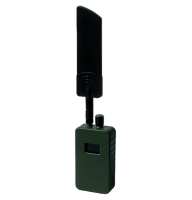
6. Vanilla Sugarok
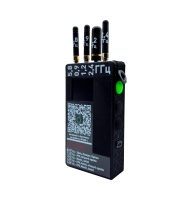
Vanilla Sugarok is a compact passive drone detector designed for everyday carry. It simultaneously monitors four frequency ranges: 865–885 MHz, 895–928 MHz, 970–1020 MHz, and 2400–2500 MHz. The device provides visual, audible, and vibration alerts but does not support video interception.
Weighing approximately 100 g and powered by a 3500 mAh 18650 battery, it supports USB Type-C charging and offers a claimed battery life of 12–20 hours. Its primary purpose is to provide timely warnings of radio activity rather than display FPV video.
How These Models Differ
Chuika 3.0, Chuika 4.0, Dzyga, and Fox are designed for users who need not only an alert but also the ability to view compatible analog FPV video after detection. Arrakis 4 and Vanilla Sugarok operate differently—they detect radio activity and generate alerts but do not display video.
The question of which drone detector is best always begins with frequency coverage. Chuika 3.0 is suitable for monitoring the three primary analog FPV bands. If your application also requires monitoring the 6100–8600 MHz range, external video output, and continuous external power, Chuika 4.0 becomes the more appropriate option. Fox distinguishes itself through its three parallel receivers, while Dzyga is available in multiple frequency configurations. For long-term passive monitoring without video interception, Arrakis 4 and Vanilla Sugarok differ mainly in supported frequencies, battery life, and portability.
What to Consider When Choosing a Drone Detector
- Frequency coverage. Always verify the exact supported frequency ranges in MHz or GHz. General claims about "wide coverage" do not indicate whether the detector can identify the signals you need.
- Information provided after detection. Audible and vibration alerts indicate radio activity. Displays provide system information, while video interception is only possible with compatible analog FPV channels.
- Power system. Six, eight, or twenty hours of operating time may be appropriate depending on the intended application. Consider charging options, external power support, spare batteries, and low-battery indicators.
- Antennas and portability. External antenna connectors, overall weight, housing design, clips, or carabiners determine how practical the detector will be during field operations.
A drone detector does not replace visual observation or other security measures, but it can provide valuable reaction time whenever radio activity appears within the monitored spectrum. Determine which frequencies you need to monitor and what type of information you expect after detection, then choose the Flash Army model that best matches your operational requirements.