Catalog
0
0

Carbon Fiber Drone Components
Sort By:
Carbon tube 8x6x1000mm (3K Twill)
0
441 грн.
Add to Cart
Carbon tube 24x22x1000mm (3K Twill)
0
1 026 грн.
Add to Cart
Carbon tube 20x18x1000mm (3K Twill)
0
748 грн.
Add to Cart
Carbon tube 22x20x1000mm (3K Twill)
0
906 грн.
Add to Cart
Carbon tube 28x26x1000mm (3K Twill)
1
880 грн.
Add to Cart
Carbon Fiber Drone Components
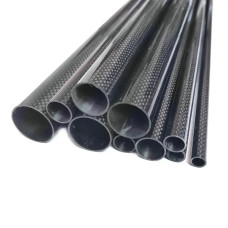
What are carbon fiber components?

Carbon fiber is a material that combines lightness and strength, and carbon fiber components are parts and spare parts for drones made from it. They help maintain structural stability, increase maneuverability, and reduce the weight of the aircraft. In military conditions, this is critical: carbon fiber parts withstand impacts, falls, and rapid maneuvers without adding unnecessary weight. They also simplify repair and modernization if such a need arises.

Why are carbon fiber components needed for drones?

Carbon fiber components are essential for the reliability and durability of drones. They ensure frame strength, flight stability, and control precision. For drone users, such parts reduce the risk of breakdowns during active maneuvers. And if repairs are needed, replacing carbon fiber components is quick and straightforward. Plus, they are excellent for modernization – you can reinforce the structure or reduce weight. 

Types of carbon fiber components

There are several types of carbon fiber components: frames, arms, fairings, supports, and protective panels. Frames are responsible for the main strength and structural stability, fairings improve aerodynamics and maneuverability, and protective panels protect electronics and motors. Accessories for FPV drones often complement carbon fiber components, making the system more functional and lightweight.

Advantages of carbon fiber components

Carbon fiber is distinguished by its durability, lightness, and high strength. Such components reduce drone weight, increase maneuverability, and improve flight stability. They withstand impacts and temperature changes, which is important for field conditions and military applications. Thanks to these properties, repairs and part replacements are quick, and modernization is straightforward. In field conditions, access to electricity is also important, and portable power stations come to the rescue, as, unlike generators, they produce no noise or emissions.

How to choose carbon fiber components correctly?

When choosing, pay attention to compatibility with your drone model, material strength, and manufacturing precision. It is important that carbon fiber components fit your existing parts, including drone batteries. This ensures stability, durability, and comfortable use of the equipment.

Where to buy carbon fiber components?

It is best to buy carbon fiber and ready-made drone components from a trusted source that offers reliable parts. This guarantees durability, compatibility, and stable operation of the aircraft in field conditions. FlashArmy offers a wide selection of carbon fiber components suitable for drone modernization and repair, and you can also purchase necessary accessories and drone batteries, portable power stations, and other equipment.

Expand

Frequently asked questions about products in this category Carbon Fiber Drone Components
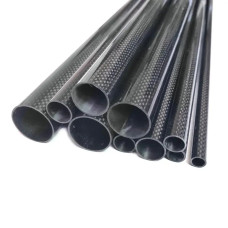
Carbon fiber drone components include sheets, tubes, rods, and other carbon fiber blanks. They are used in frames, arms, reinforcements, mounts, and protective parts. Carbon fiber is valued for its light weight, high rigidity, and resistance to deformation, making it well-suited for FPV drones where extra grams quickly affect flight performance.
Carbon fiber sheets are used to make frames, bottom and top plates, standoffs, protective panels, and other flat parts. An element can be cut from the sheet to fit a specific drone geometry, with holes for standoffs, the controller, battery strap, or camera mount. In drone manufacturing, carbon fiber sheets are used where a rigid base is needed without excess weight.
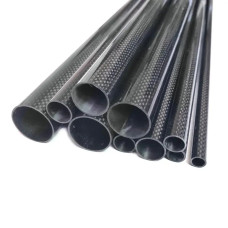
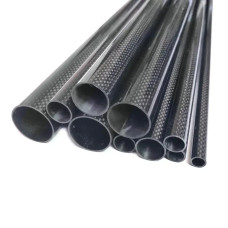
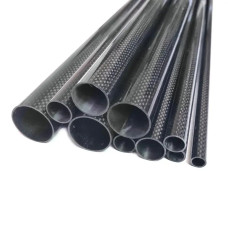
Carbon tubes for FPV drones provide rigidity with low weight. They are used as arms, extensions, frame elements, mounts, or parts of custom structures. A tube performs well under bending and torsion if the diameter, wall thickness, and length are chosen correctly. For larger or heavier drones, a thin tube can be a weak point, so the size should be selected based on the load, not just the weight.
Carbon rods are lightweight and rigid enough to reinforce frames, guy lines, guides, or auxiliary elements. They weigh less than metal counterparts of the same size but maintain their shape well under proper load. At the same time, carbon does not tolerate sharp point impacts, improper drilling, or overtightening with bolts without washers. If the rod operates in a force-bearing assembly, diameter, fiber direction, and material quality are crucial.
Carbon is denser than most plastic parts in terms of rigidity and lighter than many metal solutions. Plastic is easier to process and cheaper to replace, but it bends, cracks, or warps under load. Aluminum holds up well to impact and threading but adds weight. Carbon is better suited for frames, plates, and tubes where rigidity, geometric stability, and low mass are important, but it must be processed carefully.
Carbon fiber sheets with a thickness of 1 to 10 mm are often used for drones. Thinner sheets are suitable for overlays, protection, and lightweight parts, while thicker ones are used for structural plates, frames, and elements with higher loads. Common formats include 500×600 mm, 600×500 mm, 600×1000 mm, and 1000×1000 mm sheets, but it is best to choose the specific size according to the drawing or template of the part.
Carbon tubes for a drone frame are selected by outer and inner diameter, wall thickness, length, and weave type. For a lightweight drone, the thickest tube is not always necessary, as it would add weight without benefit. For a large frame, heavy battery, or long arms, it is better to choose a stiffer tube with a larger diameter and a normal safety margin. It is also necessary to check how the tube interfaces with mounts, motors, and the central part of the frame.
Carbon rods and sheets are best cut with a sharp tool, without significant overheating or delamination of the edge. After cutting, the edge should preferably be sanded, and holes drilled carefully to avoid splitting the fiber. During processing, respiratory protection should be used, and carbon dust should not be inhaled. When mounting, do not overtighten the part with bolts: carbon is strong, but point pressure can damage the structure.
Carbon fiber drone components in Ukraine cost approximately from UAH 100 for small blanks or simple elements. Larger tubes, rods, and sheets cost more, as the price depends on thickness, diameter, length, format, manufacturer, and carbon type. A sheet for a frame, a one-meter tube, and a thin rod are different parts in terms of material consumption and load, so one should not focus solely on the lowest price.
Flash Army offers carbon sheets, tubes, and rods for drone repair, assembly, and modification. When cutting a plate for a frame, first check the sheet thickness and blank size; if beams or reinforcement are needed, check the tube diameter, length, and rigidity. Before purchasing, it's best to immediately verify drawings, holes, mounting points, and loads so that the carbon doesn't need to be reworked after the first fitting.