On the modern battlefield, unmanned systems, digital communications, and satellite navigation play one of the most crucial roles. This is why electronic warfare (EW) has ceased to be an auxiliary support element and has become a fundamental means of survival for personnel, preserving equipment, and maintaining positions.
EW systems are an urgent necessity in current combat conditions, as they not only function as a shield against drones but also can significantly reduce enemy combat effectiveness in certain areas, making them a central component of modern warfare strategy. However, there is no universal system — EW jammers can differ depending on the specific threat, usage conditions, frequency range flexibility, etc.
An incorrectly chosen system is not only wasted money but also a deadly risk if the complex "blinds" its own communication devices and drones. In this article, we will examine how to choose and buy an EW jammer, what types of systems exist, where they are used, and what characteristics to pay attention to when choosing. The text was developed by the Flash Army team for EW/SIGINT unit specialists and signalmen, unit commanders, and combat vehicle crew members.
What is EW and how does it work
EW is a set of technical solutions and means designed to suppress or disorient enemy electronic systems and protect one's own systems. The main function of EW is to create interference and jamming that suppress communication between an enemy drone and its operator.
The principle of operation of EW systems is based on generating their own powerful radio emission at the same frequency as the enemy's device operates, with the aim of jamming it. Some systems are capable of not only jamming the control signal but also replacing it with false data, disorienting an enemy drone or missile.
Main types of EW systems
There are various military EW jammers, differing in design, method of application, and range. Let's consider the main types of systems:
- Directional EW (Anti-drone rifles)
These are portable complexes made in the form of a rifle, where waveguide or patch antennas are installed instead of a barrel. The operator detects the drone (visually or with a detector), aims the rifle, pulls the trigger, and the device begins to emit a beam of radio interference. This option is best suited for mobile patrols, checkpoints, and observation posts.
- Dome EW systems
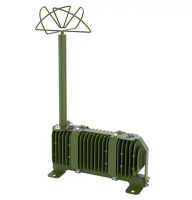
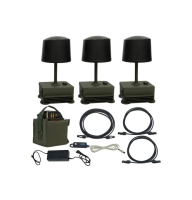
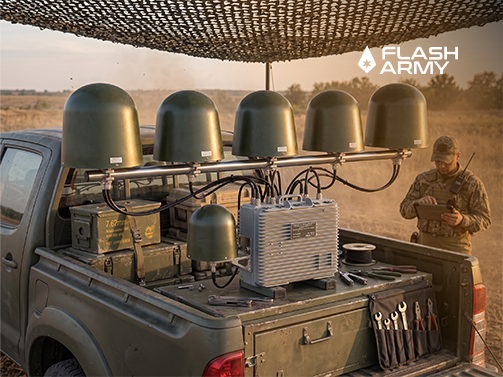
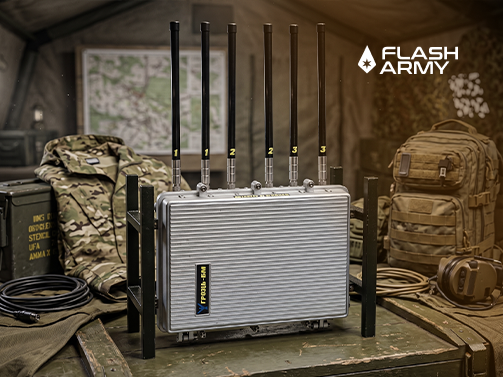
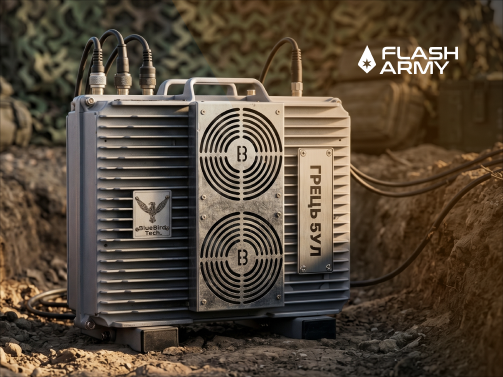
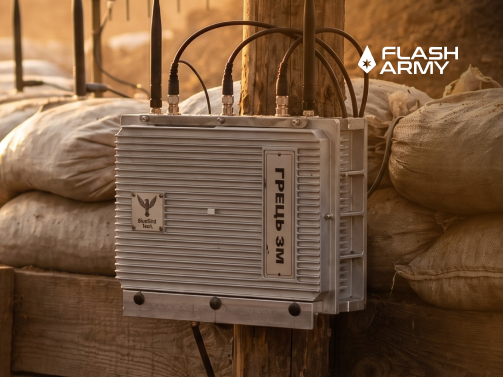
These systems emit interference 360° around themselves using omnidirectional antennas, creating an "umbrella" effect. After activation, the system automatically floods the airwaves in all directions with noise at specified frequencies, creating a protective "dome." Best suited for stationary positions, dugouts, trenches, and command and observation posts (COPs).
- Vehicle-mounted EW
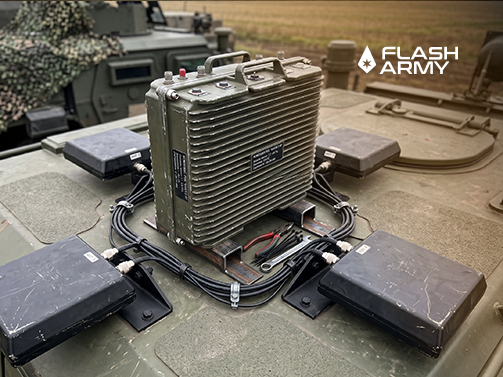
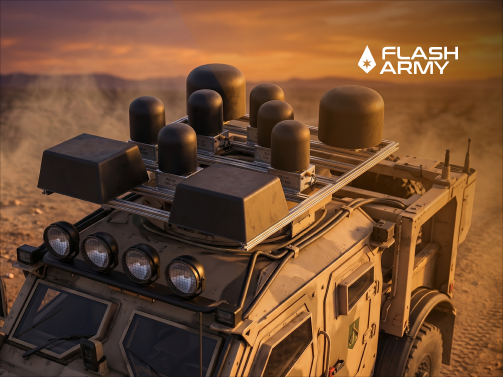
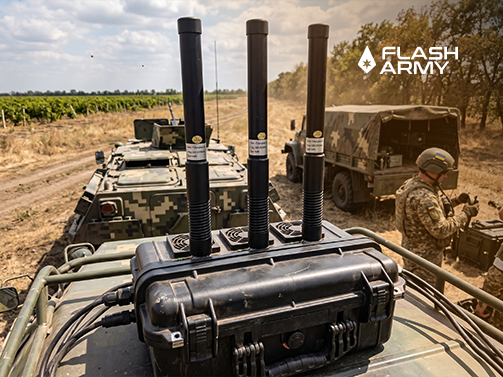
This is a type of dome system adapted for mounting on vehicles: logistics vehicles, evacuation transport, armored vehicles. They are powered directly from the vehicle's onboard network, protected from vibrations, dirt, and moisture, and antennas are mounted on the roof using powerful magnetic or bolted platforms. Used to prevent FPV drone attacks while the vehicle is moving on a route or during evacuation.
- "Trench" EW
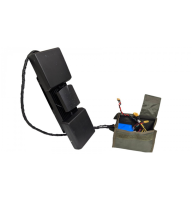
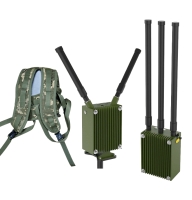
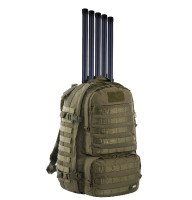
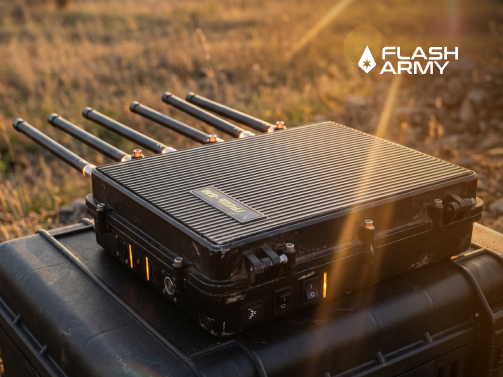
Lightweight, compact, portable devices assembled as cases, backpacks, or monoblocks. These portable models are powered by quick-change rechargeable batteries and typically can only work with the most popular "working" frequency ranges of enemy FPV drones. A common choice for assault groups, small infantry units, and medics during foot evacuation.
- Large operational-tactical complexes
Systems based on truck chassis or multi-axle trailers, which have enormous power capable of covering entire sections of the front, work in conjunction with powerful electronic reconnaissance stations and are serviced by specialized crews. They can affect heavy reconnaissance UAVs, SIGINT aircraft, satellite communication channels, and navigation channels of high-precision missiles.
Key characteristics when choosing an EW jammer
When choosing a military EW jammer, it is necessary to pay attention to a number of important technical parameters that determine the system's effectiveness and its suitability for the unit's actual needs.
- Frequency range
One of the most important criteria — because the types of drones or communication devices the system can suppress depend precisely on the frequency ranges in which it can operate. If an EW jammer, even with enormous power, cannot operate at the frequency at which an enemy drone is flying, the system's use is absolutely useless.
Modern EW jammers must be able to work with classic frequencies for Mavics (2.4 GHz and 5.8 GHz for video and control, 1.5 GHz and 1.2 GHz — satellite navigation), and also support modern frequency shifts. Since the enemy has learned to adapt to standard jammers, shifted-down ranges are actively used: 700–850 MHz, 850–1000 MHz, 400–500 MHz.
That is why a modern complex must have a modular structure that allows covering the widest possible range of frequencies, including shifted ones, and changing boards (modules) for new enemy drone firmwares.
-
Output power is measured in watts (W) and is specified not only for the entire device but also separately for each module. The higher the power of each module, the greater the "noise wall" the device can create, and the further from the EW position it can jam the signal from the drone's control panel.
An optimal indicator for trench or dome EW is considered to be 10-30 W or even 50 W per frequency channel. For a dome with 4–6 channels, the total power can range from 100 to 300 W or more. However, high power also has a downside — the need for a large amount of energy, which leads to rapid battery discharge and device overheating. Therefore, quality batteries and active cooling (radiators, coolers) are a critical necessity in a powerful EW complex.
- Range
The standard range for dome and trench systems is from 50 to 250–300 meters. Exceptions include anti-drone rifles, which can penetrate up to 2500 m due to their concentrated beam, while the shortest range is found in light trench EW jammers, which operate at 30–150 m.
This indicator is directly dependent on the distance of the enemy drone from its operator. For example, if the operator is close (2–3 km away), the signal will be very powerful, and the EW jammer will only be able to suppress it at a distance of 30–50 m from the dome. If the drone has managed to fly 7–10 km from the operator, the EW jammer will be able to "suppress" it 150–200 m before the position.
- Directionality and Antenna Type
Energy from the jammer can be directed into space in two different ways, depending on the type of antennas used:
- Omnidirectional (Omni / whip / collinear): energy is distributed evenly 360° horizontally, creating the "dome" effect. In this case, protection occurs in all directions without the need to aim at an object, but the range is limited.
- Directional (patch antennas, panel, log-periodic): these antennas concentrate the signal into a narrow sector, providing maximum range. They are used in anti-drone rifles and stationary sectoral complexes. The disadvantage of such systems is the need for aiming; other sides remain unprotected.
The choice of antenna type directly depends on the task at hand — whether it is necessary to protect an object from all sides or to control a specific sector.
- Mobility and Power Type
Military EW jammers differ in format, depending on the unit's logistics:
- Stationary: heavy, with large radars and powered by a generator or a large battery bank via an inverter.
- Vehicle-mounted: lighter than the previous type, with magnetic mounts for quick installation, vibration protection, and powered by the vehicle's onboard network with protection against voltage spikes from the car's alternator.
- Trench: the lightest option, as the soldier must carry the device along with standard equipment — the weight of a trench EW backpack does not exceed 8–12 kg. This type provides for quick battery replacement.
Stationary systems provide a larger coverage area but require more time to deploy; mobile and vehicle-mounted complexes allow for quick position changes and accompanying personnel on the march.
Where EW Systems Are Used
Modern EW systems are used in several key areas:
- Front line — to protect trenches, assault groups, and observation posts from drops and FPV drones.
- Transport and armored vehicles — to cover medical evacuations, logistics trucks, tanks, and infantry fighting vehicles (IFVs) while in motion.
- Critical infrastructure (rear tasks) — protection of large industrial facilities, power plants, ports, and oil depots from long-range kamikaze drones.
- Command posts — at operational depth, used to cover headquarters, communication nodes, ammunition depots, and artillery positions from reconnaissance UAVs.
In wartime, the range of EW system applications is very wide and is not limited to the zone of active hostilities.
Common Mistakes When Choosing EW Jammers
Most often, when choosing an EW jammer, you may encounter the following mistakes:
- Ignoring current frequencies: it is important to clearly understand which current frequencies enemy FPV drones operate on in a specific sector of the front, otherwise the purchased system will not cover the necessary ranges and will simply be useless.
- Focusing on power: it is incorrect to rely solely on the number in the specifications, because in reality, this indicator depends on the operating frequencies (if the system mainly works only with outdated channels, the power will be minimal on current shifted frequencies), antenna type, equipment placement, etc.
- Insufficient attention to power and cooling systems: it is necessary to clearly understand what will power the dome in the field, how long it can operate autonomously, and whether it will overheat in the first 15 minutes of operation due to weak radiators and coolers.
- Incorrect distance assessment: the stated range can significantly differ from the actual range depending on the proximity of the enemy operator, antenna type, terrain, etc.
- Lack of coordination between units: activating a powerful omnidirectional EW jammer without prior coordination with neighboring drone operators will lead to the fall of friendly Mavics from "friendly fire" or to the loss of radio communication or internet for infantry.
- Lack of integration with other systems: EW jammers most often work in conjunction with drone detectors, SIGINT equipment, and air defense systems. Modern drones often switch to autonomous mode when they lose connection with the operator, so EW equipment alone may not be enough.
Tips for choosing an EW jammer for specific tasks
There are several common tips on which EW jammer is best to buy depending on the tactical task. For example, for infantry, a multi-channel trench or dome EW jammer is most suitable, preferably in a protected case with reliable active cooling capable of ensuring long-term operation.
For evacuation and logistics, an in-vehicle EW jammer with omnidirectional antennas, powered by the vehicle's electrical system and resistant to vibrations, is the best choice, while assault groups need lightweight mobile EW jammer backpacks that are easy to carry, unload, and have quickly replaceable batteries.
The main thing to remember is that there are no universal application scenarios — in-vehicle kits do not protect stationary objects well, and a heavy trench system is not suitable for a mobile group.
Conclusion
Choosing a military EW jammer is a complex but very responsible task that requires technical skills, an understanding of the current threat landscape, use scenarios, and even coordination with neighboring units. The protection of equipment, ammunition, the effectiveness of the unit, and most importantly, the lives of soldiers depend on the correctly chosen electronic shield. You can order and buy an EW jammer for any tactical task at Flash Army.
-min-192x200.png "Dome EW Jammer Hrets 4M with Quadrifilar Antennas")