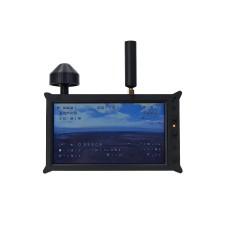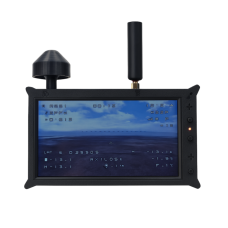
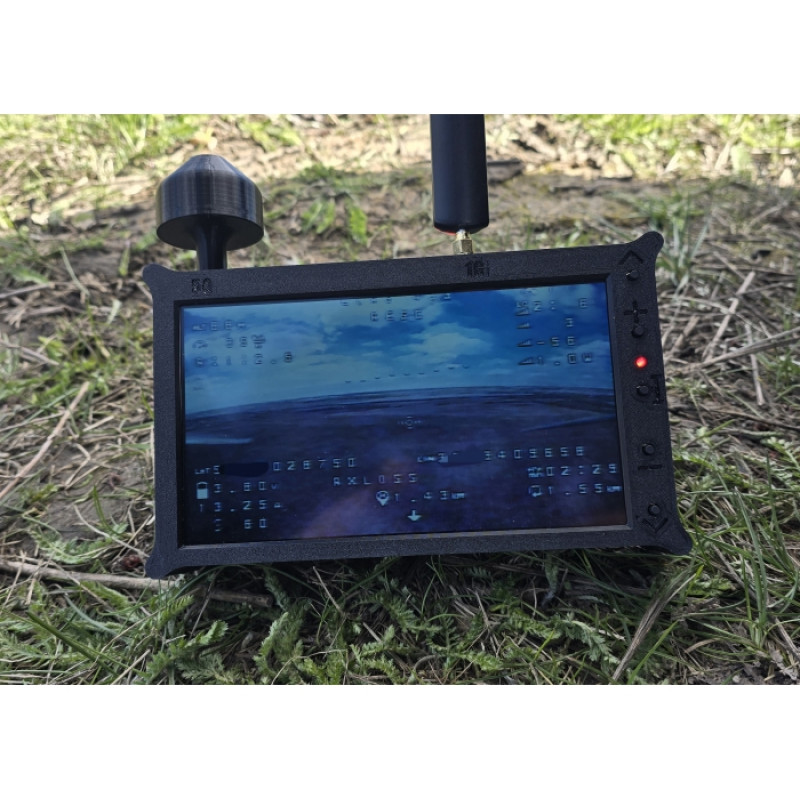


Video Interceptor VIDIK-S v3 Stationary 1.2, 3.3, 5.8GHz





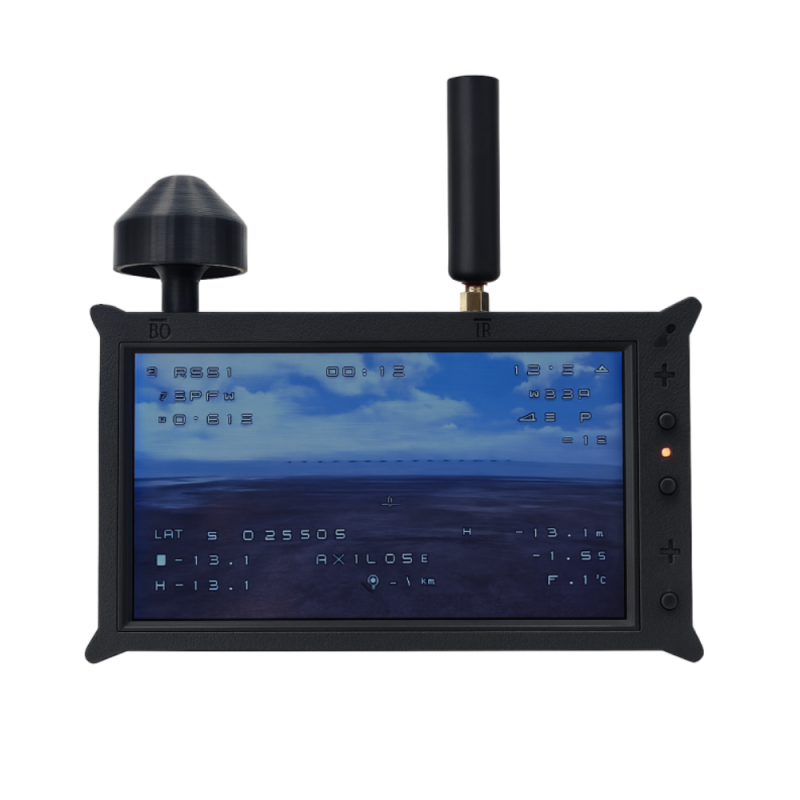
VIDIK-S v3 Stationary Video Interceptor 1.2, 3.3, 5.8GHz from Micro-wave — a professional device in the Drone Detector category, designed for automatic search and display of video signals from UAVs. Please note: there is currently a waiting list for video detectors; please place orders via wholesale or by contacting a manager; estimated delivery time is 5 weeks.
Key Features of VIDIK-S v3
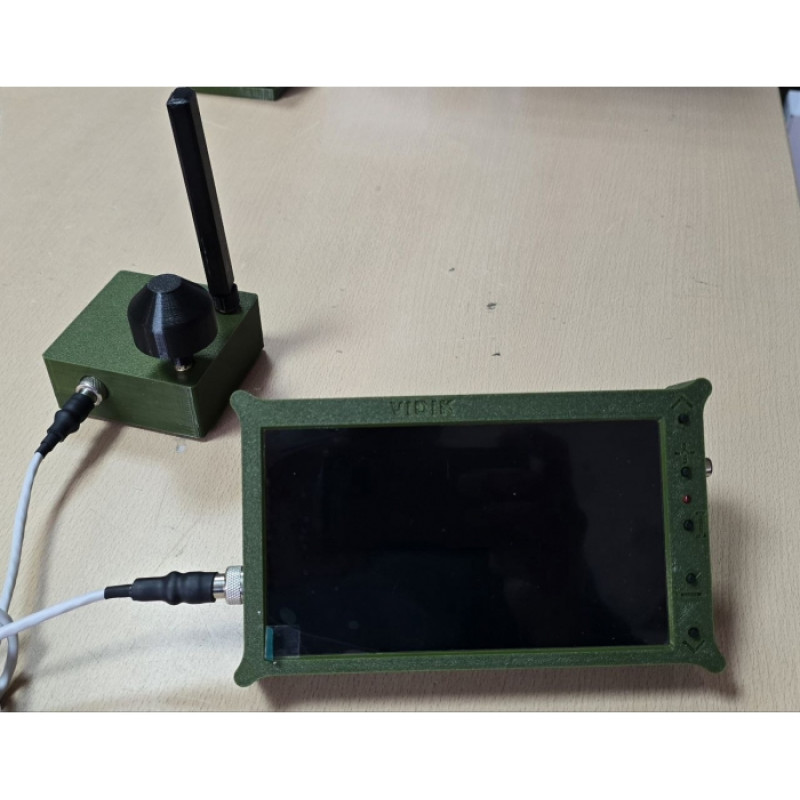
- Stationary version with separate enclosures for the screen and receiver with antenna.
- Supported bands: 1.2 GHz, 3.3 GHz, 5.8 GHz with simultaneous scanning of all spectra.
- Scanning frequency intervals: 1.2 GHz = 850-2200 MHz; 3.3 GHz = 2800-4150 MHz; 5.8 GHz = 4850-6100 MHz.
- Scanning step: 2 MHz (scans the air by frequency, not by channels).
- Battery capacity: 10000 mAh (approximately 6-10 hours of operation).
- Power supply: 5V/2A via Type-C connector — can be powered by a mobile phone, power bank, or car charger.
VIDIK Modifications
Option #1 VIDIK-P — portable interceptor for 2 spectra (1.2 GHz and 5.8 GHz), all integrated into one housing for portable use.
Option #2 VIDIK-S — stationary interceptor for 2 bands (1.2 GHz and 5.8 GHz). The receiver and screen are in separate enclosures; processed signal is transmitted from the receiver to the screen via twisted pair, reducing quality degradation.
Option #3 VIDIK-P v3 — portable interceptor for 3 spectra (1.2 GHz, 3.3 GHz, and 5.8 GHz) in a single housing for convenient field use.
Option #4 VIDIK-S v3 — stationary interceptor for 3 bands with separate screen and receiver, where the processed signal is also transmitted from the receiver to the screen via twisted pair without reception degradation.
How to Choose Between P and S
Connecting the antenna and receiver with a coaxial cable results in signal losses of approximately 7 dB including connectors, which is equivalent to a power reduction of about 2.2 times; this is an important factor when choosing between portable (P) or stationary (S) configurations.
Device Description and Interfaces
The screen has a 7-inch diagonal. There is an RCA connector for connecting an external monitor. There is a Type-C charging and connection port. The antenna connector is SMA Female (external thread). Type-C power allows the use of standard chargers, power banks, or car adapters.
Operating Principle and Control
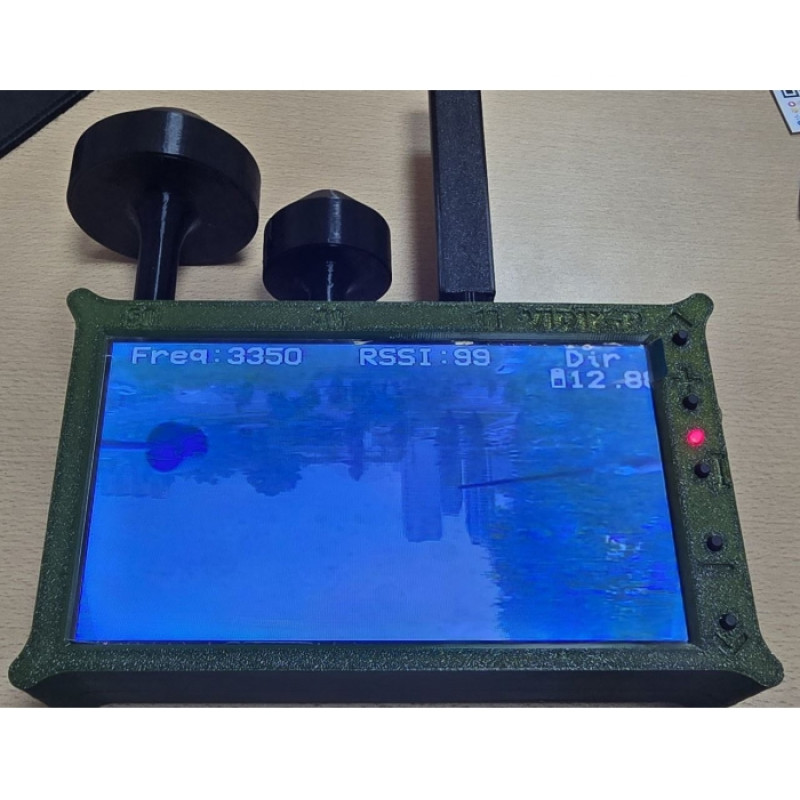
After powering on, the detector automatically begins scanning the airwaves by frequency with a 2 MHz step — no additional button presses are required. Scanning occurs simultaneously across all three bands. While waiting, the screen is off, and a red LED flashes. Upon detecting a video signal, VIDIK automatically stops scanning on that stream, the screen turns on, an audible signal is emitted, and the LED glows steadily. To mute the sound, press button I; the sound will activate again upon the next signal detection.
If you need to ignore a found frequency (e.g., your own drone or a false positive), press button I for 10 seconds — the message «Ignore» with that frequency will appear on the screen. To continue scanning, use the up or down buttons: the up button moves the scan in the direction of increasing frequency in a loop, the down button — in the direction of decreasing frequency. The + and − buttons allow fine-tuning the frequency with a 2 MHz step. As long as a signal is displayed on the screen, the detector does not scan other frequencies. A full scan pass takes approximately 15-20 seconds.
Factors Affecting Detection Range
- 1) Power of the transmitter you are trying to intercept.
- 2) Operating frequency spectrum (1.2 GHz, 3.3 GHz, or 5.8 GHz).
- 3) Drone flight altitude.
- 4) Terrain.
- 5) Radio wave propagation conditions (atmospheric conditions, obstacles).
Due to the large number of variables, precise predictive range values are difficult to provide, so examples from field tests and user feedback are given: in a test scenario under conditions:
- 1) Transmitter power: 1 W;
- 2) Frequency band: 5.8 GHz;
- 3) Flight altitude: 70-100 meters;
- 4) Terrain: flatland;
- 5) Normal radio wave propagation conditions (sunny day)
the interception distance was approximately 2300-2500 meters. In user feedback, there were cases: at 1.2 GHz, interceptions were recorded at distances up to 8 km, and with a directional antenna at 3.3 GHz, stable video signals were received at distances up to 10 km. At the same time, it should be remembered that in these examples, the transmitter power and other conditions are unknown.
Important: the detector cannot intercept digitally encoded or encrypted video (e.g., Mavic, Autel, Zala series drones and others with crypto protection).
The device is mass-produced, has passed field tests, and is available for industrial-scale orders. If you need consultation on choosing a modification or application conditions — please contact a manager.
Other products in this category here Drone Detectors
No questions about this product, be the first and ask your question.