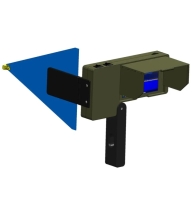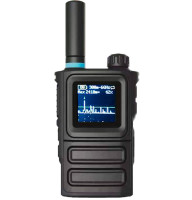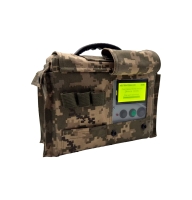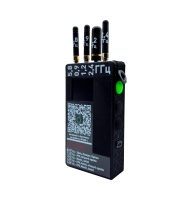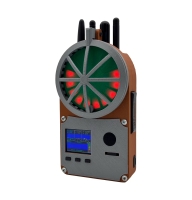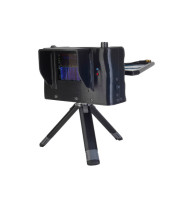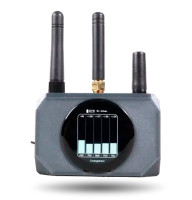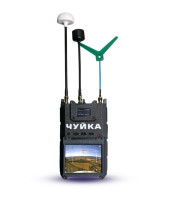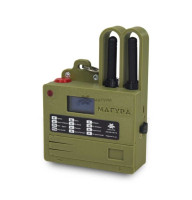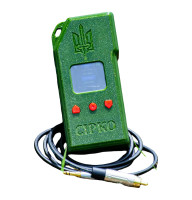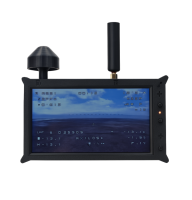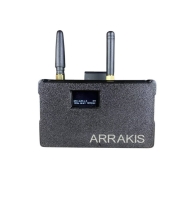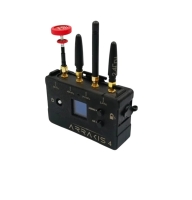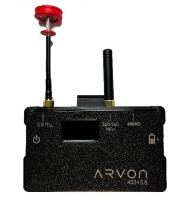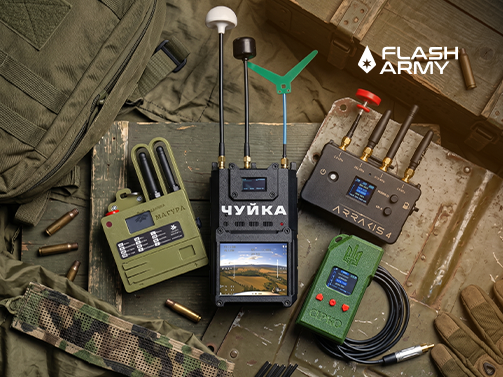
A drone detector is a device essential in modern warfare, as it identifies the presence of unmanned aerial vehicles in the air. Unlike EW jammers, detectors do not suppress radio signals but rather search for and pinpoint them. This allows for preparation against an approaching threat.
The correct choice of drone detectors is particularly important because it affects not only the effectiveness of combat missions but also the safety of the soldier. An unreliable device can lead to unpleasant consequences such as inability to scan drones on non-standard frequencies, reaction to false signals, rapid battery discharge, or even emitting its own signal that could be triangulated by the enemy.
This article will help you understand which characteristics and features to pay attention to when choosing a drone detector. The FlashArmy team has prepared this material for people who work with drones and would like to know how to buy a drone detector that will not let them down.
Frequency Ranges and Their Number
Frequency ranges are one of the most important criteria when choosing, as the spectrum of frequencies that a detector can "sense" determines which drone models it will be able to detect. UAVs typically transmit telemetry, service data, and video to the control panel—transmission occurs via a specific frequency. An FPV detector scans various frequencies for activity—if an enemy drone operates in a range not supported by the device, i.e., in a "blind spot," it may go unnoticed.
The most common frequencies are:
- 5.8 GHz — most often used for HD video transmission and operation over short or medium distances; the primary band for Mavic, as well as for digital FPV systems (DJI O3, Walksnail, HDZero).
- 2.4 GHz — the most widely used standard frequency, on which most civilian drones (such as Mavic, Air, Autel), some FPV drones, and Wi-Fi-controlled quadcopters fly; has better range than 5.8 GHz but a large amount of "noise."
- 1.2–1.5 GHz — mid-range frequencies used for long-distance analog and digital video transmission, GPS/GNSS signal operation, and in complex control systems.
- 700–1000 MHz — typical range for FPV kamikaze drones, attack drones, and relay drones. Most common frequencies: 750 MHz, 868 MHz, and 915 MHz.
- 300–600 MHz — low frequencies that are becoming increasingly popular, as they allow for long-distance operation, bypassing obstacles, and circumventing standard EW jammers.
For a basic detector, e.g., a civilian one, 1–2 bands (2.4 and 5.8 GHz) will suffice. Devices with at least 3–5 bands (700–900 MHz, 2.4 GHz, 5.8 GHz) are considered optimal, while professional options should cover the entire spectrum—from 300 MHz to 6 GHz.
The number of bands is an important criterion, but it's not enough. Technical nuances such as the following are also crucial:
- Scanning bandwidth: technically, this is the speed at which the detector scans frequencies. Most modern drones can change frequencies instantly, so it's important to detect them at the moment of a "hop."
- Sensitivity: it's not enough to just detect an FPV drone—it needs to be done at a safe distance before it gets too close. Therefore, it's important for the drone to be able to detect weak signals even at long distances.
- Protocol analysis: a good detector should not just catch the wave, i.e., the frequency on which the drone transmits a signal, but also the protocol—the data packets transmitted for communication with the remote control. This is how you can identify the specific type and model of drone attempting to approach.
This data helps distinguish specific targets from a large amount of noise and do so in a timely manner, which is why a modern, reliable drone analyzer must be "intelligent." It is desirable for the device to support simultaneous monitoring of multiple channels.
Portability and Autonomy
These parameters are among the key factors when choosing a detector, especially for mobile groups, as in combat conditions, the weight, portability, and operating time of the device without power are critical.
Portability
In terms of portability, detectors can be divided into handheld, backpack, and mobile stations. Handheld detectors are the most commonly used, as backpack options weighing 5–15 kg, although having more powerful antennas, significantly restrict the soldier. Mobile stations involve the use of a long-range antenna but are only used on vehicles, require power from the vehicle's electrical system, and are more conspicuous.
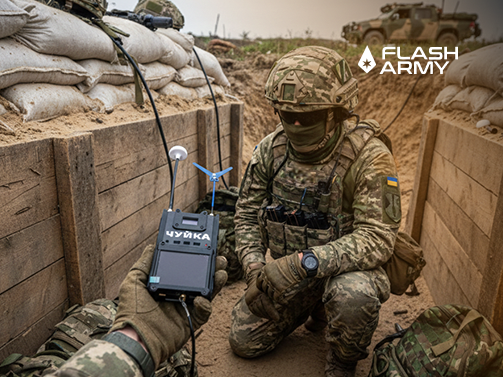
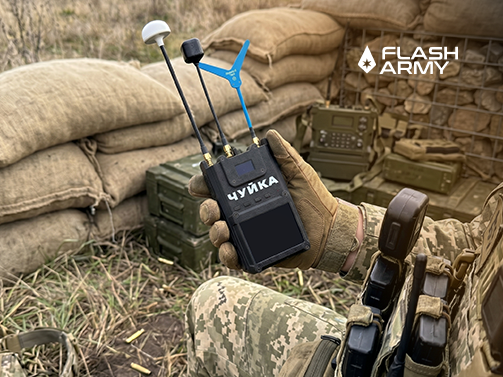
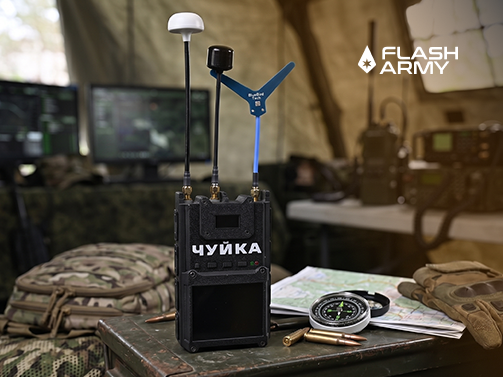
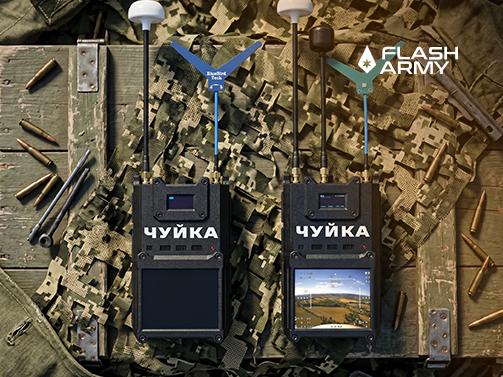
A handheld detector should not impede the soldier's movement or the use of weapons and other equipment. Therefore, most modern models, such as the Chuyka drone detector, have dimensions similar to a mobile phone, allowing them to be carried in a two-way radio pouch. The standard weight is 150–400 grams, and most models also feature a reliable clip for attachment, enabling the device to be used in the background without requiring hands.
Autonomy
Another important criterion that determines how long the detector can operate without recharging. An optimal indicator is 8–12 hours of active operation and 24 hours in "sleep" mode. The following battery types are most commonly used:
- Built-in (lithium-ion or polymer) — standard option for handheld models, designed for 4–8 hours of continuous scanning.
- Replaceable cartridges — a very convenient option that allows replacing a discharged battery (usually 18650 type batteries) in just a few seconds.
- USB Type-C charging — the most common option in modern models, allowing the device to be charged from a regular power bank and use smartphone batteries.
It is also important to consider the reliability of the design (impact resistance, protection from external factors, and antenna flexibility), as the device is used in extreme conditions. Also, its stealth—a quality detector should not have its own emissions, otherwise it could be triangulated by the enemy. In addition, a light masking function is useful, as any light at night can reveal a position.
Signal Indication Options
Signal indication is the method by which an FPV drone detector provides information to the operator. The indication determines how quickly, conveniently, accurately, and safely a signal about a potential threat will be delivered.
The following signal indication options exist:
- Audible indication — typically an audio signal, beep, voice message, etc. Most models increase signal intensity as the threat approaches. This method is the fastest and most convenient when the device is on a vest or in a pouch, but audible signals can overload the operator and may not be heard in a noisy environment (some models provide for the use of headphones for this purpose).
- Visual indication — the most informative method. The following visual indication options exist:
- LEDs: the signal color (from green to red) reflects the level of danger. A very quick method—sufficient for a single glance at the device, but it does not provide information about the type of target.
- Digital display (screen indication): displays the specific signal frequency, its power, distance, altitude, and communication protocol name (drone model). Modern models display a map of the area and flight trajectory, which is maximally convenient for the operator.
- Spectrogram: displays a graph (time—horizontally, frequency—vertically, signal intensity indicated by color). This option is best suited for experienced operators and allows for immediate exclusion of possible "noise."
- Vibration indication — the least common option, but very useful in situations where a silent mode is required. The detector emits a vibration signal that can be felt through equipment—the closer the threat, the more active the vibration. The main drawback is low informativeness, as it is impossible to communicate which specific drone is approaching.
- Remote indication — in some models, data can be transmitted to external devices (smartphone or tablet), allowing the detector to be used with an external antenna, remaining at a distance from it and seeing the situation on the screen.
It is best to choose maximally flexible systems that offer several different indications simultaneously. This way, the operator will be able to receive a danger signal in the most convenient and accessible way for them under any conditions.
Video Interception Capability
The ability to transmit video transforms an FPV drone detector into a true reconnaissance device and provides significant advantages, such as identifying enemy targets, the drone's launch point, its route, and a small time priority if an FPV drone is already approaching, etc. Typically, two types of video are transmitted:
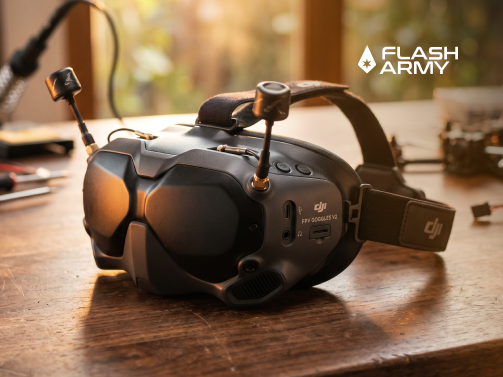
- Analog — this option is easier to intercept, as it is not encrypted and is used by most attack drones. Analog video is usually transmitted on 5.8 GHz, sometimes 1.2–1.5 GHz. To view such video, a detector with a monitor or autonomous devices (FPV monitor, FPV goggles, or OTG receiver for a smartphone) is required.
- Digital — used by digital drones such as DJI Mavic 3, whose signal is encrypted. This complicates the task, as most detectors only catch the signal but cannot decode it. This requires professional drone analyzers with Remote ID functionality, electronic reconnaissance (SIGINT) systems, or special mobile applications. Alternatively, detectors with a signature database can be used, which do not see video but clearly identify and indicate a threat, or HDMI receivers for connecting the device to a tablet.
There are several limitations to video interception, such as long distance (the drone must be within the antenna's radius), the operation of one's own EW, and the bright light of the monitor, which can make the position very noticeable at night (it is recommended to use devices with shades or FPV goggles).
Interfaces and Integration with Other Systems
Detector interfaces are the ways they exchange data with other devices, which determine how easily the device can be integrated into a system and exchange data with the user. The following types of integration exist:
- Physical integration: USB Type-C connector (universal for charging and data transfer), connectors for antenna connection (SMA/RP-SMA), audio output for headphones (3.5 mm Jack), Ethernet for network connection;
- Wireless interfaces: Wi-Fi and Bluetooth (used for connecting to a smartphone, tablet, laptop, etc.);
- Integration with other systems: some detectors can transmit the signal with the detected threat frequency directly to an EW module; API or SDK (allows integrating the detector with external software for automating data processing, creating custom scenarios and monitoring systems), work with other sensors; signal transmission to an air defense control center, etc.
It is important to choose a maximally flexible drone analyzer that will be a universal solution and can integrate with existing equipment into a common defense system at any time. In addition, attention should be paid to the level of network access protection and update support.
Conclusion:
Choosing a drone detector is a complex and highly responsible task, as it is the foundation of safety on the modern battlefield. It must be sufficiently versatile, portable, designed for a large number of ranges and integration methods, and have regularly updated software. You can choose the optimal drone detector, compare different models, or consult with specialists in the Flash Army online store.