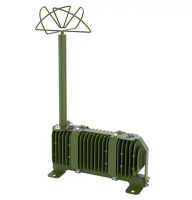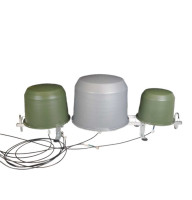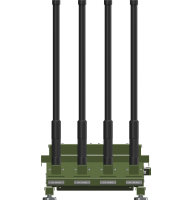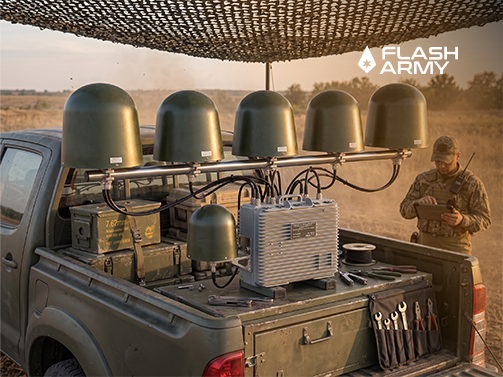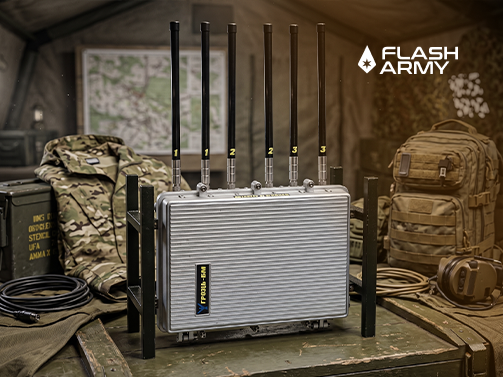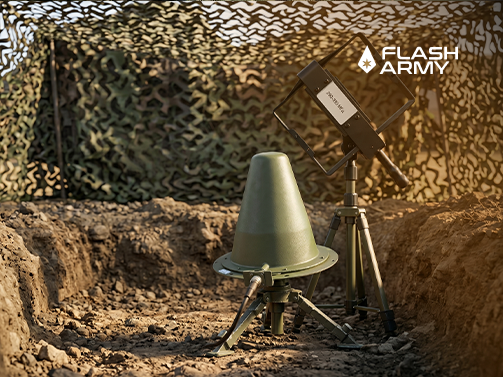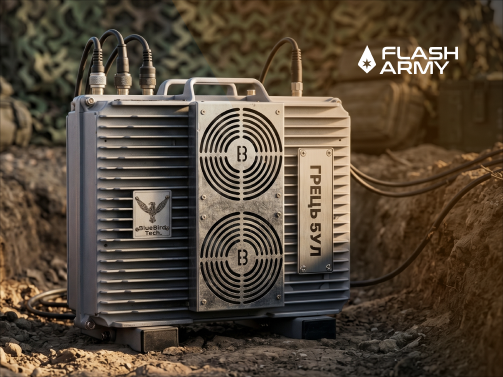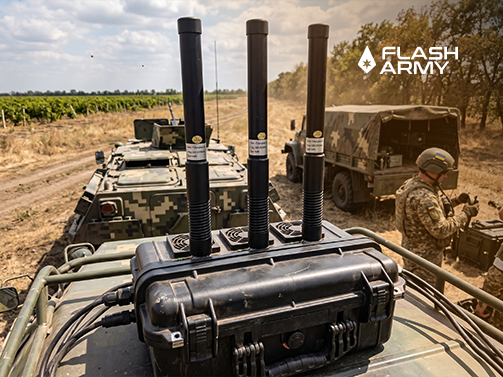
Antennas for EW directly affect the efficiency of the entire system. They are responsible for receiving and transmitting signals, determining the operating range, communication stability, and target detection accuracy. Even with powerful equipment, an incorrectly selected antenna can significantly reduce the overall result.
This article was prepared by the Flash Army team for military personnel, technical specialists, and everyone who works with radio frequencies and signal control systems. In this material, we will consider what types of antennas for EW exist, how they differ, and how to choose the right one for specific tasks.
What are antennas used for in EW systems
As part of an EW system, antennas perform a basic function — interaction with the radio frequency environment. They receive signals, transmit interference, and form the equipment's area of influence.
Main types of antennas for EW
Different tasks require different types of antennas.
Several basic solutions are most often used, each with its own characteristics.
Main tasks of antennas in EW:
- detection of signal sources;
- transmission of interference to suppress communication channels;
- forming directional or omnidirectional coverage;
- operation in different frequency bands.
The antenna's characteristics determine how effectively the system can operate in a complex radio environment. Therefore, the choice of this element is not a secondary issue, but a key factor in the result.
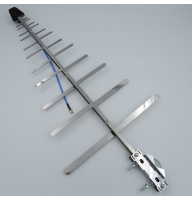
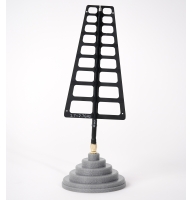
Log-periodic antennas
Log-periodic antennas — are a universal option for operating in a wide frequency range.
They provide stable signal reception and transmission in several bands at once, making them convenient for tasks where it is necessary to work with different types of channels.
Main advantages:
- wide frequency range;
- stable characteristics;
- versatility of use.
Such antennas are often used in systems where flexibility and the ability to quickly adapt to changes in the radio environment are important.
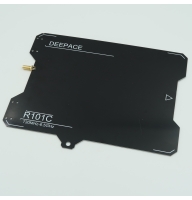
Patch antennas
Patch antennas — are compact directional antennas that operate in a specific frequency range.
They form a narrow coverage sector, which allows concentrating the signal in a certain direction.
Advantages:
- compactness;
- good directivity;
- ease of installation.
Patch antennas are used where it is necessary to work with a specific area or object without signal scattering.
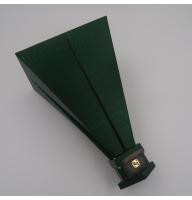
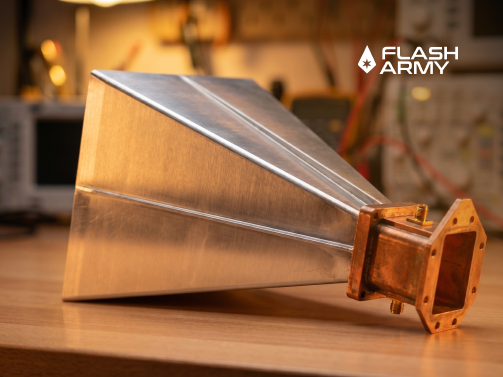
Horn antennas
Horn antennas are distinguished by high directivity and accuracy of operation.
They allow maximum signal focusing and operation over longer distances in a given direction.
Advantages:
- high accuracy;
- signal stability;
- effectiveness at long distances.
Such antennas are used in tasks where signal concentration and control of a specific sector are critically important.
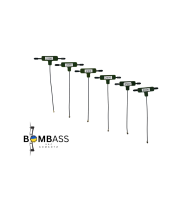
Dipole antennas
Dipole antennas — are simple and effective solutions for basic tasks.
They usually provide omnidirectional coverage, allowing operation in all directions at once.
Advantages:
- simple design;
- wide coverage angle;
- affordability.
Dipole antennas are suitable for situations where it is necessary to control the general radio environment, rather than a specific sector.
What characteristics to pay attention to when choosing
To correctly select antennas for EW, several key parameters should be considered.
-
Frequency range
The antenna must match the frequencies with which the system operates. Mismatch will lead to loss of efficiency.
-
Gain
The range and quality of the signal depend on this parameter. The higher the gain — the stronger the signal in a given direction.
-
Directivity type
- omnidirectional — for general coverage;
- directional — for working on a specific sector.
The choice depends on the task: territory control or pinpoint work.
-
Quality of materials and assembly
Antennas operate in difficult conditions, so it is important that they withstand moisture, dust, and mechanical loads.
-
Compatibility with equipment
Before buying an antenna, you need to check the connectors, connection type, and system compatibility.
Conclusion
Antennas for EW — are a key element that determines the efficiency of the entire system. Their characteristics determine the range, accuracy, and stability of operation in the radio environment.
In this material, we reviewed the main types of antennas, their features, and the parameters to pay attention to when choosing. Now you understand how to approach the selection of antennas for specific tasks and operating conditions.
In the Flash Army marketplace, you can choose different types of antennas for EW — from universal to specialized solutions. The catalog presents verified models that are used in real conditions, allowing you to choose the optimal option without unnecessary compromises.