UAVs have long ceased to be a highly specialized tool. Today, they are used in various fields — from agriculture to construction, energy, and logistics. Drones help perform work faster, reduce costs, and provide more data for analysis.
For example, in the agricultural sector, they allow assessing crop conditions, identifying problematic areas, and treating fields. In construction — monitoring work progress and taking measurements. In energy — checking the condition of lines and equipment without risk to people.
But a drone itself is only part of the system. Drones and quadcopters work in conjunction with control equipment, and the FPV ground station is the key element of this system. It ensures the control, stability, and accuracy of the UAV's operation.
This material was prepared by the Flash Army team for those who want to better understand the operating principles of drone control stations, their features, and practical applications.
What is a drone control station
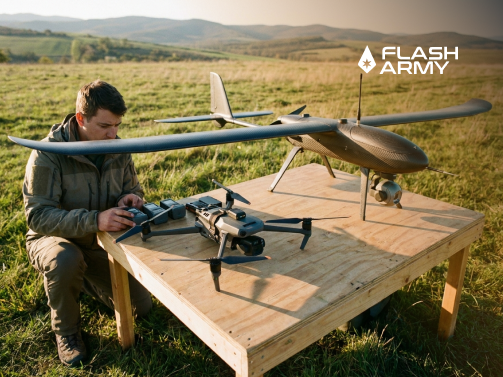
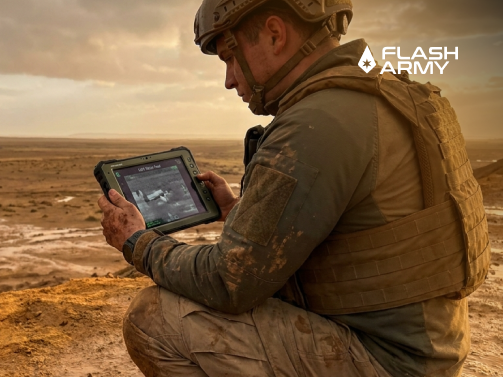
A control station is a complex of equipment through which an operator interacts with a drone. It allows controlling flight, receiving video and technical data, and monitoring all main parameters.
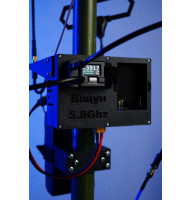
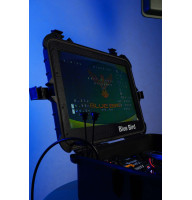
In its simplest form, it can be a remote control with a built-in screen. In more complex configurations, an FPV ground station is used, which may include separate monitors, signal amplifiers, antenna systems, and additional modules for video processing.
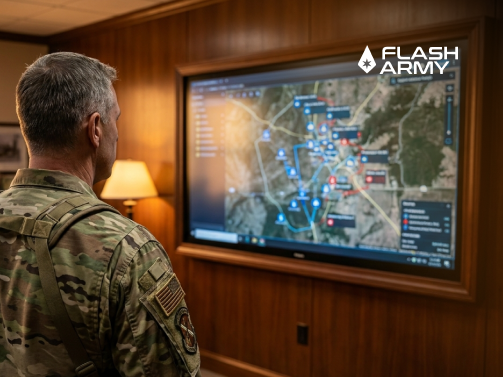
In fact, the station is a “control center” through which all information passes. The operator controls the drone not at random, but sees the full picture: where it is, how it moves, and what is happening around it.
Main functions of control stations
An FPV control station addresses several important tasks at once. And its capabilities determine how convenient and safe it is to work with a particular drone.
Data reception and display
One of the main functions is data transmission. The operator receives images from the camera, as well as data on altitude, speed, coordinates, signal level, and other parameters.
This allows working not blindly, but with an understanding of the situation in real time. This is especially important in tasks requiring precision: inspections, mapping, territory monitoring.
Image quality matters here. If the picture lags or is poorly legible — it immediately affects the work.
In complex systems, stations can work together with solutions such as drone detectors, which allows for additional control of airspace and analysis of the radio environment.
Flight control
Through the station, the operator sets all main parameters: direction of movement, altitude, speed. Modern systems also offer automatic modes — for example, flight along a route or return to the starting point.
This simplifies work, especially when repetitive tasks need to be performed. But even in automatic modes, it is important to have stable control and the ability to intervene at any moment.
Drone status monitoring
The ground control station also displays the UAV's technical status: battery charge, signal quality, navigation system operation.
Such data helps avoid problems during flight. For example, the operator sees when the charge level drops or the signal begins to weaken, and can timely return the drone or make adjustments to its operation.
Types of control stations
Control stations can vary greatly depending on the tasks. Let's consider the main types.
Portable
This is the simplest and most common option, as these control stations are easy to carry. They work with a smartphone or tablet.
Such stations are suitable for mobile work where it is important to quickly deploy equipment and start flying.
Stationary
Used where constant control from one location is required. These can be observation posts or infrastructure facilities.
Such stations usually have large screens, powerful antennas, and additional equipment for data processing. They are less mobile but offer more capabilities.
Mobile complexes
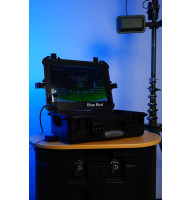
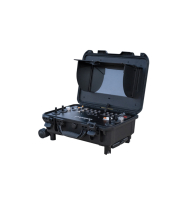
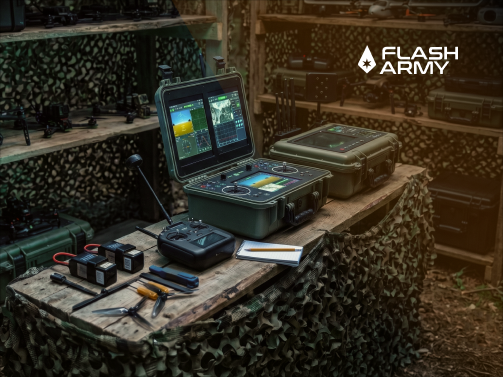
These are something in between portable and stationary solutions. They can be housed in cases or even in vehicles.
Such complexes are convenient for field work: they can be quickly deployed, while offering more functionality than a regular remote control.
What to consider when choosing a control station
The choice of a drone control station depends on the tasks you need to perform. But there are a few points worth considering in any case.
Compatibility
Not all stations are compatible with all drones. Before purchasing, it is worth checking if the system supports your model.
Otherwise, problems with connection or functionality may arise.
Range and communication stability
This is one of the key parameters. It determines the distance at which the drone can be controlled without signal loss.
Communication quality is affected by antenna type, transmitter power, and even terrain. If long-distance operation is planned — it's better to immediately look at models with signal amplification capability.
Screen and ease of use
A good display is a matter of efficiency. The screen should be bright enough to be visible in sunlight, and the interface — clear and logical. The fewer unnecessary actions, the faster the operator can react to a situation.
Power and autonomy
The operating time without recharging directly affects how long you can work without interruption.
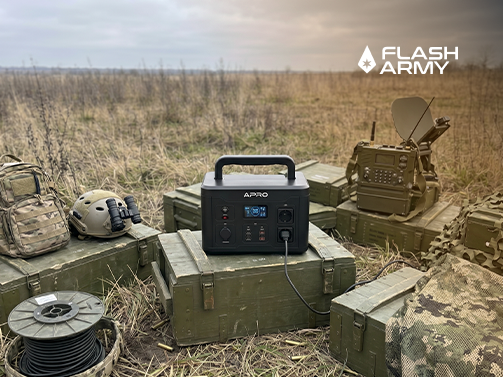
For field conditions, it is important to be able to quickly replace the battery or connect an additional power source. This is especially relevant for long tasks.
Conclusion
The control station is the foundation of drone operation. It is responsible not only for control, but also for data transmission, communication stability, and overall flight safety.
In the article, we analyzed the points that truly affect drone operation. In short, when choosing, you should look at compatibility, communication quality, interface convenience, and autonomy.
At Flash Army, you can find various control station options — from simple solutions for basic tasks to more complex systems for professional use. This allows you to choose equipment for specific conditions without unnecessary overpayments.