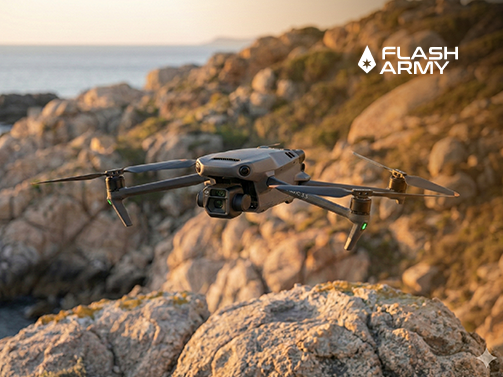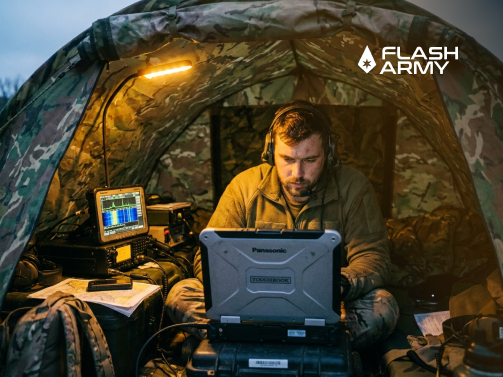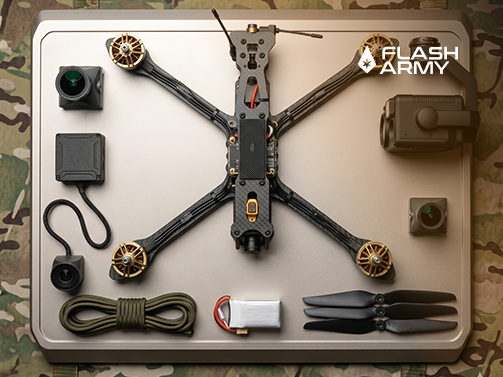
The operational effectiveness of drones and quadcopters depends on many components: the motor, weight, propellers, design, etc. The camera should also be included in this list, as it provides the primary channel for obtaining information during flight. Whether it's reconnaissance, fire adjustment, mapping, or filming, the operator relies primarily on the video signal.
Why is the camera so important for a UAV? First and foremost, it acts as the operator's "eyes." For real-time flights, high resolution and image detail allow for better object recognition, obstacle avoidance, and control of altitude and distance.
In addition, cameras with good light sensitivity and image processing allow for clear images even in poor lighting conditions or during movement. This reduces operator strain and increases control accuracy.
Thus, we see that the camera is not just an optional element, but an important component of a drone. Therefore, in this article, we will examine the features of drone cameras, their additional functions, and conditions of use.
Key Characteristics of Drone Cameras
Drone cameras can differ in lens, field of view, low or high video transmission latency, light sensitivity, weight, and compatibility with other elements. Let's consider each of these parameters.
Lens
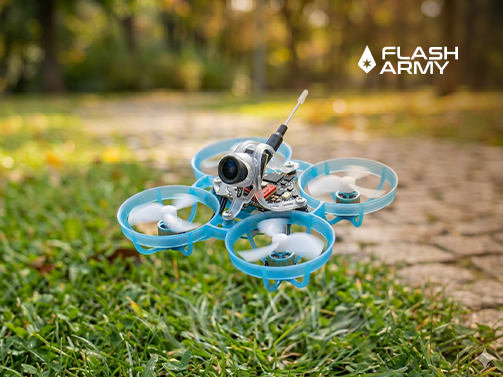
For FPV drones, options with focal lengths of 1.8 mm, 2.1 mm, or 2.8 mm are most often used. They provide a wide field of view and allow you to see elements from the side. In most models, lenses can be changed to adjust the field of view.
In addition, it is worth paying attention to the presence of WDR (Wide Dynamic Range) technology. It ensures correct image transmission during sharp transitions between dark and bright lighting conditions.
Field of View
The focal length of the lens directly affects the camera's field of view. It usually ranges from 120°–170°. The wider the field of view, the greater the likelihood of image distortion at the edges and the creation of a "fisheye" effect.
Latency
This parameter determines how quickly the image from the FPV camera reaches the operator. In bomber drones, the ideal latency should not exceed 20 ms, and 20–40 ms is considered an acceptable value. Latency over 50 ms significantly complicates piloting. Analog cameras provide the lowest latency.
Light Sensitivity
Light sensitivity determines how well the camera "sees" in the dark. This is important during night or evening flights. The lower the Lux value, the better the image. Light sensitivity of 0.00001 Lux or less provides good visibility in the dark.
Weight
The weight of a UAV camera can vary depending on its type (analog, digital, thermal) and size. If it is heavy, the drone with the camera becomes less fast and maneuverable. Therefore, manufacturers offer options that weigh no more than 1 kg. Ideally — 1.5–2 g or 5–10 g.
Compatibility
The FPV camera must be technically compatible with the video transmitter. Digital cameras do not work with analog transmitters, so it is important to consider the type of signal transmission system. For example, DJI cameras are only compatible with DJI Air Unit modules. In many cases, it is advisable to choose ready-made kits where the camera and transmitter are optimized to work together.
In addition, it is necessary to ensure correct interaction of the entire video communication system with the control equipment (e.g., the remote control). Incompatibility can lead to a situation where the operator receives an image but cannot control the drone.
Cameras with Extended Functionality
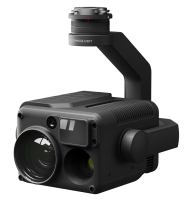
There are also quadcopter cameras with specialized capabilities designed for more complex and comprehensive tasks. These extensions include thermal and night-vision cameras.
Thermal Imagers
Thermal imagers work by detecting the thermal (infrared) radiation of objects, allowing them to detect people and other heat sources regardless of lighting. They do not require light, as they "see" temperature differences. This ensures the camera operates in complete darkness, at night, or during search operations. They usually have an analog signal type.
Night-Vision Cameras
Night-vision cameras can also operate in low-light conditions. This is achieved through ultra-high sensitivity (up to 0.00001 Lux). They amplify existing light (e.g., moonlight or starlight) using special sensors, enabling clear images at night. Such cameras transmit a more natural image (black and white).
It is important to remember that when choosing, compatibility with the video system should be considered.
Conclusion
In this article, you learned that the camera is one of the key elements of a drone, on which the quality of control, the effectiveness of task execution, and even operator safety directly depend. It provides the necessary information in real time, so its characteristics must correspond to the conditions of use and the type of flight.
When choosing a camera, it is important to consider not only basic parameters (lens, field of view, latency, light sensitivity, and weight), but also compatibility with the video system and signal type. For night conditions, we recommend paying attention to cameras with extended functionality that provide visibility in the dark.
In the Flash Army online store, you can choose proven drone cameras, as well as all the necessary components that will ensure effective flights and the fulfillment of assigned tasks.