Unmanned aerial vehicles are used today in many areas — from civilian aerial photography to specialized technical tasks. In recent years, many different types of drones have appeared, each with its own purpose and design features. One such type is the bomber drone.
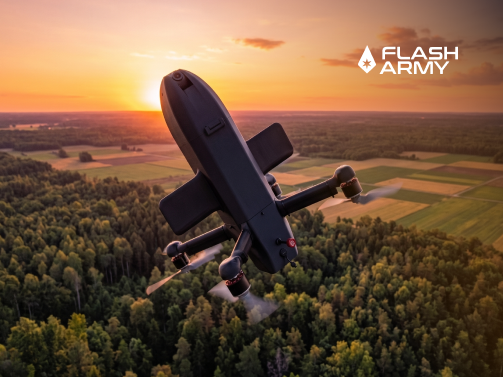
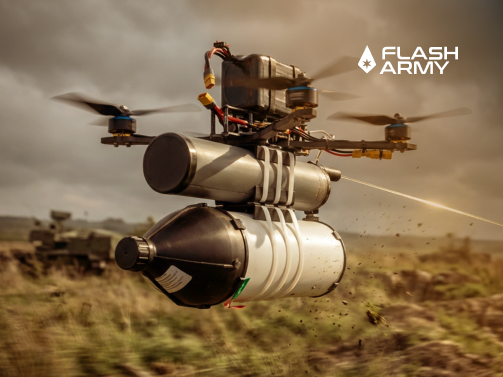
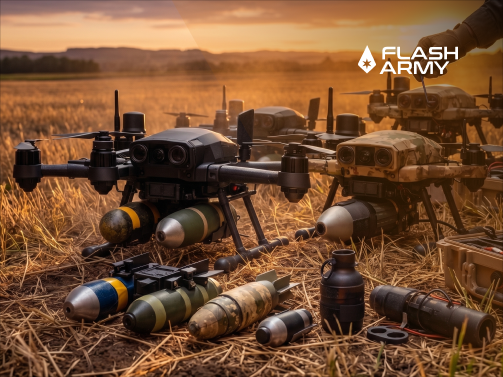
A bomber drone is an unmanned aerial vehicle that can carry and remotely drop a specific payload. Usually, such devices are also called "drone bombers." This name emphasizes their ability to transport cargo and drop it during flight.
The material was prepared by the Flash Army team for military personnel and those working in the military sphere. In this article, we will examine what a bomber drone is, what design features such UAVs have, and what characteristics are usually paid attention to when choosing such equipment.
What is a bomber drone
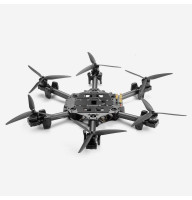
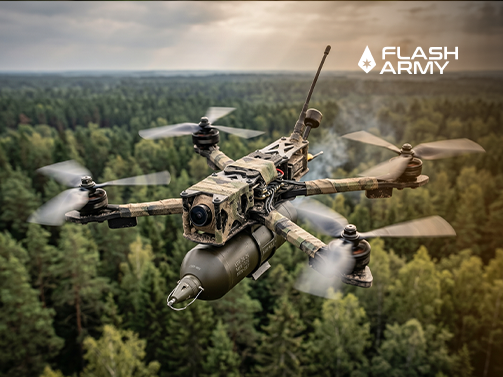
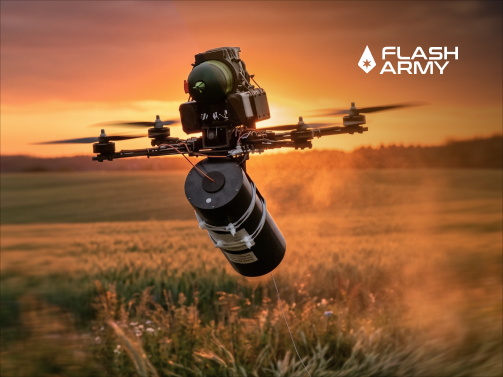
A bomber drone is a type of unmanned aerial vehicle that can lift and remotely drop a certain payload. Most often, such devices are created based on multicopters. A separate category of such devices is the FPV bomber — an FPV drone modification equipped with a payload drop mechanism.
The principle of operation is quite simple: the drone lifts the payload, delivers it to the desired point, and performs the drop at the operator's command. For this, the design includes a special mechanism integrated into the control system.
Drones of this type can vary significantly in size and technical capabilities. Some models are designed for a small load, while others are capable of carrying significantly more weight.
Main design features
The design of bomber drones has certain differences from standard multicopters. They are created taking into account that the device must lift an additional load and remain stable in flight.
Platform and frame
One of the key elements of any drone is its frame. In the case of bomber drones, it must be strong enough to withstand additional load.
Frames are usually made of light yet strong materials — for example, carbon or aluminum alloys. This allows reducing the overall weight of the structure while maintaining its reliability.
The design also often provides special places for installing the drop mechanism and attaching the payload.
Control and stabilization system
For stable flight, a drone requires precise control systems. The main element is the flight controller — an electronic module that coordinates the operation of engines, sensors, and navigation systems.
Modern UAVs use various sensors: gyroscopes, accelerometers, GPS modules, and other sensors. They help the device maintain stable flight even in difficult conditions.
For bomber drones, this is especially important, as additional load can change the device's center of gravity.
Camera and signal transmission
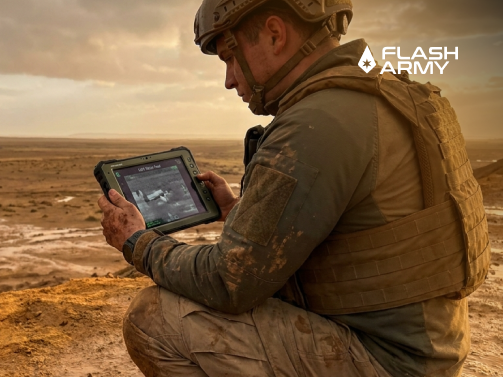
Most modern drones are equipped with cameras. They transmit real-time video to the operator's screen and allow flight control.
Such a system is often called FPV — first-person view. The operator actually sees what the drone's camera "sees."
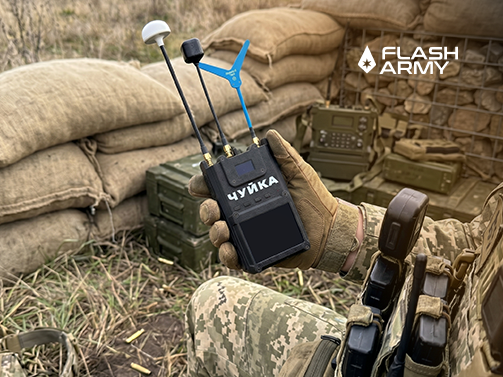
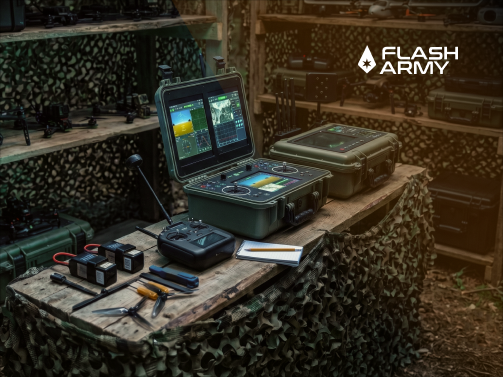
The quality of the video signal and the stability of the communication channel are of great importance, as they determine the ability to accurately control the device remotely. Special drone analyzers are used to monitor radio signals and detect UAVs in the air. They help determine UAV activity and communication parameters.
How bomber drones differ from other UAVs
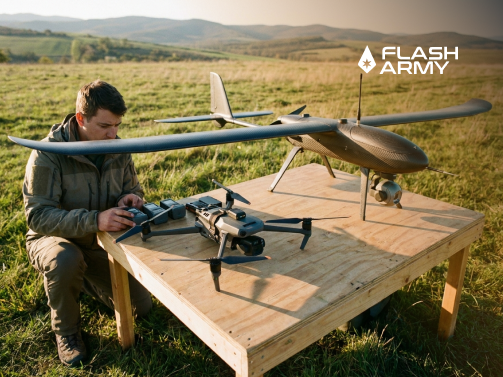
There are many different types of UAVs. Most often, they are divided by purpose.
Reconnaissance drones are used for observation and information gathering. They may have high-resolution cameras, thermal imagers, or other sensors.
Universal multicopters are used for civilian tasks — aerial photography, object inspection, territory monitoring, or delivery of small loads.
Bomber drones differ in that their design is initially intended for transporting and remotely dropping cargo. Because of this, they usually have more powerful engines, a reinforced frame, and a special drop mechanism.
Key parameters to pay attention to
When choosing a drone of this type, several main characteristics are usually evaluated. Let's consider each of them.
Flight time
Flight time determines how long the drone can stay in the air without recharging or replacing the battery.
This parameter is strongly influenced by the payload weight. The greater the weight, the faster the battery charge is consumed.
Control range
The control range determines the maximum distance between the operator and the drone at which a stable signal is maintained.
This indicator is affected by transmitter power, antenna type, and environmental conditions. For example, in open terrain, the signal usually propagates better than in urban areas.
Resistance to environmental conditions
Weather conditions can significantly affect drone operation. Therefore, it is important to consider the device's resistance to wind, dust, and moisture.
High-quality engines, reliable electronics, and a well-thought-out design help the UAV operate stably even in difficult conditions.
Conclusion
A bomber drone is a specialized type of unmanned aerial vehicle whose design provides for the transportation and remote dropping of a payload. Such UAVs differ from ordinary multicopters by a reinforced frame, greater carrying capacity, and the presence of a special drop mechanism.
In this article, we examined what a bomber drone is, what structural elements affect its operation, how such UAVs differ from other types of drones, and what characteristics are usually paid attention to when choosing. Understanding these features will help you better navigate the technical parameters and capabilities of such equipment.
You can familiarize yourself with modern UAV models and related equipment, as well as buy drones and components, on the Flash Army marketplace. The catalog presents various types of equipment and gear used both in civilian tasks and when working in difficult field conditions.