With the onset of power outages, more and more people are asking themselves, "How to choose a charging station?" In an apartment, country house, or military camp, stable power supply is no longer a luxury but a necessity. It's a kind of minimum for the comfort we're used to and can no longer do without. After all, without power for electronics, communication, and lighting, we quickly realize how dependent we are on electricity. That's why a home charging station has become an important part of daily life, tourism, or even service.
But how do you know how to choose a portable charging station? How does it differ from a generator? And which technical parameters are truly important, and which are just marketing manipulation? Let's break it down in detail with Flash Army, where the most reliable solutions for autonomous power in any conditions are gathered.
Charging Station - What Is It?
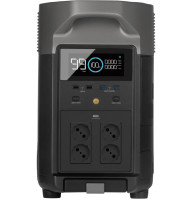
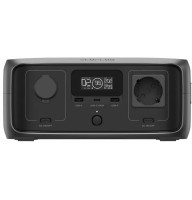
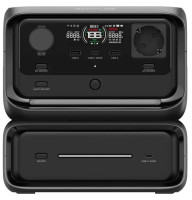
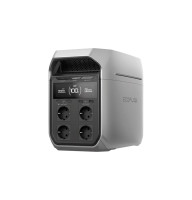
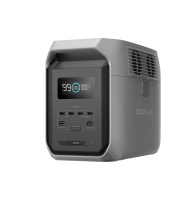
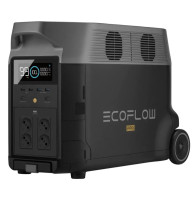
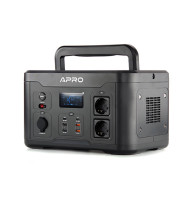
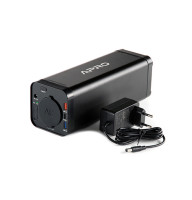
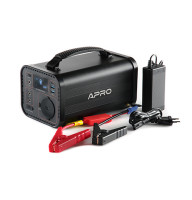
A charging station is a device that stores energy in a battery and allows you to power or charge various household appliances: from smartphones to refrigerators and other home electronics. It can be called a modern alternative to a generator, but without the noise, exhaust, and fuel smell.
Simply put, a portable charging station for home is a large power bank. It has a built-in battery, inverter, charge controller, and several ports, most often USB, 220V outlets, car outputs, etc. All you need to do is charge it from a wall outlet, solar panel, or car – and use it when there's no power, as needed.
The main components of charging stations are:
- Battery - this is the "heart" of the device. They come in different types: lithium-ion (Li-ion), lead-acid (AGM/GEL), and lithium iron phosphate (LiFePO4). The latter are most often used because they are durable and safe to use.
- Inverter - its main task is to convert DC into 220V AC for household appliances.
- Charge controller - responsible for safe power supply to devices and proper system operation.
So, a home charging station is convenient, eco-friendly, and quiet. It requires no maintenance, no fuel, and is not afraid of cold if stored correctly.
Where Are Charging Stations Used?
The scope of charging stations is much wider than it might seem. Portable charging stations for home come in handy not only during power outages but also when traveling, camping, or fishing. They can be used:
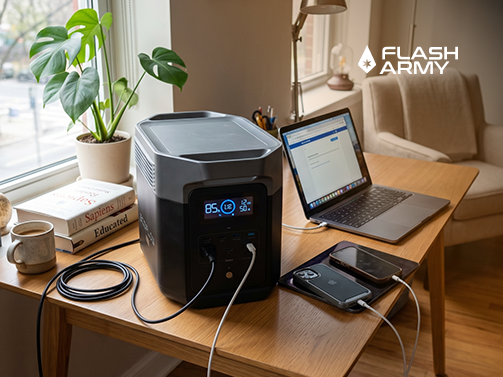
- For home or apartment. A charging station can power a Wi-Fi router, laptop, lamps, and even a refrigerator for several hours. This is an ideal option for people who need an optimal charging station for an apartment.
- For travel and camping. On hikes and outdoor recreation, a portable charging station for home helps charge electronics, turn on an electric portable stove, or a pump. This is energy independence when there is no access to an outlet.
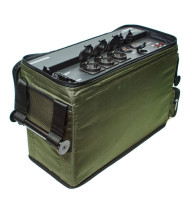
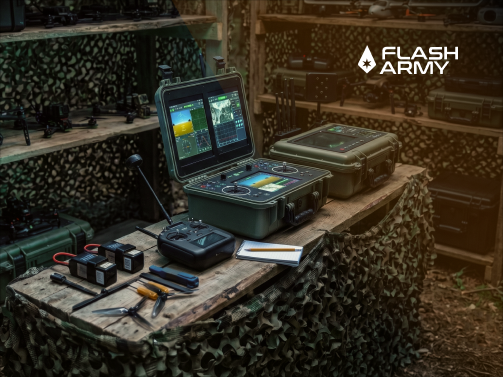
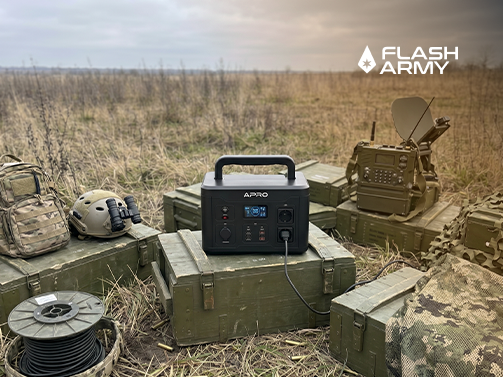
- For military and rescuers. In field conditions, a portable charging station for home can power two-way radios, drones, lighting, or communication systems, ensuring stable operation even without a generator.
Such stations have become a true symbol of autonomy - from home use to field bases and tourist camps.
Characteristics of Generators and Charging Stations
To choose the right charging station, you need to understand how a charging station differs from a generator.
A generator produces electricity by burning fuel - gasoline, diesel, or gas. They are powerful but very noisy and require fuel and maintenance.
A charging station, unlike a generator, stores electricity in a built-in battery. It is quiet, has no exhaust, and can use solar energy if charged from solar panels. This is what makes charging stations safe for home use.
Key Characteristics of Charging Stations:
- Battery capacity - shows how much energy the device can store (measured in watt-hours, Wh). For example, 1000 Wh is enough for 10–12 hours of router power or several hours of refrigerator operation. The number of hours a refrigerator operates directly depends on its power.
- Output power (W) - determines which appliances can be connected. 200-300 W is enough for a laptop, while a more powerful station - 800-1000 W - will be needed for a refrigerator.
- Number of charge cycles. This is an indicator of battery longevity. Modern lithium iron phosphate (LiFePO4) batteries can withstand up to 5000 cycles, which corresponds to approximately 8-10 years of operation.
- Weight and compactness. For an apartment and field conditions, it's better to choose lightweight models; for a house, more powerful ones with a larger battery.
Thus, a charging station is a clean and quiet alternative to a generator, ideal for home and military use in field conditions.
Charging Station or Generator - Which Is Better to Choose?
The choice depends on your goals and needs. If long-term backup power is required, a generator will be a cost-effective solution. The main disadvantage of generators is exhaust, which is why they are placed outdoors. But if quietness, environmental friendliness, and the ability to operate indoors are important, then it's better to buy a portable charging station for home.
Characteristics and Advantages of Generators:
- High power. Depending on the model, it can power several powerful appliances simultaneously - a refrigerator, boiler, heater.
- Reliability and versatility. The simple design ensures stable operation under various conditions. With an easy-to-use startup and maintenance system, the generator can be used for office, small business, camping, and military tasks.
- Long-term operation. Due to different fuel types and tank capacity, which may vary depending on the generator, the device can operate autonomously from 5 to 25 hours without refueling. The main fuel types for generators are: gasoline, diesel, or gas.
- Independence from the power grid. The devices work during a complete power outage and do not require charging.
- Noise level. Although this advantage can be attributed more to the disadvantages, modern models are being improved and equipped with sound-insulating casings to absorb noise.
Unlike generators, the advantages of power stations are:
- Silent operation.
- No exhaust or odors.
- Safe for use in an apartment.
- Can be charged by solar panels.
- Minimal maintenance.
It can be concluded that generators are more suitable for powering private homes and small businesses. But when choosing for an apartment, buying a power station for home is a more practical solution.
What to look for when choosing a power station?
If you are wondering how to choose a power station for home or how to choose a portable power station, here are some important tips:
- Determine energy consumption. Calculate which appliances you want to connect: for basic needs - a router, laptop, lamp - a 500-700 W station will suffice. For more powerful appliances, such as a refrigerator, microwave, or TV, a station of 1000 W or more will be suitable.
- Check the output power. It must not be less than the sum of the power of the connected devices.
- Pay attention to the battery type. LiFePO4 is the most reliable option.
- Evaluate charging time. Ideally, the station should fully charge in 3-5 hours.
- Mobility. If you plan to use the station for travel, we recommend choosing a station up to 12 kg.
When considering which portable power station to buy for home, it is best to choose models with a capacity of 500 - 1000 W. These are compact and easy-to-use models for apartment conditions.
Where to buy a power station?
So if you are asking yourself how to choose a power station for an apartment, reliable and high-quality solutions can be found on the Flash Army website. Here you will find proven models of both generators and portable power stations for any conditions. Flash Army offers reliable devices for energy independence not only for home, but also for camping, fishing, or field conditions.
A power station is not just a convenient device, but an investment in energy independence. It allows you to stay connected, work, and light your home even when it's dark outside.
If you are still wondering how to choose a power station, focus on your actual needs, appliance power, and mobility.