No one is immune to injuries. Sometimes they lead to severe medical conditions that require immediate action to save a life. One such condition is arterial bleeding. Most people do not encounter this, but knowing how to act, especially now, is extremely important for everyone. In such moments, there is no time to "Google" what to do and how to help the victim. There isn't even time to wait for an ambulance. That is why the action algorithm must be learned and practiced.
Why is arterial bleeding dangerous? Blood exits a damaged artery under high pressure (unlike venous bleeding). Because of this, a person can lose a significant volume of blood in a very short time, leading to impaired oxygen supply to organs, the development of hypovolemic shock, and can pose an immediate threat to life.
We explain what to do in case of arterial bleeding and what means to use to avoid fatalities.
Signs of Arterial Bleeding
There are five main signs of arterial bleeding that distinguish it from, for example, venous bleeding:
- Blood color — bright red (due to high oxygen content).
- Nature of flow — a strong pulsating stream or fountain, clearly synchronized with the heartbeat.
- Blood flow rate — extremely high.
- Loss of consciousness and weakness.
- Pale skin and cold sweat.
The sooner it is recognized and the faster first aid is provided, the higher the chances of successful rescue of the victim. In an emergency, a quick reaction often becomes the decisive factor between life and death.
CABC Action Algorithm
The CABC algorithm (Critical bleeding, Airways, Breathing, Circulation) is a first aid approach used for severe injuries on the battlefield and in extreme situations. The main goal of the algorithm is an ordered and phased response to life-threatening conditions.
It covers a series of basic steps, each of which performs a separate function and is important in the process of providing aid. Prompt and correct execution of all elements of the algorithm is a key condition for effective rescue of the victim and reducing the risk of complications.
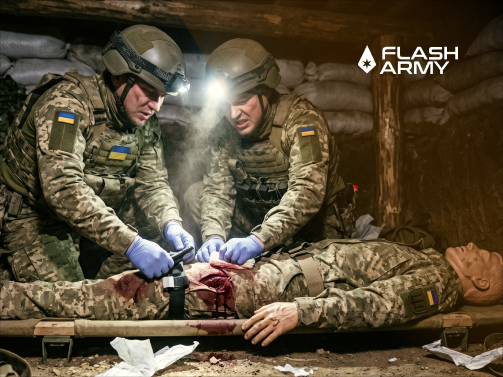
The priority is immediate stopping of massive bleeding (critical bleeding). The action algorithm is as follows:
- Immediately call emergency medical services.
- Determine the location of the injury, the nature of the bleeding, and the availability of means to stop it.
- Press the wound with a clean cloth, bandage, or hand (preferably gloved).
- If possible, raise the injured limb above heart level, if this does not cause additional pain and there is no suspicion of a fracture.
- For bleeding from a limb, apply a tourniquet above the injury site or use another available means.
- Continuously monitor the victim's condition: control consciousness, breathing, and signs of circulation until the emergency medical team arrives.
Means for Stopping Bleeding
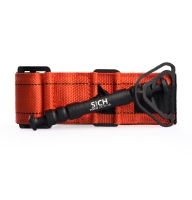
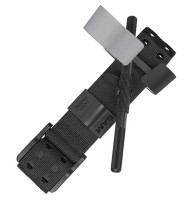
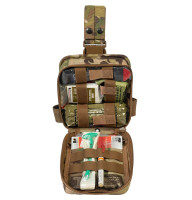
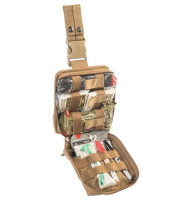
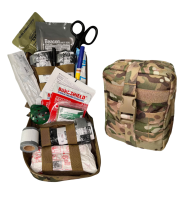
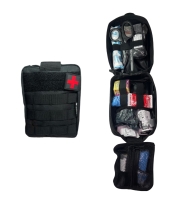
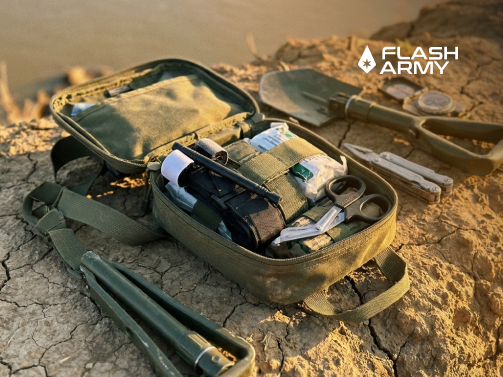
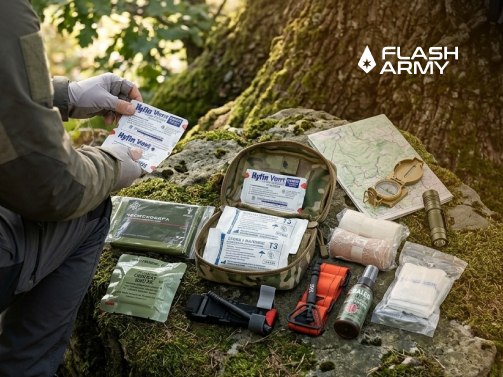
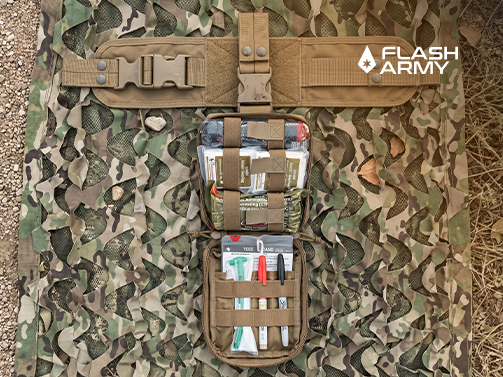
The main means of stopping arterial bleeding is a tourniquet. It effectively restricts blood flow in the damaged artery, allowing blood loss to be controlled until professional medical care is provided. Tourniquets must be used correctly to avoid causing tissue necrosis or amputation. That is why tactical first-aid kits must contain certified tourniquets. If they are not available, use a belt, tie, a piece of dense fabric, etc.
The second method is finger pressure on the artery. This method is used if there is no tourniquet or bleeding is in the neck. You need to press the artery against the bone (preferably through a cloth or napkin) and not release until help arrives.
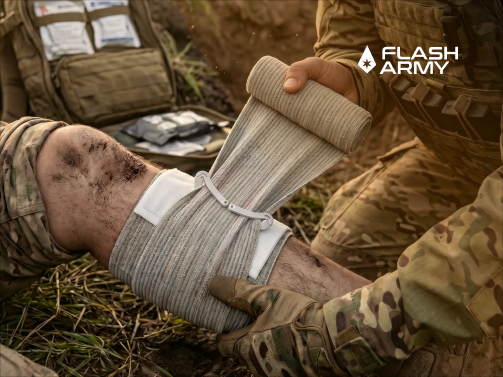
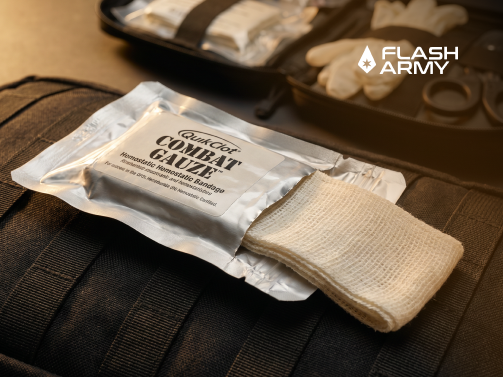
A similar means is the use of hemostatic bandages (wound packing). They contain components that promote faster blood clotting. They are used to tightly fill a deep wound, after which it is necessary to press on it with hands for at least 3–5 minutes.
Applying a Tourniquet
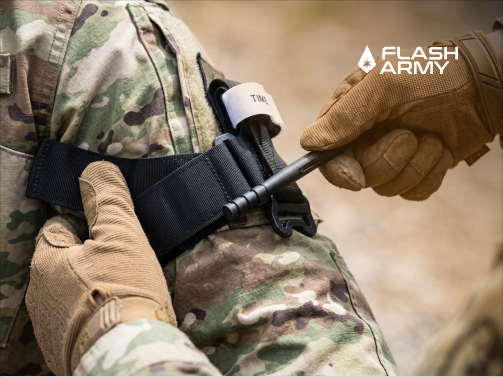
A tourniquet is used only for severe bleeding from an arm or leg when direct pressure on the wound does not stop it. Rules for applying a tourniquet:
- Expose the injury site and apply the tourniquet 5–8 cm above the wound. Do not apply it to a joint (knee, elbow, etc.).
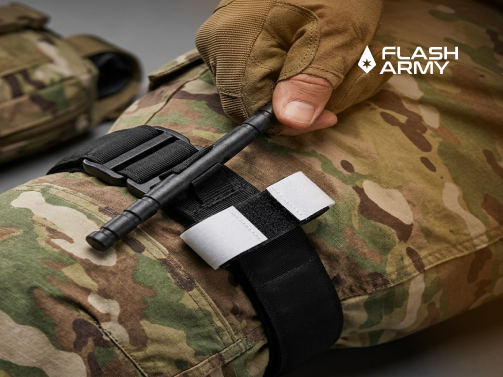
- Thread the limb through the loop. Tighten the strap as much as possible and secure it firmly with the hook-and-loop fastener.
- Turn the windlass until the bright red bleeding completely stops and the pulse below the application site disappears.
- Secure the windlass in the special holder so that the tourniquet does not loosen.
- Record the time of application.
If the tourniquet is applied correctly, the bleeding stops, and the skin below the constriction site becomes pale.
Additional Tips and Safety Measures
Arterial bleeding is an emergency, so when providing aid, it is important not only to act quickly but also to observe basic safety rules:
- Do not delay calling emergency medical services. Even if the bleeding has been temporarily stopped, the victim needs a professional medical examination and treatment (safe time with a tourniquet is up to 2 hours).
- Do not remove foreign objects from the wound. If there is a fragment, knife, or other object in it, do not try to remove it, as this may increase bleeding.
- It is important to maintain contact with the injured person. Talk to the person and monitor their well-being. If possible, limit their movements and help them get into a comfortable position.
Following these recommendations helps minimize the risk of complications.
Conclusion
Arterial bleeding is one of the most dangerous conditions requiring immediate response, as even a short delay in providing aid can lead to critical blood loss and fatal outcomes. In such situations, not only the availability of special tools but also a clear understanding of the action algorithm and the ability to quickly apply it are crucial.
We advise you to be prepared and buy a tourniquet in the Flash Army online store. We offer only tested and high-quality options that can help save a life when needed.