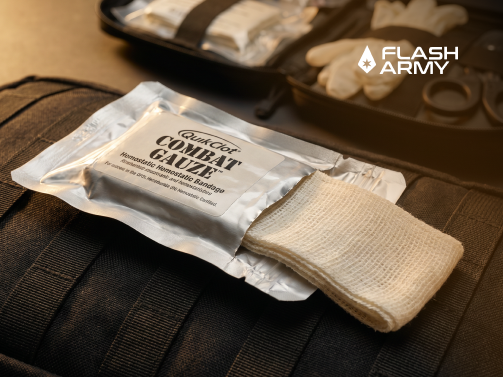
Modern combat operations are actively changing under the influence of technology. In particular, drones are used not only for reconnaissance or strike missions, but also for delivering equipment to positions. This includes medical supplies. That is why the availability and proper use of elements such as medical tourniquets become critically important in the field.
When every minute counts, it's important not to get lost and to clearly understand what to do. The ability to quickly apply a tourniquet in such situations often determines whether a life can be saved.
This material was prepared by the Flash Army team for military personnel, medics, volunteers, and everyone working in high-risk conditions. It contains basic rules for applying a tourniquet, common mistakes, and practical tips that will help you act quickly and without unnecessary doubts in critical situations.
What is a medical tourniquet and its purpose
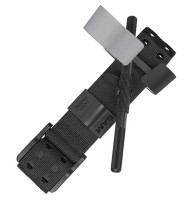
A medical tourniquet is a device for temporary stopping of severe bleeding from limbs. Its main task is to block blood flow in the damaged area so that the person does not lose a critical amount of blood before being handed over to medics.
Tourniquets are part of the basic set of tactical medicine supplies and are mandatory for military personnel, rescuers, and everyone working in dangerous conditions.
It is important to understand a simple thing: with massive bleeding, first aid begins with stopping it. And a tourniquet, in this case, is one of the most effective tools.
How to use a tourniquet
Understanding how to properly apply a tourniquet is a basic skill that needs to be brought to automatism.
Application algorithm (according to US Department of Homeland Security recommendations)
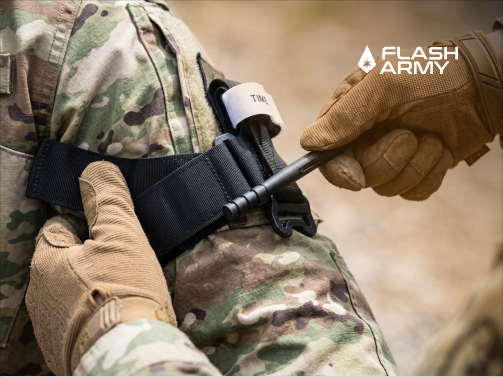
To do everything correctly, it is important to follow a simple and clear algorithm:
- Assess the situation and find the source of bleeding.
- Apply the tourniquet above the wound (approximately 5–7 cm).
- If the wound is not visible, apply it as high as possible on the limb.
- Tighten the strap firmly.
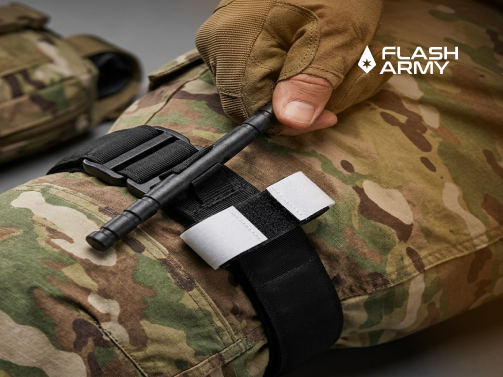
- Twist the windlass until the bleeding stops completely.
- Secure it in the holder.
- Be sure to record the application time.
In most modern protocols, these rules remain the same.
In short, you need to act quickly, as accurately as possible, and without hesitation.
How long can a tourniquet be used
A tourniquet is a temporary solution, and its use is limited.
On average, the safe time is up to 2 hours, but much depends on the conditions of use. In a combat situation, this time sometimes increases, but with it, the risks also increase.
The main rule is not to remove the tourniquet yourself. It can only be loosened or removed under the supervision of medics. First aid is about stabilization, not about complete treatment.
Common mistakes
Even if a person knows how to use a tourniquet, mistakes often occur under stress, and some of them can have serious consequences. Let's look at the main ones:
Using low-quality tourniquets
One of the most common problems is the use of cheap or uncertified products.
They can:
- tear during tightening;
- fail to create sufficient pressure;
- be poorly secured.
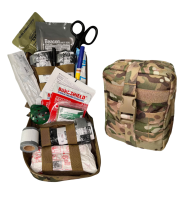
In a critical situation, this means losing time. Therefore, it is important to use only proven solutions that are part of a quality tactical first-aid kit.
Insufficiently tightened tourniquet
Another typical mistake is that the tourniquet was tightened, but not completely.
If the bleeding has not stopped completely, it means it was applied incorrectly. Often people are afraid to cause pain and do not tighten it enough.
But here it is important to understand: pain is a lesser problem than blood loss.
Premature loosening of the tourniquet
Sometimes people try to loosen the tourniquet to "restore blood circulation." This is a serious, sometimes fatal, mistake.
Such actions can reopen bleeding and sharply worsen the condition.
If a tourniquet has already been applied, it must remain secured until the injured person is handed over to medics.
Why it is important to take tactical medicine courses
Knowing the theory is not enough. In real conditions, everything happens quickly, under stress, and often without the opportunity to think.
That is why tactical medicine courses provide what reading manuals and instructions will not give you, namely:
- practice;
- clear algorithms;
- confidence in your actions.
First aid is knowledge combined with skills. And it is regular training that helps to bring everything to automatism.
Conclusion
A tourniquet is one of the key life-saving tools for massive bleeding. Understanding how to properly apply a tourniquet, adhering to basic rules, and avoiding common mistakes directly affect the chances of survival of the injured person.
In short, you need to act decisively, without delay, and without mistakes.
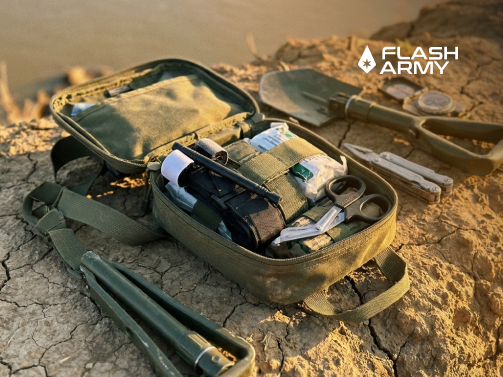
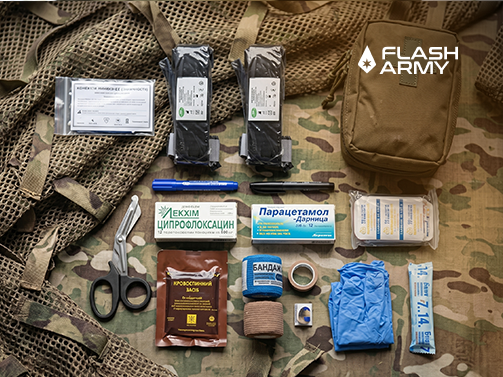
Quality tourniquets, proper first-aid kit configuration, and regular training are the foundation of effective assistance. These factors allow first aid to be not a formality, but a real action that saves lives.
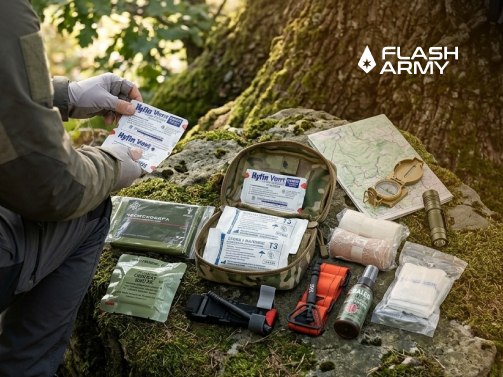
In the Flash Army catalog, you can choose tourniquets, first-aid kits, and other tactical medicine elements for various tasks. The catalog presents proven solutions used in real conditions, so you can assemble a reliable, complete kit for providing first medical aid in emergency situations.