Medical Manikins: Where They Are Used and What Types Exist
Providing first aid is a vital skill that often determines a person's life. In cases of cardiac arrest, injuries, or other critical conditions, the correctness and speed of actions can truly save lives. Even a few seconds can affect the victim's subsequent condition. That is why it is important not only to know the aid algorithms but also to be able to apply them in practice. This creates a need for tools that allow safe practice of procedures. Medical manikins play an important role in this process.
Medical manikins are realistic anatomical models of the human body or its parts, designed for training, practicing practical skills, and certifying medical personnel. They simulate physiological processes of the body, allowing training in cardiopulmonary resuscitation, surgical interventions, airway control, and tourniquet application without risk to patients. Thus, they are an essential component in tactical medicine, educational institutions, and medical facilities.
This material was prepared by the Flash Army team. It will help you understand what types of medical manikins exist and for what tasks they are used.
Manikins for Cardiopulmonary Resuscitation (CPR)
Among the most common options are CPR manikins, which allow practicing chest compressions and artificial respiration techniques. They are divided into adult, pediatric, and full-body.
Adult
Adult CPR manikins are usually made in the form of a human torso (from head to waist). They provide realistic chest resistance, control of compression depth and rate. These trainers are lightweight, compact, and convenient for transport.
Pediatric
Pediatric training manikins differ in smaller sizes and other parameters for compressions, ventilation, and pressure force. They allow practicing the specifics of providing aid to children and infants.
Full-body and Manikins with Electronic Feedback
A full-body CPR manikin is a professional trainer that simulates the structure of an adult human body. Modern models are often equipped with sensors with feedback and connection to applications. LED indicators or audible signals (click) confirm the correct depth and rate of compressions. This allows for immediate assessment of actions and increases training effectiveness.
Manikins for Specialized Procedures
Medical manikins can also be designed for specialized procedures (intubation, pneumothorax decompression, obstetrics, etc.). Let's consider their features.
Airway and Intubation Trainers
These manikins are used to practice skills in ensuring airway patency, endotracheal intubation, and bronchoscopy. They simulate the anatomy of the upper respiratory tract, allowing training in inserting an intubation tube, using a laryngoscope, and other breathing-related procedures.
Manikins for Pneumothorax Decompression
These are specialized torso-shaped trainers used to practice needle decompression skills for tension pneumothorax. Tension pneumothorax is a life-threatening condition in which air accumulates in the pleural cavity due to a one-way valve mechanism, with no exit. The manikin allows practicing how to correctly insert a needle or catheter to reduce pressure in the chest.
Manikins for Cricothyrotomy and Childbirth
Cricothyrotomy manikins are specialized medical trainers that simulate the human neck and airways to practice emergency airway restoration skills. They allow learning to perform surgical incisions, insert tubes, and ensure breathing in critical situations. They usually come with interchangeable elements (skin, trachea) for repeated training.
Childbirth simulation manikins imitate the process of childbirth, allowing medical personnel to practice actions in various obstetric scenarios, including complicated cases.
Manikins for First Aid and Trauma Training
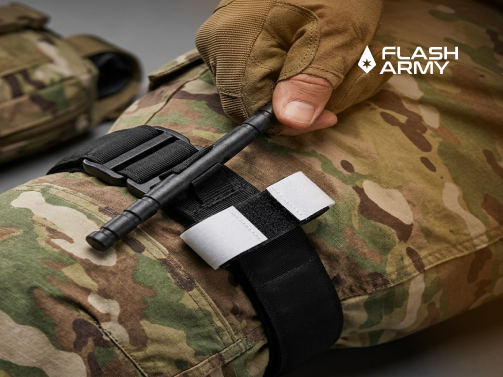
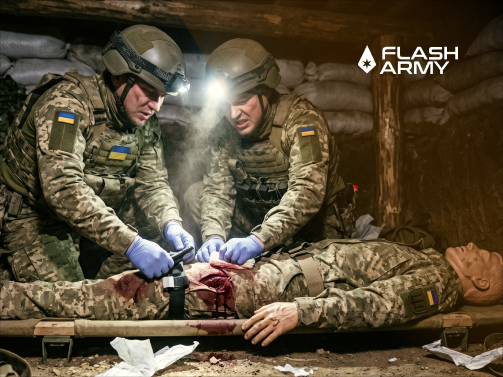
Manikins for first aid and trauma training are specialized trainers that help practice CPR, bleeding control, wound packing, and applying medical tourniquets. They are most often used for tactical medicine training, where participants learn to form correct behavioral algorithms, quickly assess the victim's condition, and provide aid before medical personnel arrive. They are presented in two main categories: for basic first aid skills and for trauma training.
For Basic First Aid Skills
Such manikins are used for training in the basics of tactical medicine: assessing the victim's condition, checking breathing and consciousness, stopping bleeding, applying bandages, etc. It should be noted that the choice of manikin depends on the level of training and the tasks set (basic or advanced training).
For Trauma Training
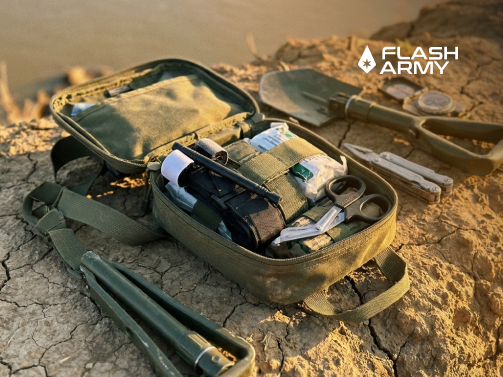
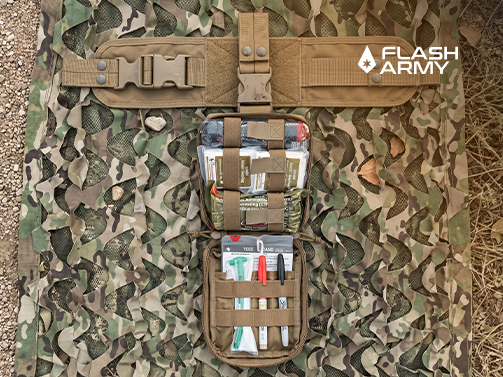
These medical manikins simulate soft tissue damage, gunshot wounds, and bleeding, so they are usually used to practice wound packing, applying tourniquets, treating severe limb injuries, and transporting victims with burns or fractures. After practicing skills on manikins, it is important to have quality equipment at hand, so we recommend buying a military first-aid kit in advance.
Additional Accessories for Manikins
To increase training effectiveness, additional accessories are used with medical manikins. They help expand the functionality of the trainers and make sessions more realistic. Such accessories include: protective masks and lung bags for CPR, injection skin, anatomical models of internal organs, circulatory systems, obstetric kits, etc.
Lung Bags for Ventilation
Lung bags for manikins are manual devices for forced air delivery to the lungs in case of respiratory failure. They are used to practice correct air delivery technique, control inspiratory volume, and coordinate actions during CPR and artificial lung ventilation (ALV). They consist of a mask, a self-inflating bag, and valves.
Training Electrodes and AED Remotes
Training electrodes and remotes for automated external defibrillators (AEDs) are reusable training tools that simulate the operation of a real device without delivering an electric shock. They provide realistic practice of electrode placement skills and working with the remote control to simulate various cardiac arrest scenarios.
Conclusion
Medical manikins are not just training tools, but an important element in preparing medics, military personnel, rescuers, and civilians for emergencies. They help "polish" action algorithms in critical moments, form reflexes, and increase confidence when providing aid. It is thanks to such trainers that learning becomes more effective and closer to real conditions.
Thus, the use of training manikins contributes to improving the quality of specialist training. And in conditions where every action matters, this directly affects the preservation of human life and health. Therefore, it is important to be prepared to respond to any scenario.
You can familiarize yourself with the available options for medical manikins in the Flash Army online store. The catalog presents various types of trainers that will help in the process of learning to provide first aid.