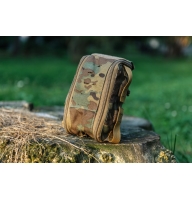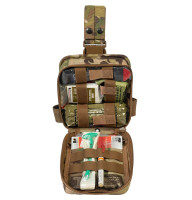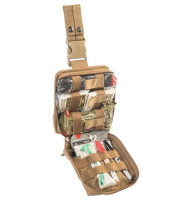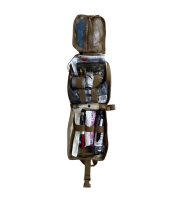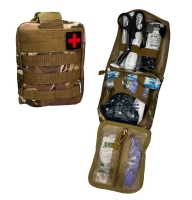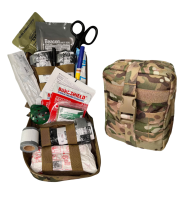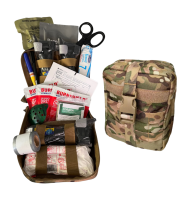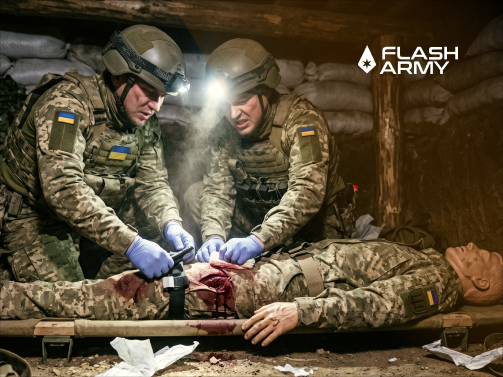
A military first-aid kit is arguably the most crucial piece of equipment, on par with body armor and weapons, as a soldier's survival in the first seconds after an injury, and until qualified medical help arrives, directly depends on it. In combat conditions, time is invaluable, as most deaths are caused by critical bleeding in the first seconds after an injury.
A high-quality first-aid kit, equipped according to TCCC (Tactical Combat Casualty Care) standards, is key to timely bleeding control, stabilizing the injured, preparing for evacuation, and minimizing the risk of further complications. That is why choosing a tactical first-aid kit must be done with utmost responsibility.
The Flash Army team created this material for military personnel who are looking to buy a first-aid kit and would like to know what characteristics and features to consider when choosing. Let's take a closer look at what the contents of a military first-aid kit should be, what standards it should meet, and how its contents should be organized.
First-Aid Kit Contents
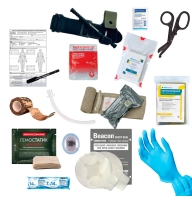
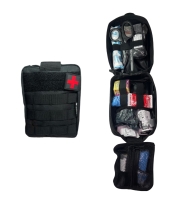
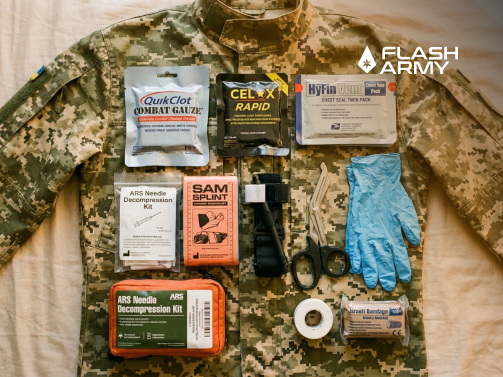
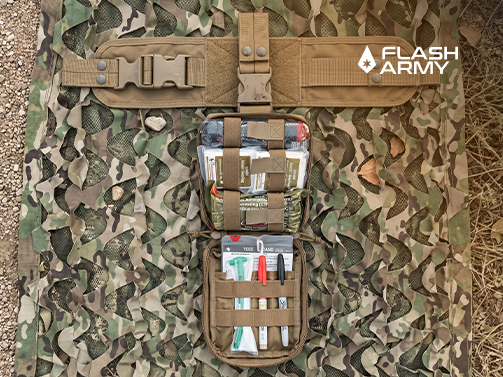
The contents of a tactical first-aid kit may vary depending on the tasks, user's training level, and usage conditions, but there is a basic, critically important set, standardized under the TCCC algorithm, also known as IFAK (Individual First Aid Kit). What it includes:
- Bleeding Control Devices
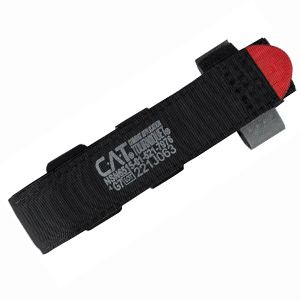
- Tourniquet — designed to stop bleeding from limbs. There should be at least two in the kit (one in an easily accessible place, for example, on body armor, the second — in the first-aid kit itself). They must be exclusively certified (CAT Gen 7, SICH, or SAM).
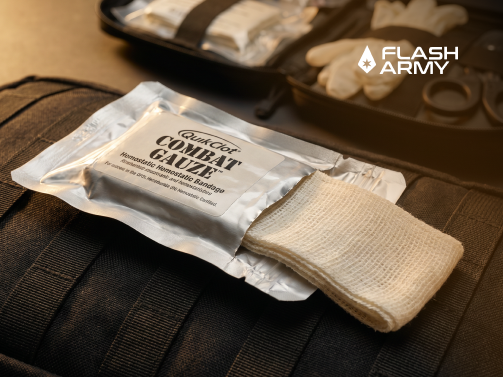
- Hemostatic bandage — impregnated with a hemostatic agent (Kaolin, Chitosan) and used to accelerate blood clotting in areas where a tourniquet cannot be applied (neck, groin, armpits, etc.).
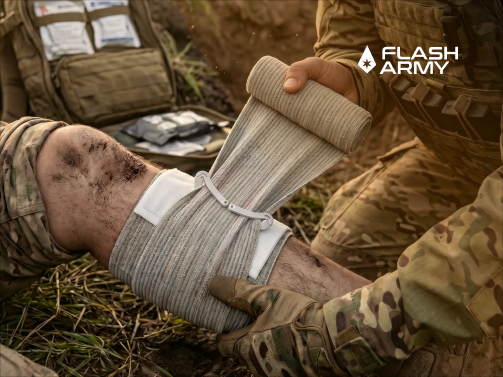
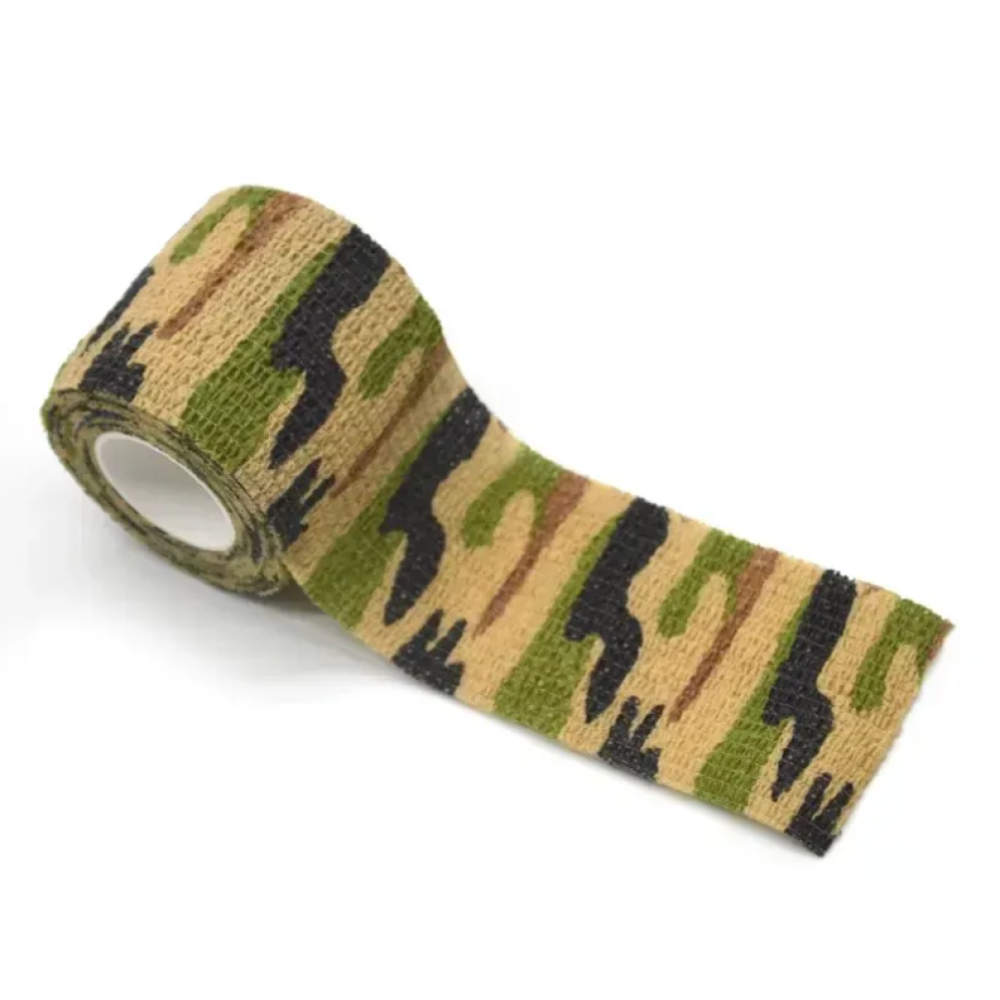
- Compression bandage (e.g., "Israeli bandage") — secures wounds with additional pressure to control bleeding.
- Gauze for wound packing — regular or with active components — used for packing wounds without massive bleeding.
- Airway and Chest Injury Devices
- Nasopharyngeal airway — a tube inserted through the nose to restore airway patency in unconscious casualties. Lubricant for insertion is included in the kit.
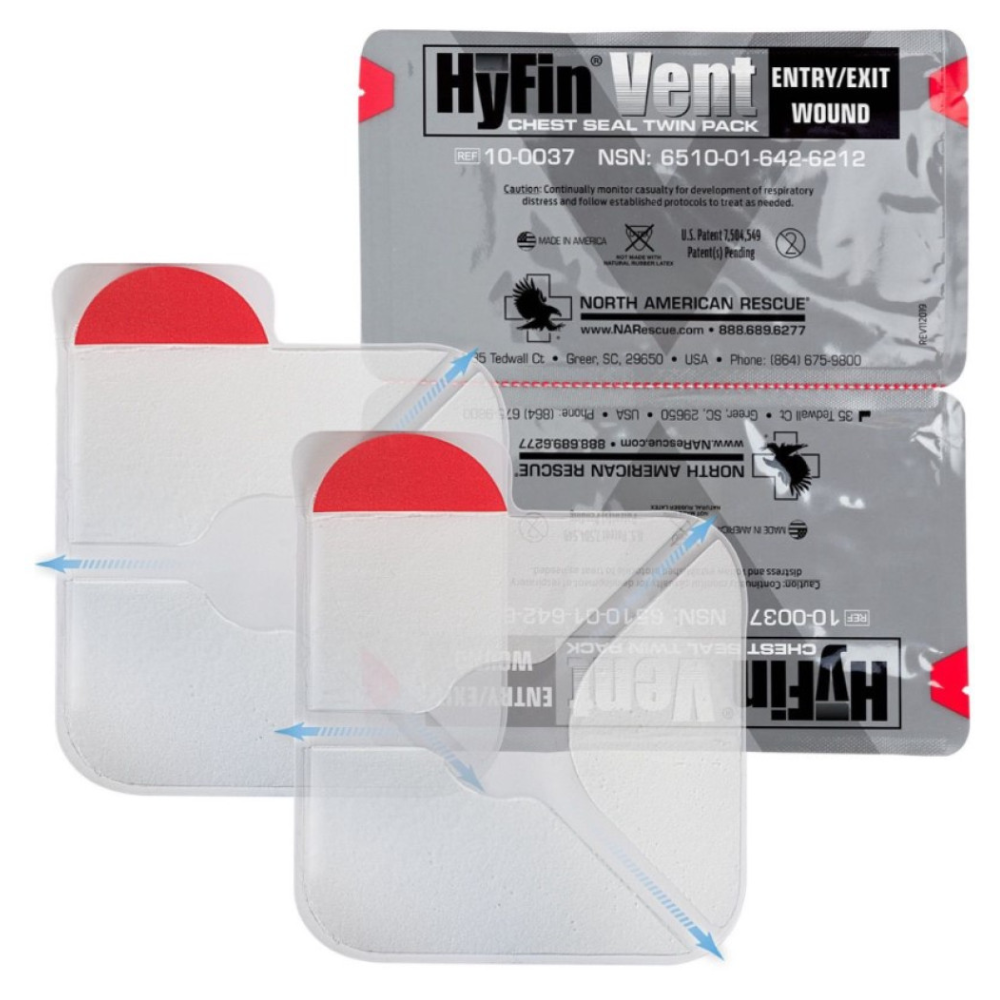
- Occlusive dressings — special patches used to seal penetrating chest wounds to prevent lung collapse (pneumothorax). It is advisable to have 2 pieces — one vented, with a valve for air release.
- Tools and Auxiliary Devices
- Nitrile gloves — necessary to prevent direct contact with blood and maintain sterility.
- Tactical shears — have rounded tips, designed for atraumatic cutting of clothing from the injured.
- Marker (waterproof) — used to write the time of tourniquet application on the injured person's forehead.
- Thermal blanket — a lightweight metallized film that helps reduce the risk of hypothermia, as significant blood loss reduces the injured person's ability to thermoregulate.
- "Combat Pill Pack" — a sealed package containing medications that the injured person can take only if conscious (not in shock and without breathing problems). It includes:
- Paracetamol (1000 mg) — basic pain reliever.
- Meloxicam (15 mg) — anti-inflammatory drug with a pronounced analgesic effect that does not thin the blood.
- Moxifloxacin (400 mg) — antibacterial agent.
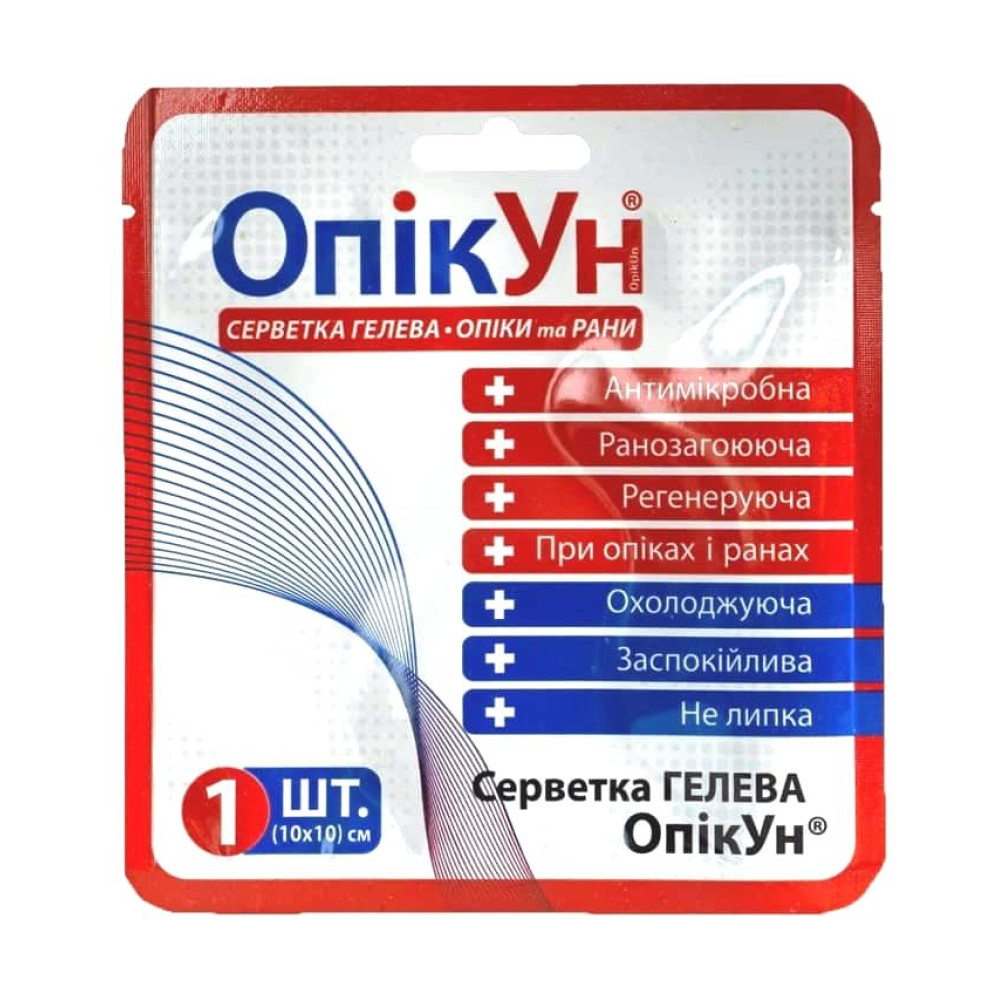
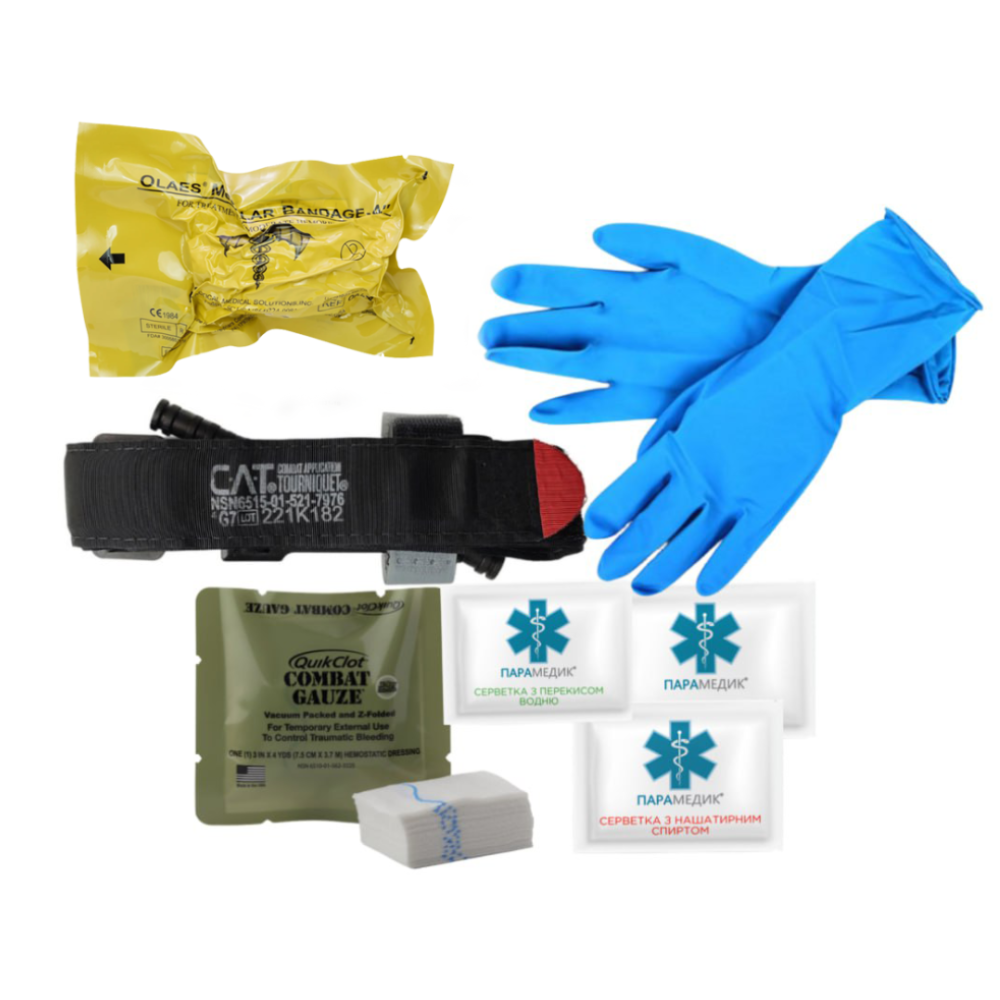
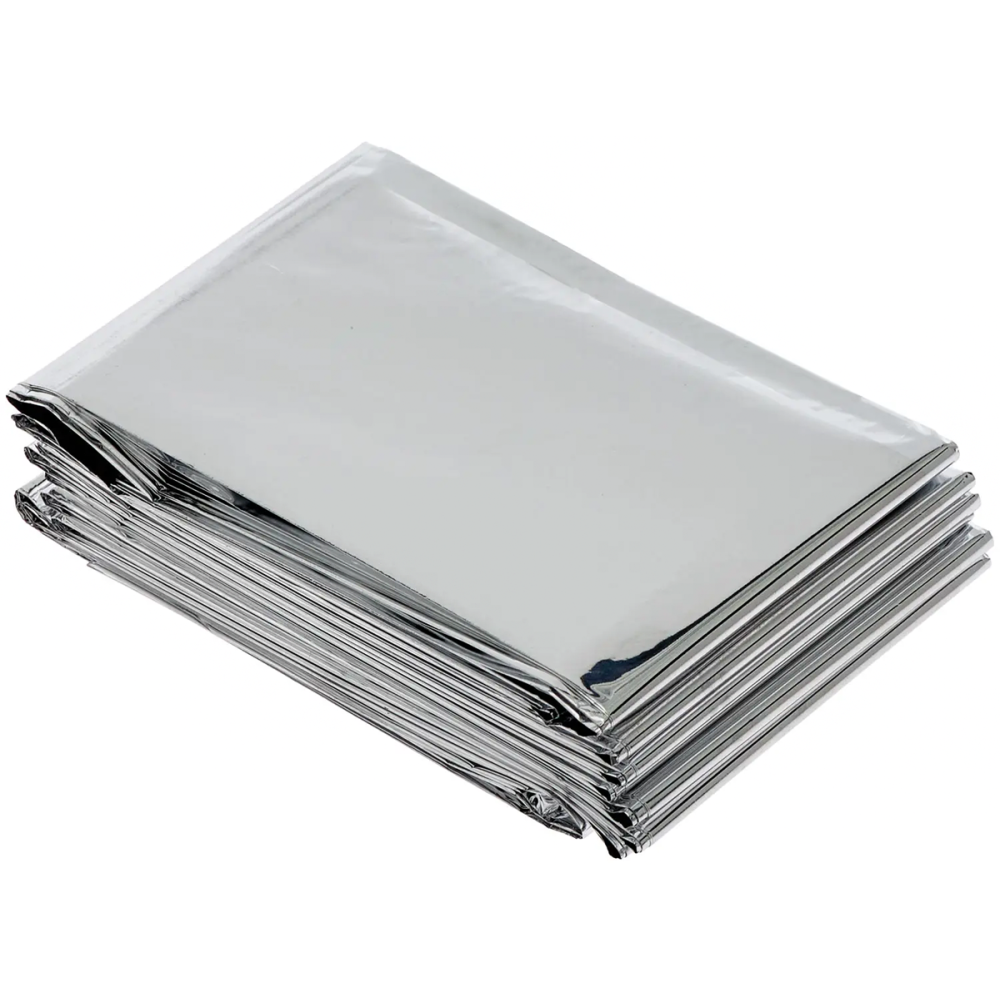
In a proper tactical first-aid kit, each component has a clear purpose, proven effectiveness, and complies with the most modern tactical medicine protocols. The contents may vary — for combat medics or medevac crews, it will be significantly expanded, but the core is always the same.
Quality and Reliability of Materials
In field conditions, a first-aid kit, like all other equipment, is subjected to extreme loads: moisture, dirt, temperature fluctuations, solar radiation, and difficult transportation. That is why the quality of military first-aid kit materials is critical, as the price of a broken tourniquet or pouch zipper can be a life.
The quality level of a tactical first-aid kit is assessed by the materials of the pouch and the components of the kit itself.
- The pouch is responsible not only for organizing medications in one place but also for protection from the external environment and instant access. It must be made of Cordura nylon with a density of 500D or 1000D (Denier), with a waterproof and water-repellent coating. For pouches, durable, reliable zippers with special pullers instead of tabs, high-quality hook-and-loop fasteners, and reinforced webbing are used.
- Medical components must be sealed in dense vacuum packaging that protects against moisture, dust, dirt, and UV radiation (which destroys the structure of some hemostatic substances). Special attention should be paid to the material of tourniquets: (strong duralumin or high-tech composite plastic for the windlass and buckle, as well as ultra-dense woven nylon or polyester for the internal strap).
A real guarantee of the quality of a military first-aid kit is reputable manufacturers, compliance with medical protocols, and the availability of official certificates.
Manufacturer and Compliance Standards
When choosing an IFAK, it is very important to pay attention not only to the contents but also to the manufacturer and compliance with modern tactical medicine standards. Quality military first-aid kits meet two standards:
- TCCC (Tactical Combat Casualty Care): this is the main standard of modern tactical medicine, developed by CoTCCC (Committee on Tactical Combat Casualty Care). It defines not the contents of the first-aid kit, but the algorithm of necessary actions in case of injury, for which products and medical devices are selected. The contents of a proper first-aid kit must be sufficient to perform all TCCC steps (bleeding control, airway management, immobilization).
- FDA (USA), CE (European Union), ISO, NATO Certification: guarantees that the contents of the first-aid kit are original. Tourniquets, hemostatic agents, and Israeli bandages are particularly often counterfeited. Certified components undergo quality control and testing in combat conditions.
- Order of the Ministry of Defense of Ukraine No. 506: according to this standard, the official first-aid kit of the Armed Forces of Ukraine from domestic manufacturers, including AMZI, is equipped.
It is very important to choose trusted first-aid kit manufacturers, as this guarantees the originality and high quality of the product, which is extremely important in combat conditions. Reliable brands not only use high-quality materials and certified tools and adhere to international standards but also test their products in real conditions.
Size and Mobility
An IFAK must simultaneously be spacious enough to accommodate all necessary supplies and compact enough not to hinder movement or reduce the soldier's endurance. A standard tactical first-aid kit for individual use should not weigh much. Before buying an Armed Forces of Ukraine first-aid kit, make sure its dimensions allow the pouch to be conveniently placed on a belt, body armor, or a special thigh platform.
Colors and Camouflage
Since the first-aid kit is part of the overall equipment, its pouch should not stand out against the rest of the gear and should blend in with the environment, providing camouflage for the soldier and not attracting enemy attention. The most common pouch colors are:
- Olive (classic olive shade);
- Coyote Brown (sandy-brown color for dry and steppe regions)
- Black (black pouches are most often used in special forces and for urban operations);
- Multicam (universal camouflage for operations in various types of terrain);
- Pixel (official camouflage of the Armed Forces of Ukraine, blends well with modern uniforms).
The color of the pouch is essential, as it ensures stealth in field conditions.
Ease of Access and Content Organization
The mobility and ergonomics of the pouch play an important role — according to modern standards, its design should be based on two aspects:
- Quick Release System (Rip-Away / Tear-Away) — the pouch design consists of a modular panel and the pouch itself. The modular panel is attached to body armor or a battle belt using MOLLE webbing, and the first-aid kit is attached to this panel with a special strong hook-and-loop fastener. If necessary, the soldier instantly rips the first-aid kit from the panel, without losing precious time. Thigh attachment is also used.
- Two-Handed Access — the first-aid kit should be designed so that it can be opened with both hands, as one of the limbs may lose functionality due to injury.
Internal mobility of the IFAK is no less important — usually, the first-aid kit unfolds like a book or has an internal organizer, all elements must be secured with tight elastic bands, and the most critical items (tourniquets) are placed outside the pouch or duplicated on the tourniquet itself.
Conclusion
The correct choice of a military first-aid kit is critically important, as the health and even life of a soldier can be the price of an unsuccessful configuration, low-quality products, or a poorly made pouch. It is important to choose only certified options from reliable manufacturers, which will guarantee the originality and high quality of the kit. You can buy military first-aid kits from trusted brands at the Flash Army store.