

Trench EW Systems
Sort By:
In stock
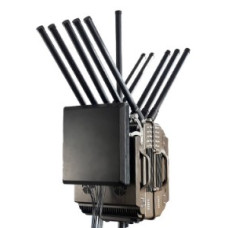
EW KVERTUS AD KRAKEN-U+ 420-5900 MHz
450 450 грн.
In stock
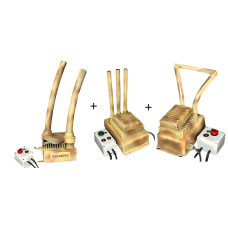
EW Jammer Kit Dobrota, 4-Channel
115 000 грн.
In stock
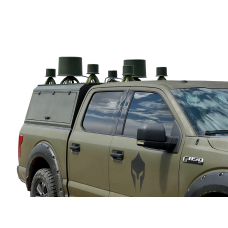
EW KVERTUS AD CERBERUS 130-6000 MHz
500 000 грн.
In stock
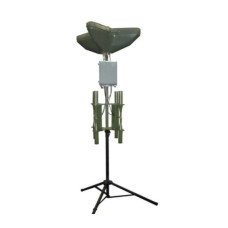
EW KVERTUS MS AZIMUTH 30-6000 MHz
2 205 000 грн.
-min-228x228.png "Dome EW Jammer Hrets 4M with Quadrifilar Antennas")
In stock
Dome EW Jammer Hrets 4M with Quadrifilar Antennas
215 000 грн.
181 200 грн.
-16%
In stock
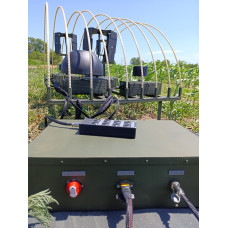
EW Shelter 9AM Modular
286 000 грн.
In stock
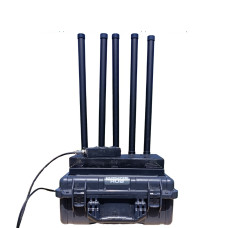
EW Jammer Shelter 8-Module P-Series
220 000 грн.
In stock
In stock
In stock
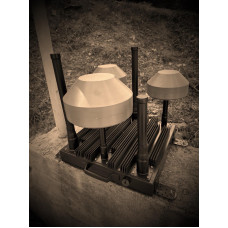
EW 6d 300-1050 MHz Hawks of Victory trench, vehicle
156 300 грн.
In stock
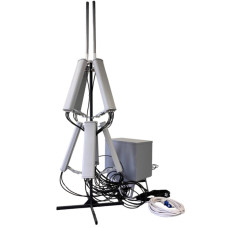
EW stationary system KVERTUS AD VEPRM100 420-5900 MHz
1 963 500 грн.

In stock
Modular EW Jammer "Hrets XL"
97 800 грн.
In stock
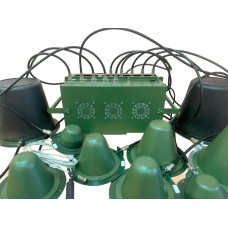
EW jammer Hoverla+ for 10 bands Lynx development
310 000 грн.
In stock
In stock
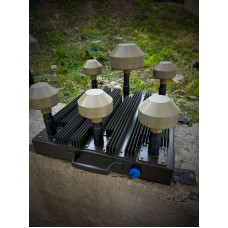
EW jammer Hoverla 8-band Lynx development
260 000 грн.
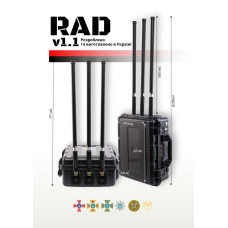
In stock
EW TRENCH RAD V1.1 400–1100 MHz (2 cases)
275 000 грн.
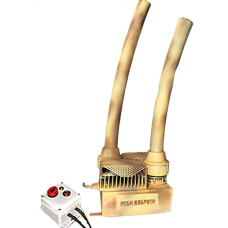
In stock
EW Dobrota 2 from FPV Ponyzhenyi
55 000 грн.
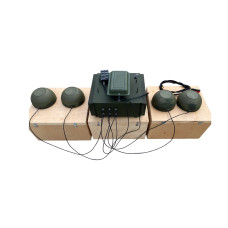
In stock
EW Jammer Shelter 12-Band AM Series Universal
286 000 грн.
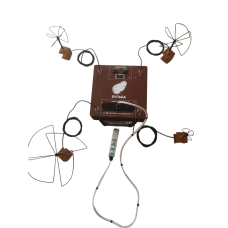
In stock
Dome EW Jammer Bulba 1.0
120 000 грн.
In stock
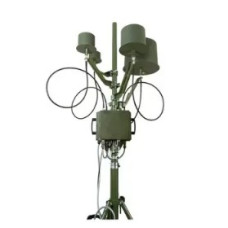
EW KVERTUS LTEJ MIRAGE 1 300-6000 MHz
304 500 грн.
In stock
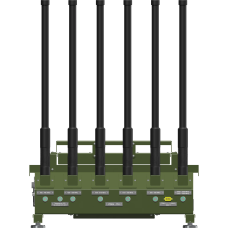
Universal EW Jammer Odin XL-6 with Six Antennas
152 000 грн.
In stock
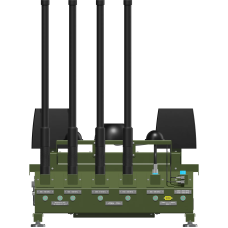
Universal EW Jammer Odin XL-9 with Nine Antennas
182 000 грн.
In stock
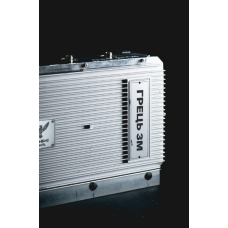
Compact Drone Jammer "Hrets" 3M
160 000 грн.
140 400 грн.
-12%
In stock
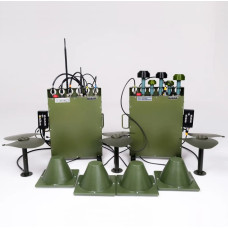
EW Babai 12M MZ 200-5850 MHz trench/vehicle Babai
520 000 грн.
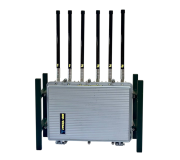
Trench EW Systems
Trench EW is a stationary electronic warfare system designed to protect Ukrainian Armed Forces positions from drones, navigation signals, and enemy communications. Such devices are placed directly in trenches, dugouts, observation posts, or near field infrastructure.Purpose of Trench EW Systems
The main task of trench EW is to create an active protection zone around a position. The device:- jams UAV control signals;
- blocks data transmission between drones and operators;
- creates interference for satellite navigation;
- protects command posts and personnel from aerial surveillance.
How Does Trench EW Work?
The principle of operation is simple: the system detects the frequencies on which drones or other communication devices operate and creates a strong radio pulse in the corresponding range. This leads to:- loss of communication between the drone and the pilot;
- disruption of coordinate transmission;
- reduced targeting accuracy or complete disabling of the drone.
Technical Specifications of Trench EW Stations
Range — up to 1500 meters Jamming formats — GPS, 2.4G, 5.8G, LTE, GSM Power supply — from external batteries or generator Startup time — 5–10 seconds Protection — IP65 or higher Weight — 5–10 kg (depending on model)These stations are easily mounted in shelters, operate in dusty, humid conditions, withstand temperature fluctuations, and do not require special maintenance.
Key Advantages of Trench EW
- Stable operation in field conditions
- Camouflage and mobility
- Effective jamming of kamikaze and FPV drones
- Autonomous operation for up to 24 hours
- Rapid response to threats
- Intelligent approach to radar
How to Choose Trench EW?
Before buying trench EW, pay attention to:- the types of signals the system jams;
- the operating range (for trench format, 800–1500 m is optimal);
- the possibility of autonomous operation;
- resistance to external factors.
Expand
Frequently asked questions about products in this category Trench EW Systems
Trench EW is a stationary or semi-mobile electronic warfare system used to protect positions from unmanned aerial vehicles. Such devices are installed directly in the area of fortifications and work to suppress drone control and video communication channels. The main task is to reduce the effectiveness of enemy FPV and reconnaissance UAVs.
The system operates by creating radio interference in the frequency bands used by drones for control and video transmission. It generates a noise signal that disrupts communication between the operator and the UAV. Effectiveness depends on power, frequency settings, and antenna placement.
The average jamming range is usually from 1 to 5 km, depending on the system's power and terrain conditions. In open fields, the figures may be higher, while in complex terrain or urban areas, they decrease. The actual area of effect also depends on the drone type and its frequencies.
Trench EW systems typically support 3 to 10 simultaneous jamming channels. Each channel operates in a separate band, allowing for coverage of various signal types. The number of channels affects the system's ability to counter multiple drones simultaneously.
Operating time typically ranges from 2 to 8 hours, depending on the power source and load mode. This figure may decrease with continuous operation at maximum power. For stationary use, connection to external power is possible for continuous operation.
Trench EW jammers typically use batteries or generators with voltages ranging from approximately 24–220 V, depending on the configuration. For cooling, active systems with fans or combined solutions with radiators are employed. The type of system depends on the equipment's power and the duration of continuous operation.
The most commonly jammed frequencies are 2.4 GHz, 5.8 GHz, as well as 868 MHz and 915 MHz, which are widely used in drones. Some systems may additionally cover other frequencies depending on the settings. The specific set of bands depends on the equipment configuration.
The effectiveness of trench EW depends on proper installation, settings, and counter-action level. Under favorable conditions, such systems can significantly reduce the effectiveness of FPV drones and reconnaissance UAVs. The outcome is always determined by distance, frequencies, system power, and tactical application.