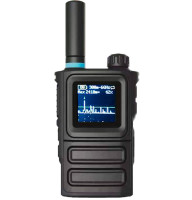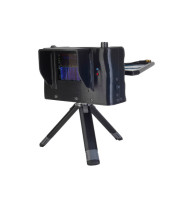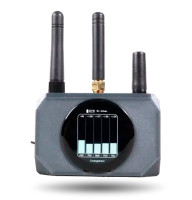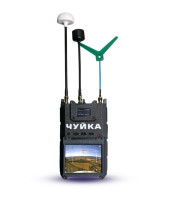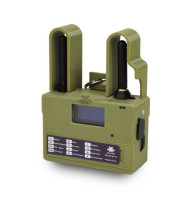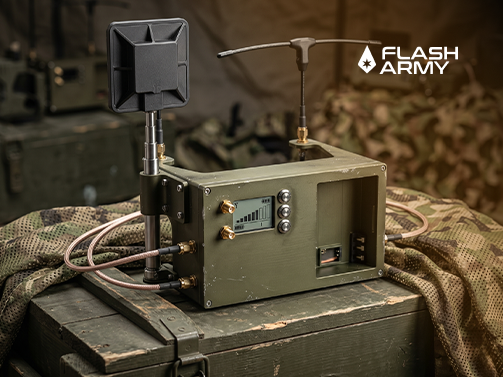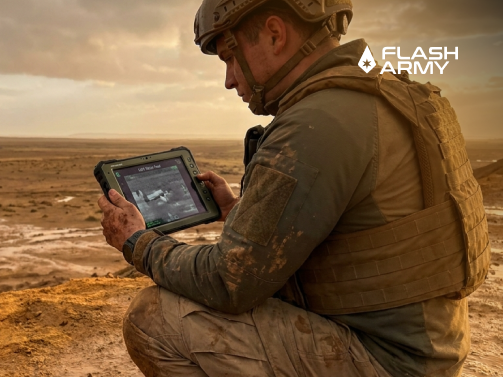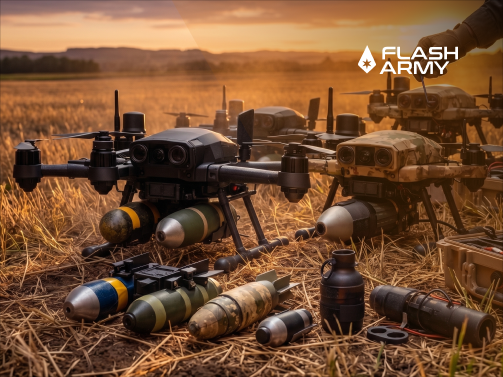
Today's market for drone detectors is not just a list of frequencies and promised ranges. To make a balanced choice, it is worth looking at the set of characteristics and how the device performs in real conditions. Below is a practical overview and advice based on the analysis of drone detector models and their characteristics.
What the device detects and its operating principle
The first and basic criterion is what exactly the device detects. There are two main approaches:
- Devices that respond to control channels and telemetry. They provide warnings about the operation of the device on radio frequencies.
- Devices that focus on FPV video transmission - intercept or visualize the drone's camera video signal.
By operating principle, they differ in the following types:
- Passive listening of the airwaves - does not emit, but only "listens" to the airwaves. This is important if the position cannot be unmasked.
- Spectrum analysis and filtering - critical for reducing false positives.
- Video signal interception - can immediately display the image from the drone's camera.
In this review, we have various models presented in the list: both budget-friendly and more expensive ones.
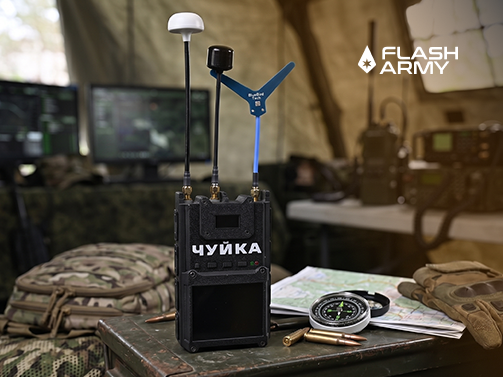
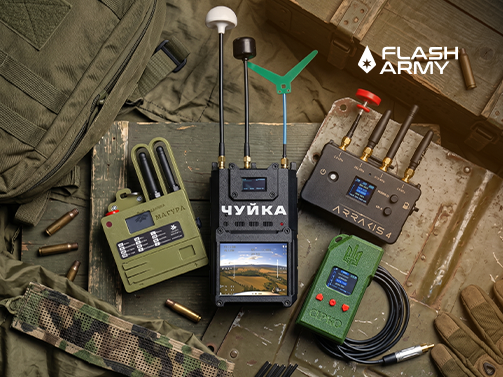
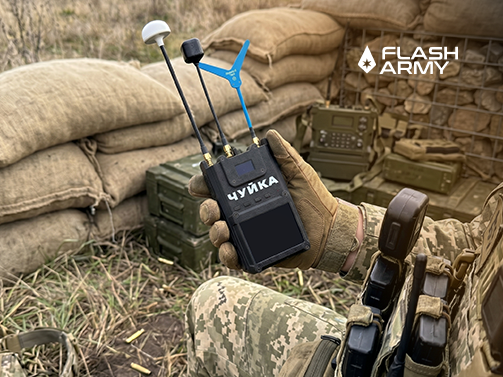
- Chuyka 3.0 - two in one: both a passive scanner and a spectrum analyzer. It tracks a wide range of frequencies 1.2 (1080-1800 MHz), 3.3 (3000-4100 MHz), 5.8 GHz (4900-6100 MHz). It is unique in that it can intercept the drone's video signal and immediately display what the drone sees.
- Vanilla Tsukorok - passively scans four frequency bands: 865-885 MHz, 895-928 MHz, 970-1020 MHz, 2400-2500 MHz. It only detects the presence of a UAV, displaying the drone type and signal level on the screen.
- Arrakis 4 - combines the functions of a passive scanner and a spectrum analyzer. The device can track several types of signals at once - FSK (860-928 / 955-1020 MHz), ELRS / FPV (720-915 MHz), DJI (2400-2500 MHz). Due to its hybrid operating principle, it not only detects activity but also allows determining the type of UAV.
- Stevia fly - a passive scanner focused on the radio channel range of control remotes - (250-950 MHz). Its task is to detect the fact of activity in the air, without deep spectral analysis.
- RER SHPAK - a combined device operating at frequencies 300 MHz - 6000 MHz, with switches between channels (0.7-1 GHz, 1-1.7 GHz, 1.8-3 GHz, 3-6 GHz). It displays the detected aircraft and its frequencies.
- Kseon-L - a universal detector with wide frequency coverage (0.9 MHz, 1.2 GHz, 2.4 GHz, 4.9 - 6.0 GHz). The device can detect control signals, video, and telemetry channels of various platforms.
- Shukach-2 - a scanner with a spectrum analyzer operating in a wide range: 0.7-1 GHz, 1-1.7 GHz, 1.8-3 GHz, and 3-6 GHz, displaying all information on the touchscreen display once a target is detected.
- TinySA Ultra - a spectrum analyzer that analyzes in normal mode - up to 800 MHz, in ultra mode - up to 6.0 GHz, which allows it to be used for airwave diagnostics and detection of extraneous signal sources.
- Detector from Lynx development - detects and identifies UAVs at frequencies 865-885 MHz, 895-928 MHz, 970-1020 MHz, 2.4-2.5 GHz, which allows detecting both drone control attempts and the presence of telemetry and video streams. Helps determine the approximate direction of movement.
- VIDIK - an example of a professional spectrum analyzer. It tracks video signals depending on the modification in the range 1.2 GHz (850 - 2200 MHz), 3.3 GHz (2800 - 4150 MHz), 5 GHz (4850 - 6100 MHz) and allows tracking even non-standard FPV channels.
- SIRKO - a complex device whose algorithm allows simultaneous detection of both control signals and video streams. It operates in two large ranges (350-1020 MHz and 4.9-6.2 GHz), covering most modern drones. It detects not only video signals but also drone control signals.
- ADEVIN v1.0 - a multi-channel analyzer (1.1-1.6 GHz | 2.4-2.5 GHz | 3.2-3.4 GHz | 5.1-5.8 GHz). It detects and displays the approach of a drone on the screen.
- Obriy 1.3 - a combined option that combines passive scanning with elements of spectral analysis. It detects both radio control and video signals, operating at main frequencies 1.2, 2.4, and 5 GHz.
- Teneta PRO - detects and alerts about an approaching threat, operates in the range 415-1050 MHz and 2.4 GHz, which helps detect not only FPV but also other devices.
- PES Babai - scans a wide spectrum of frequencies (150-6000 MHz), alerts about the presence of a UAV with a light indicator and uses a sound indicator to signal an approaching threat.
- Kolibri - the device operates in a wide range (100 MHz to 6 GHz), which helps detect most UAVs. It automatically identifies the drone type and alerts with an audible signal about its approach.
- Dzhmiľ - a passive system operating in the frequency range 2.395-2.479 GHz and 5.752-5.821 GHz, belonging to the professional class. Designed to work with DJI. It determines not only the presence of a UAV but also the sector and transmits coordinates to the engagement system.
From the examples, it can be seen that some models are primarily focused on detecting control or telemetry, while others are on capturing analog video. Practice shows: for early warning, a control channel detector is needed; for reconnaissance and analysis - a video detector.
Detection range is where the real effectiveness of any drone detector begins. It indicates the distance at which the device can "hear" a drone's signal and warn of its presence. This distance is affected by:
- Receiver sensitivity (on the board or via LNA), antenna quality, and proper shielding.
- Terrain and absence of obstacles. In urban or mountainous areas, the actual range can decrease tenfold.
So, the difference between models:
- Chuyka 3.0 - declared range up to 4 km in open areas, full scan cycle speed 4-8 seconds.
- Vanilla Tsukorok - declared range - 8-16 km with an error depending on conditions and UAV type. Reaction time takes 3-6 seconds.
- Arrakis 4 - operates within several hundred meters, scan cycle takes about 2 seconds.
- Stevia fly - declared range up to 7 km, but without an external antenna, it's more like 3-4 km. Works fast, 2-4 seconds, but sensitivity significantly decreases at high frequencies.
- RER SHPAK - up to 1.5 km (in real field conditions) and notification speed within a few seconds.
- Xeon-L - detection approximately 1 km for main bands (actual performance depends on the antenna), detection speed 5-8 seconds.
- Shukach-2 - indicated practical range up to 3 km, indication speed mostly 2-5 s.
- TinySA Ultra - range 4-5 km, scan cycle 4-6 seconds, but can be slower depending on settings.
- Lynx development Detector - declared range up to 10 km depending on conditions and UAV type, reaction speed also depends on drone type.
- VIDIK - depending on band and antenna 2-10 km, reaction speed to video output from drone 5-10 seconds.
- SIRKO - in ideal conditions 5-7 km and reaction speed 5-7 seconds.
- ADEVIN v1.0 - device detection within 2-3 km, reaction speed 2-6 seconds.
- Obriy 1.3 - declared alarm within up to 2.5 km, under favorable conditions up to 4 km. Reaction speed from 3 seconds and up.
- Teneta PRO - range within 0.5-2 km, reaction speed 2-5 seconds.
- PES Babai - manufacturer claims a range of up to 2 km, device notification speed 2-3 seconds.
- Kolibri - depending on conditions and device type from 2 to 30 km, detector reaction speed is unfortunately not reported.
- Dzhmeel - detection distance up to 5 km, reaction speed 1-3 s for sectoral indication.
Therefore, it is important to pay attention not only to the device's range but also to its reaction speed. Measurement conditions and how the device performs in practice should be the decisive factor, because if the device "sees" slowly, it reduces the chance of an early reaction.
Ergonomics and Durability
Ergonomics and durability are not just about convenience, but also a factor in how long the device will serve you. Weight, casing, power type, and battery life determine whether the detector can withstand constant vibrations, dust, rain, and frequent trips to positions.
- Chuyka 3.0 - light and compact device (650 g) in a plastic casing. Power: 8.4V (2S) 4500 mAh battery, battery life about 6-8 hours.
- Vanilla Tsukorok - relatively light (100 g) in a plastic casing, powered by 18650 batteries or built-in battery (depending on version), battery life 4-5 hours.
- Arrakis 4 - compact casing; power - built-in battery with USB-C charging, battery life up to 24 hours depending on mode.
- Stevia fly - plastic casing with rubberized inserts, weight 140 grams, continuous operation - 81 minutes.
- RER SHPAK - metal casing, weight 270 g, powered by internal 6000 mAh battery, battery life up to 12 hours.
- Xeon-L - reinforced casing with IP54 protection, Li-Ion 7000 mAh battery, providing up to 8 hours of operation.
- Shukach-2 - ergonomic shape, durable plastic casing, battery power up to 48 hours.
- TinySA Ultra - weight with case 2.5 kg, plastic casing and small screen, protected from splashes and dust. Battery powered, autonomous operation 4-5 hours.
- Lynx development Detector - plastic casing, 3.7 V power, battery life up to 20 hours.
- VIDIK - durable casing and large display. 10,000 mAh Li-Ion battery provides 6-10 hours of stable operation.
- SIRKO - made of durable plastic. Battery life up to 22 hours.
- ADEVIN v1.0 - plastic casing with basic protection, weight not specified, Li-ion battery provides up to 24 hours of battery life.
- Obriy 1.3 - durable anodized aluminum casing. Battery life about 8 hours, battery easily replaceable.
- Teneta PRO - plastic casing, only 90 grams, full charge in 90 minutes with 5V power and 1A current. Autonomous for 7.5 hours.
- PES Babai - metal casing, weight 2 kg, built-in 8.4 Ah battery provides autonomous operation for 6-8 hours.
- Kolibri - metal casing with moisture-resistant coating, weight not specified, holds charge for up to 10 hours.
- Dzhmeel - metal casing, weight 1.65 kg without laptop, battery life about 2000 hours.
A large number of other drone detectors are also available in Ukraine, such as Dzyga, Yanhol, Franek, Aspirin, and other models. However, they are quite difficult to purchase in open access. Therefore, they are not presented in this review.
Practical Conclusions
In summary, the drone detector market offers a wide range of models with different detection approaches: some focus on control and telemetry channels, others on intercepting FPV video streams. The choice of device depends on the tasks: early warning requires a control channel detector, while reconnaissance and analysis require a video signal detector or a universal hybrid.
At Flash Army, you can find drone detectors from various manufacturers depending on your needs and tasks. This is not just an online store, but the largest marketplace for military and outdoor equipment in Ukraine. The website features over 25,000 products with prompt order processing, fast delivery, and convenient payment options not only for individuals but also for military units and charitable foundations.