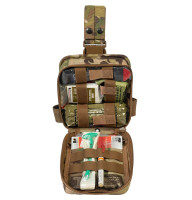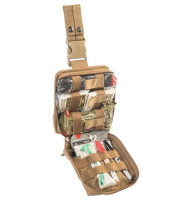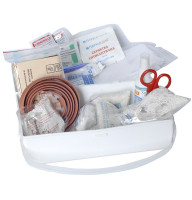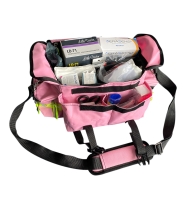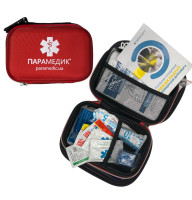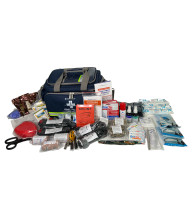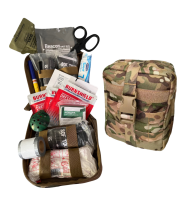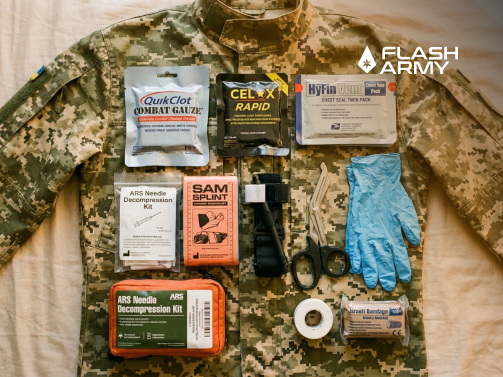
A military family lives in a different reality, even if it's not always outwardly apparent. There's more attention to detail, more responsibility, and a greater understanding that critical situations can arise suddenly. That's why a first-aid kit at home isn't just a collection of medicines, but a tool that can determine the outcome of the first minutes after an injury. However, today, a tactical first-aid kit should be owned not only by military families but by every civilian, given the dangers of martial law even in seemingly safe regions.
A home first-aid kit today operates on a different logic than a typical civilian one. It's not about treating colds or headaches, but about responding to life-threatening situations. That's why the tactical medicine approach is increasingly used. Based on its standards, an understanding is formed of what an individual military first-aid kit should contain, so that it also works well in civilian conditions if properly adapted.
It's important to understand: a first-aid kit at home won't protect against everything, but it will prepare you for critical situations. Its purpose is to buy time, stabilize the condition, and allow you to wait for professional help without fatal consequences.
Key Principles of TacMed
TacMed isn't a complex medical science, but a system of priorities. It's based on analyzing the causes of preventable deaths. Primarily, these are massive hemorrhage, respiratory compromise, and severe injuries such as wounds. These are the threats that tactical medicine prioritizes, pushing everything secondary aside.
The first basic principle is speed of response. In the first minutes, and sometimes even seconds, it doesn't matter how neatly a bandage is applied. What matters is whether the bleeding is stopped. Tourniquets and hemostatic agents are most often used to stop massive hemorrhages. The second principle is simplicity of action. All tools and algorithms are designed for people without medical training. The third principle is a clear sequence that reduces panic and allows for automatic action.
For a military family, this is especially important. In a critical moment, decisions are made not by doctors, but by loved ones. That's why the first-aid kit must be clear, logical, and not overloaded with unnecessary items.
Mandatory Components of a First-Aid Kit
Bleeding Control Devices
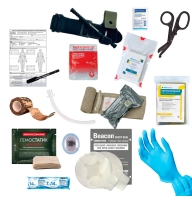
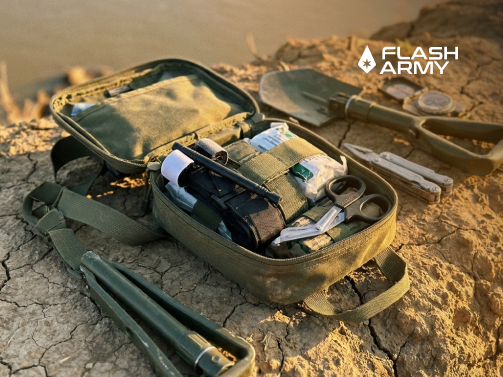
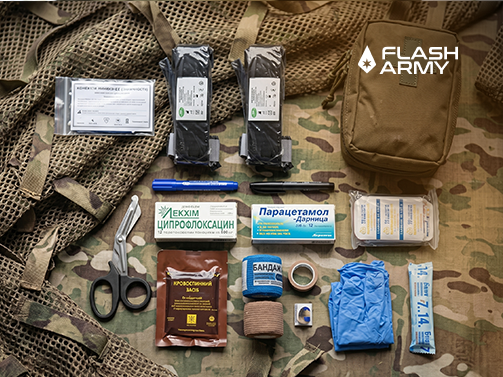
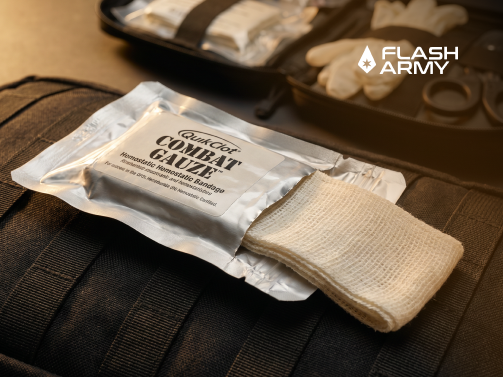
Stopping bleeding is an absolute priority. This is where the core of any first-aid kit, according to TacMed standards, is concentrated. The main contents of a military first-aid kit: tourniquets, pressure bandages, hemostatic bandages – these are not specialized military equipment, but tools that genuinely save lives.
It's important for the family to have at least a basic understanding of when and how to apply a tourniquet. This is the first and correct step for massive arterial bleeding from limbs. That's why the contents of a general military individual medical first-aid kit, adapted for civilian home use, are important.
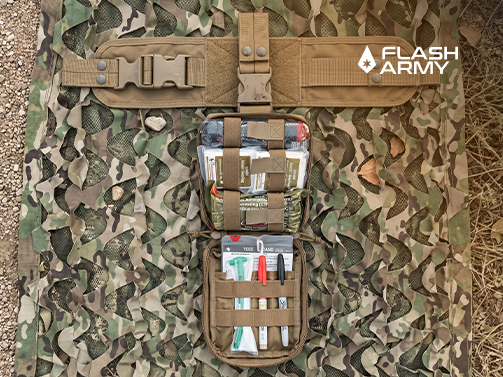
The number of such items depends on the family size, but the minimum is one full-fledged tourniquet and several wound dressings. They should not be at the bottom of the first-aid kit, but readily accessible.
Stabilization Devices
After bleeding control, the stabilization phase begins. This is often ignored in civilian first-aid kits. Occlusive dressings, thermal blankets, elastic bandages – all of these don't cure, but they prevent the condition from worsening. For example, a thermal blanket helps prevent hypothermia, which often accompanies injuries even in warm weather. Occlusive dressings are used for chest wounds and help avoid complications until medics arrive.
These elements form the contents of a first-aid kit focused on real threats, not everyday trifles.
Antiseptics and Dressings
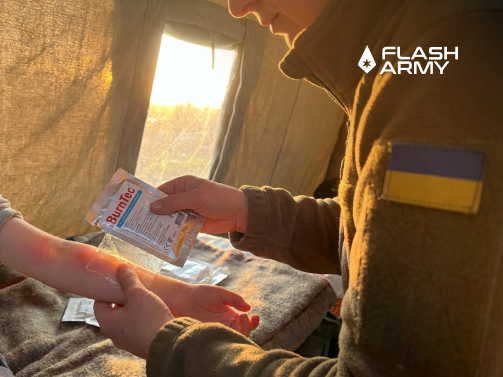
Antiseptics remain an important part of a first-aid kit, but their role is often overestimated. According to TacMed standards, they are used after life-threatening issues have been addressed. This means first bleeding and breathing, and only then wound care.
This type of material includes sterile wipes, bandages, antiseptic solutions, and plasters. It's important that the materials are high-quality and stored in proper conditions. Expired or damaged items can do more harm than good. The contents of the first-aid kit must be checked regularly to ensure all elements are in place and there are no unpleasant surprises in an emergency situation.
Additional Tools
Additional tools often seem optional, but in practice, they simplify aid provision. Medical shears allow for quick cutting of clothing without moving the injured person. Nitrile gloves protect both the helper and the person being helped. A marker to record the time of tourniquet application is a small detail often forgotten. But this information can be critically important for medics. Such elements organically complement the contents of a military first-aid kit, adapted for civilian home use.
Recommendations for Assembly
When assembling a first-aid kit, several simple but important rules should be followed:
- The first-aid kit should be singular and always in the same place.
- All family members should know its location.
- Every item should be familiar at least at a basic level.
Ready-made first-aid kits and individual components, assembled according to tactical medicine principles, can be found at Flash Army. This is convenient when you need to assemble a system rather than experiment with random components.
Conclusion
A first-aid kit for a military family at home is not a sign of anxiety, but a form of responsibility. It allows for quick, collected, and chaos-free action in the most difficult moments. The first few minutes often determine the outcome, and you need to be prepared for them.
Adhering to tactical medicine standards provides a clear logic of action and structure for the first-aid kit. A well-formed first-aid kit increases the chances of saving a life and reduces the risk of fatal errors. In this sense, preparation is not fear, but peace and confidence in one's own actions.