Unpredictable situations can arise at any moment, and it's wise to be prepared. On your way to work, while traveling, during a walk, or at the supermarket, you might need an item or tool to solve an everyday task.
EDC is an acronym for "every day carry," meaning "what we carry daily." Such a set of basic items will come in handy for household issues or urgent technical tasks. An EDC kit can vary depending on one's lifestyle. For some, it might be just a few tools, while for others, it's a more comprehensive set of items that help with work, travel, or daily commutes.
It's worth noting that EDC is not about a survival kit for critical situations, such as in the wilderness. It's more a set of auxiliary accessories and gadgets that can help you out in urban environments. The main idea of EDC is to always have the most important things with you that might be needed at any moment. These include tools, electronic devices, and first-aid supplies.
This material was prepared by the Flash Army team for everyone who strives to be more autonomous and organized in daily life. The article will help you understand what EDC is, how to form a practical kit, and what to consider when choosing its components.
What should be in an EDC kit — practical tips for every day
There is no universal list of items that belong in an EDC kit: everyone assembles it according to their own needs, lifestyle, and habits.
Below, we will discuss the most common items that fit the every day carry concept.
Knife or multi-tool
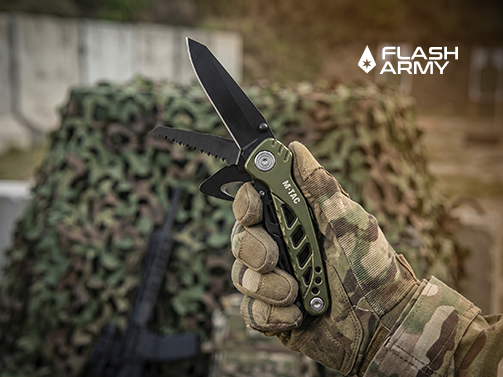
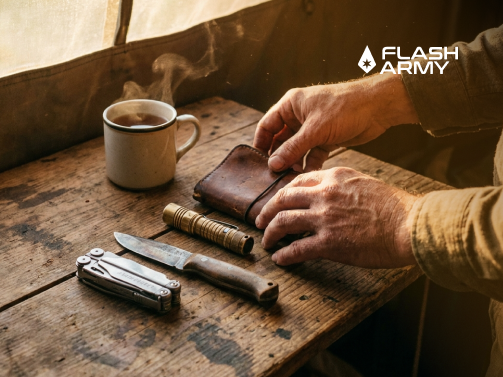
One of the most popular EDC elements is a multi-functional knife, also called a multi-tool. Due to its versatility, a multi-tool is considered one of the most important elements in many EDC kits: just one small tool can replace several separate ones.
It will come in handy for small household tasks: opening a box or can, cutting packaging, or tightening a screw. A multi-tool combines a knife, pliers, corkscrew, screwdrivers, and many other tools depending on the model.
When choosing a multi-tool, pay attention to its functionality, steel quality, compactness, and weight.
Flashlight
A reliable and compact flashlight is an essential element in a basic EDC kit, especially in conditions of unstable power supply. A light source always at hand significantly simplifies daily tasks.
Many modern flashlights have various operating modes: economic, powerful, and for signaling. Therefore, they will be useful not only for everyday affairs but also in emergency circumstances.
Lighter or fire starter
Even in urban conditions, a lighter will be a useful item for household needs. Sometimes a lighter is replaced or supplemented with a fire starter, as a more autonomous source of fire.
Smartphone and Power Bank
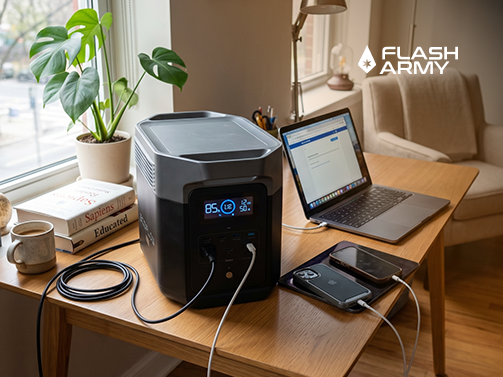
A smartphone has long become a part of daily life. It is needed for communication, work, paying for goods, navigation, and leisure — all information is stored in one device. To avoid being without a phone at the most inconvenient moment, it's convenient to have a portable battery with you.
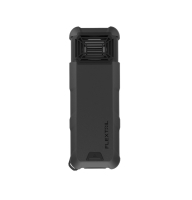
You can choose a Power Bank with a larger or smaller battery capacity, different shapes or colors according to your preferences.
Watch
A watch allows you to quickly check the time without a phone. This is convenient during work, travel, or outdoors.
Wallet and documents
Most EDC kits include a compact wallet, which usually stores cash, bank cards, documents, and paper notes. It's best to choose a wallet made of durable materials, preferably waterproof. This way, your valuables will remain intact and won't be damaged by water.
What else you can add to your kit
A basic EDC kit can be expanded depending on your needs and risk level. Often, you can also find the following items in the kit:
- pepper spray
- antiseptic
- notebook
- pen
- reflective elements
Some people add a small charging cable, tissues, a carabiner for keys, or a small organizer to their kit. These small items take up almost no space but can prove useful in everyday life.
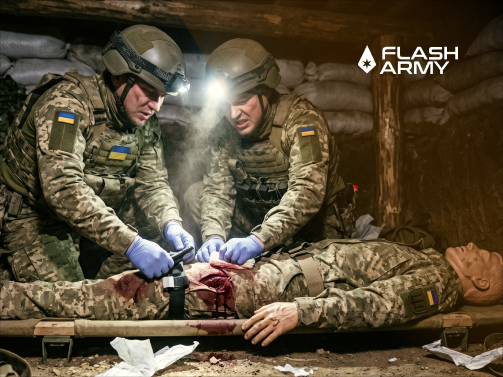
When forming an EDC kit, it is also necessary to consider all the risks that have arisen with the onset of martial law.
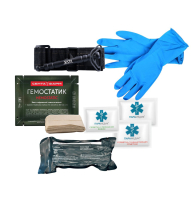
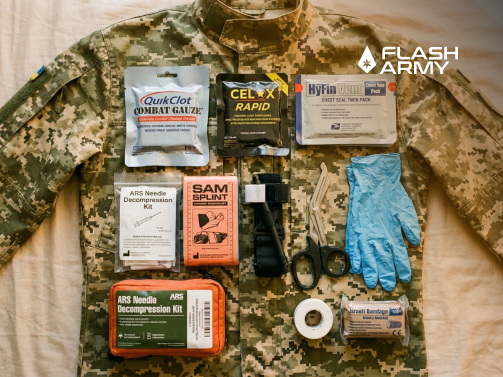
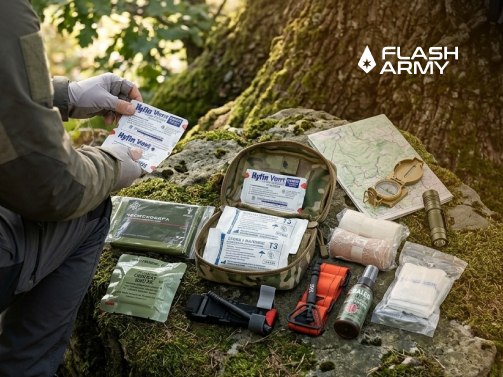
In modern realities, users add a compact tactical first-aid kit, which contains a medical tourniquet, means for stopping bleeding, providing first aid, and self-defense items (gloves, mask). It also makes sense to carry a small whistle for signaling in emergency situations.
When assembling your every day carry kit, it's important to remember that it should remain compact and convenient for daily carrying.
How to carry an EDC kit
Everyone decides how to carry their EDC kit independently, considering their mode of transport, level of activity, and the number of items included in the kit.
Backpack
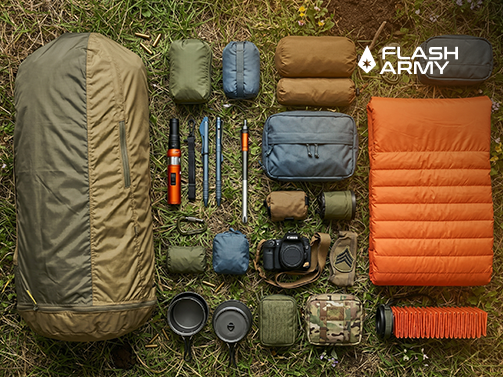
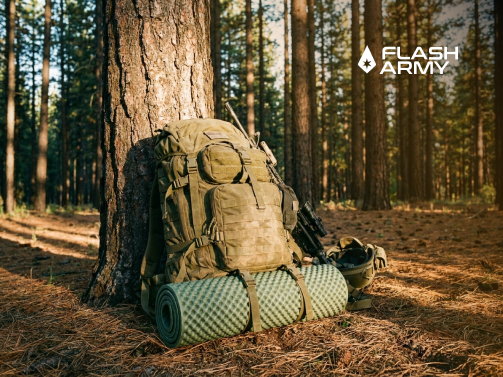
The optimal option is a compact urban or tactical backpack. It's convenient to place your main items, as well as a full-sized EDC kit, in it.
Bag
An alternative option is a bag. Models can vary, but the most common choice is a tactical shoulder bag. Such a bag allows you to quickly retrieve the desired item and is perfectly suited for urban use.
Pouch
For those who don't like to carry hand luggage, such as backpacks or bags, a universal pouch that attaches to a belt or backpack is suitable for carrying an EDC kit. It is small and easy to store.
Conclusion
EDC is a concept for approaching the daily carrying of useful and often necessary items. A properly selected kit helps solve minor problems faster and be prepared for unpredictable situations. The main thing is to choose an EDC that suits your needs and make it convenient for daily use.
Every day carry is what provides practicality and convenience. A small set of tools, a light source, communication devices, and basic medical items can be useful both in the city and on the road.
After reading this article, forming an EDC kit should become simpler for you, as you now understand the basic principles of forming and organizing a kit of the most essential items. You can buy everything you need for your every day carry on the Flash Army marketplace — our catalog contains the most common items that should often be at hand.