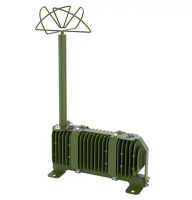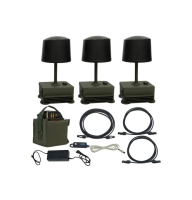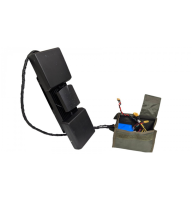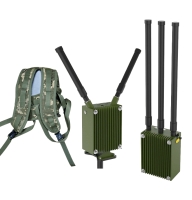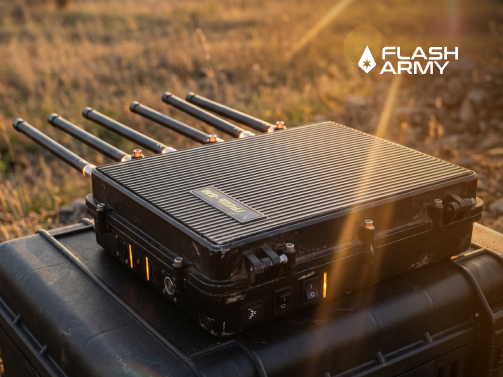
The role of electronic warfare (EW) systems is hard to overestimate today. Various types of drones are used by the enemy both on the front line and for massive attacks on civilian infrastructure. EW systems have been and remain one of the main ways to combat UAVs.
In addition, the enemy is constantly improving its UAVs: various control channels or fiber optics are used. In response, modern EW systems are also being upgraded to remain effective means of protection.
This material was prepared by the Flash Army team. In it, you will learn how EW works and what its effectiveness and limitations are. We will also discuss why it is so important for countering aerial threats.
What is EW and how is it used
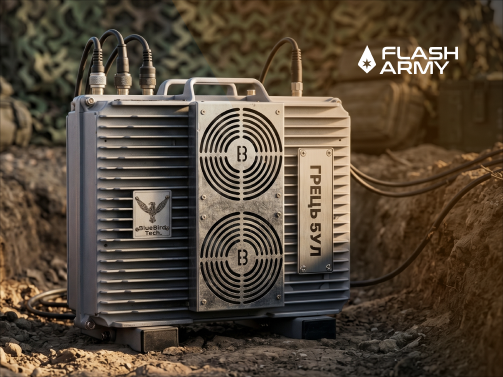
EW is a complex of modern technologies that contribute to the detection, suppression, or disruption of enemy electronic and radio-technical systems. In addition, it provides protection for one's own systems from electronic attacks.
Most often, such means are used for:
- countering FPV drones, reconnaissance UAVs, commercial drones, kamikaze attack drones, and large attack UAVs;
- protecting equipment and positions;
- covering military movement routes;
- defending strategic objects;
- disrupting radio communications, navigation, and data transmission.
The main principle of EW operation
Every communication device uses certain frequencies for drone control, data transmission, or navigation. EW identifies these frequencies and affects them with powerful pulses that overlap the target signal (or several signals). Because of this, the UAV loses the ability to operate stably, becomes disoriented, or becomes uncontrollable and crashes.
What signals are suppressed
The main types of signals that EW complexes can suppress:
- Control channels: communication signals between the operator and the UAV (or between a ground station and any radio-controlled equipment).
- Video signal and telemetry: video streaming from the drone's camera to the operator's remote control or flight status data (altitude, charge, speed).
- GPS/GLONASS navigation signals, which are used for positioning, autopilot, and route correction.
- Radio communication.
Types of impact on drones
Military EW can affect drones by jamming and spoofing. Let's consider each of these methods in more detail.
- Electronic jamming is the creation of powerful noise interference on the drone's operating frequencies, which completely clogs the airwaves. The process occurs on control channels, telemetry, and satellite navigation.
- Spoofing is imitative and deceptive interference. A more intelligent type of influence that does not just jam the signal, but replaces it with a false one. For example, EW broadcasts false navigation coordinates on the GPS communication channel. The drone believes it is in another location and begins to fly in the wrong direction.
Effectiveness and limitations of EW systems
As we can see, EW systems occupy a special place in countering UAVs. But why are they so effective? Let's explain.
The main advantage is the ability to remotely affect drones without physical contact with targets. Modern EW systems can interfere with the enemy's electronic network at a great distance. In addition, it saves resources that would be spent on expensive anti-aircraft missile systems or small arms.
Secondly, EW systems are characterized by quick reaction to aerial threats. They can process electromagnetic signal data from 8 to 10 million pulses per second (depending on the airwave load).
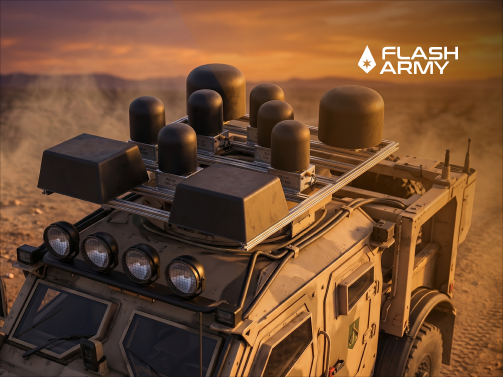
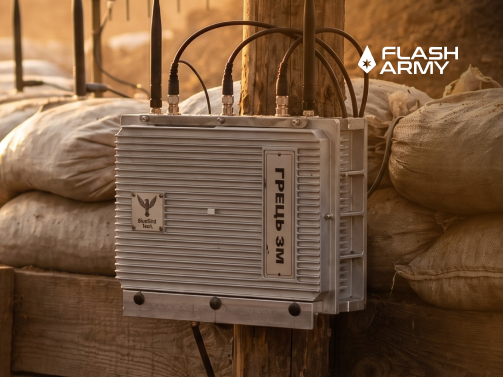
Thirdly, they provide continuous operation (as long as there is power) in stationary, mobile, trench, or vehicle formats. This creates a protective barrier around positions, equipment, or strategic objects.
Another important advantage of modern EW is multi-channel capability. Such systems can simultaneously suppress several frequencies (from 20 MHz to 6 GHz), as drones often "hop" from one channel to another.
In addition, there is the possibility of their integration with radars, thermal imagers, and SIGINT systems.
At the same time, EW systems do not guarantee one hundred percent effectiveness. They have certain limitations that should not be forgotten.
- Limited range. The effect of EW decreases with distance, and the range depends on the transmitter's output power and antenna sensitivity.
- Dependence on terrain. Radio waves propagate mainly in a straight line, so hills and dense urban development create "dead zones" where the signal does not work.
- Frequency ranges. Most devices suppress specific, predetermined frequencies. However, enemy drones operating on non-standard frequencies can bypass this protection.
- Interference with one's own electromagnetic signals. EW systems do not choose whose communication channels to jam, so they often create interference for their own troops.
- Failures in the communication systems of civilian services and organizations located nearby.
- Inability to neutralize fiber-optic drones.
- Negative impact of ultra-high frequencies and electromagnetic waves on the well-being and health of soldiers.
What to consider when choosing an EW system
Before you buy an EW system, we advise you to consider the following factors:
- frequency range;
- objects requiring protection (stationary or mobile unit);
- purpose (depending on combat missions);
- antenna types;
- required coverage radius and power;
- battery life and power type;
- deployment speed;
- availability of service support and certificates;
- quality camouflage;
- possibility of modernization (installation of additional modules).
When choosing EW equipment, it is important to understand that there is no universal solution. Different types of systems with unique characteristics are used for different needs.
Conclusion
Thanks to their ability to quickly react to the appearance of UAVs and operate in several frequency bands simultaneously, EW systems are actively used today both on the front line and for the defense of strategic objects. At the same time, the development of drone technologies constantly creates new challenges for electronic warfare systems. We will see how our protection means will overcome them.
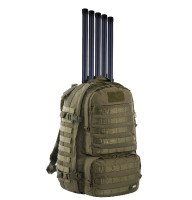
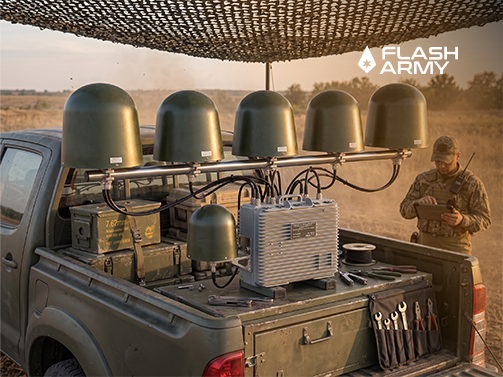
Flash Army offers a wide selection of proven systems. In particular, you can find dome EW jammers — some of the most effective options.
-min-192x200.png "Dome EW Jammer Hrets 4M with Quadrifilar Antennas")